 How-to
How to Care for Handmade Macramé Decor
Table of Contents
- Understanding Your Handmade Macramé
- How to Dust Macramé Decor
- How to Clean a Macramé Plant Hanger
- How to Wash a Macramé Wall Hanging
- Drying and Preventing Damage After Cleaning
- How to Store Macramé Wall Hangings
- Protecting Your Macramé from Sun, Moisture, and Weather
- Repairing Tangles, Fraying, and Misshapen Fringe
- Frequently Asked Questions
Last Updated: October 12, 2026
Understanding Your Handmade Macramé
Handmade macramé decor brings warmth and texture to any home. Learning how to care for handmade macramé keeps these items beautiful for years.
The care you give your macramé affects how long it lasts. Regular maintenance keeps fibers soft and colors vibrant; neglect leads to dust, stains, and fading.
Knowing what your macramé is made from helps when you care for handmade macramé properly.
How to Dust Macramé Decor
Dusting is the easiest way to keep your macramé clean and stop dirt settling into the fibers.
How often to dust based on placement:
- Bedroom or low-traffic wall: Every 2-3 weeks is usually enough.
- Living room, hallway, or near a window: Every 1-2 weeks, because open windows pull in pollen and street dust.
- Kitchen or dining area: Weekly, since cooking aerosols settle into cord and turn sticky over time.
- Homes with pets: Every 3-5 days. Pet dander and shed fur weave into knots faster than household dust.
- Outdoor or porch pieces: Every 3-4 days during pollen season, weekly otherwise.
A simple test: run a clean finger along the top row of knots.
What you'll need:
- Soft-bristled brush (a soft toothbrush, makeup brush, or paintbrush works well)
- Vacuum with upholstery attachment and a low-suction setting (optional)
- Dry microfiber cloth
- A second clean, dry cloth for the fringe
Steps:
- Hang the piece securely or lay it flat on a clean sheet so dust falls away instead of settling back in.
- Work from the top downward so you're not pushing dust into already-cleaned knots.
- Brush in short, light strokes along the direction of each cord. Don't scrub back and forth.
- For tight knots, use the vacuum on low suction with the upholstery attachment held 2-3 inches away. Never let the brush roll touch the cord directly, since rotating bristles can snag loose fibers.
- Finish the fringe separately: hold the strands together, brush downward, then shake gently outdoors.
- Wipe the mounting dowel or ring with the dry microfiber cloth, since dust collects there and drips onto the cord.
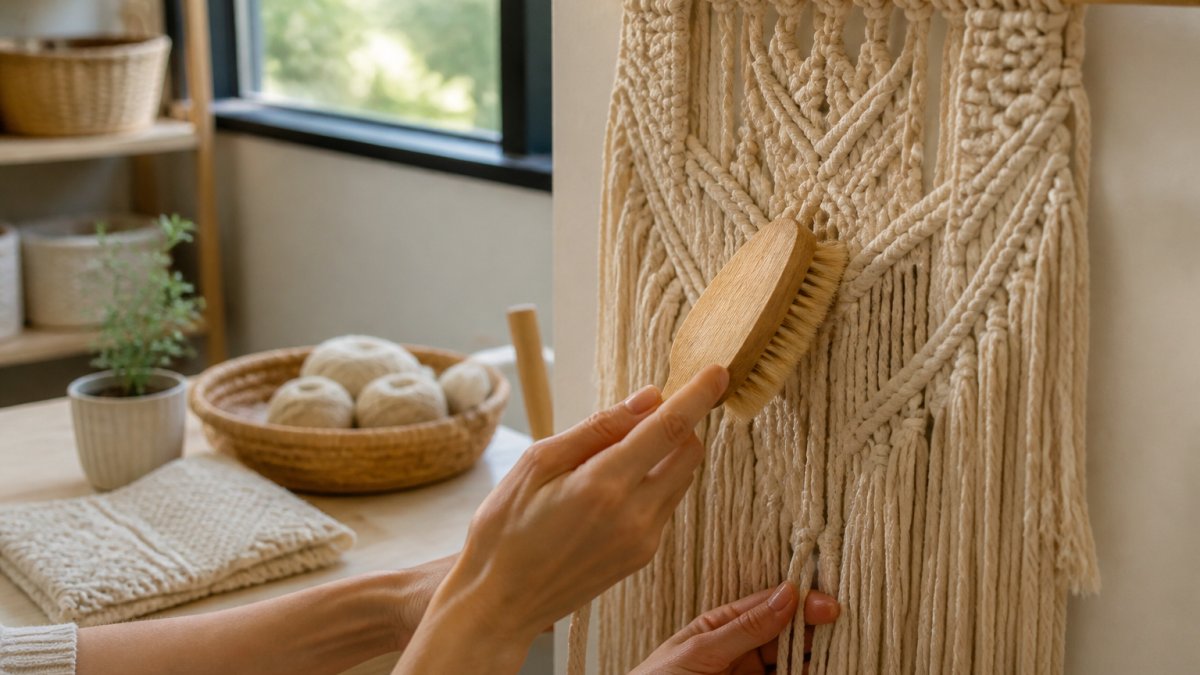
Never scrub or press hard. The goal is to lift surface dust without flattening knots or pulling fibers out of place.
Regular dusting matched to your room, pets, and season prevents dirt from embedding in fibers and keeps your macramé looking fresh between deeper cleanings. Our cotton cord wall hangings and plant hangers are knotted to hold their shape through years of routine dusting.
How to Clean a Macramé Plant Hanger
Plant hangers need extra care because they hold moisture from watering and may have soil splatter. Water and dirt can cause stains and mold, and the right method depends on the fiber. A cotton hanger from our shop handles a gentle hand-wash well.
Fiber-by-fiber care for plant hangers:
- Cotton cord: The most forgiving option. Hand-wash in cool water with a drop of mild dish soap, rinse until the water runs clear, and air dry in shade. Cotton can handle a 10-15 minute soak without losing shape.
- Jute or hemp: These fibers are rougher and can shed when wet. Skip full submersion. Wipe with a barely damp cloth, then dry immediately in a well-ventilated spot. Jute that stays damp develops a musty smell that's hard to remove.
- Wool: Wool felts when agitated in water, so never soak or wring it. Spot-clean only with a damp cloth and cool water, and lay flat to dry so the hanger doesn't stretch.
- Synthetic cord (nylon or polyester): The most water-tolerant. A quick hand-wash in cool water is fine, and synthetics dry faster than natural fibers. Avoid hot water, which can set stains and warp the cord.
- Naturally dyed or hand-dyed cord: Colors can bleed, especially in the first few washes. Test a hidden knot with a damp white cloth first. If color transfers, switch to spot-cleaning only.
Before cleaning, remove the plant and pot. Set them aside safely and shake loose soil off the hanger outdoors.
What you'll need:
- Cool water
- Mild liquid dish soap (a few drops is enough)
- Two soft cloths or sponges
- Bucket or sink
- Clean towels for drying
- A soft-bristled brush for dried soil in the knots
Steps:
- Mix cool water with a few drops of mild dish soap in a bucket, faint suds, not a bubble bath.
- Dip one cloth into the solution and wring it out so it's damp, not dripping.
- Wipe the entire hanger from the top ring or loop downward, paying extra attention to the bottom cradle where soil and water collect.
- For dried soil in the knots, let the damp cloth sit for a minute to soften it, then lift it with the soft brush. Don't pick at it with your fingernails.
- Rinse away soap residue with the second cloth and clean cool water, soap left in the fibers attracts new dirt.
- Gently squeeze out excess water. Never wring or twist, since that distorts the knots.
- Hang in a well-ventilated, shaded area to air dry completely before returning the plant, usually 24-48 hours depending on humidity.
Preventing moisture problems:
- Always use a saucer or liner inside the pot so drips don't soak the cord.
- Water the plant over a sink, let it drain fully, then return it to the hanger.
- If you notice mold or mildew spots, treat them with a cloth dampened with cool water and a drop of mild soap, then dry thoroughly. Persistent musty smells mean the piece stayed damp too long and may need replacing.
Our cotton cord plant hangers are knotted to hold up to regular gentle hand-washing.
How to Wash a Macramé Wall Hanging
Wall hangings are less exposed to moisture than plant hangers, so they require gentler handling. Most stains come from dust, smoke, or spills.
Spot-Cleaning Stains on Macramé
For small stains, spot-cleaning saves time and water.
For fresh stains:
- Blot gently with a clean, damp cloth using cold water only, never hot.
- If the stain remains, mix a tiny amount of mild detergent with cold water and dab it on with a cloth.
- Blot with a clean, damp cloth to remove soap, then pat dry with a towel.
For set-in stains:
Older stains are harder to remove. Test any solution on a hidden part of the macramé first, some stains fade naturally, and aggressive cleaning can damage fibers more than the stain itself.
Hand-Washing Your Macramé
If your wall hanging needs a full clean, hand-washing is the safest method.
What you'll need:
- Cold water
- Mild detergent
- Soft cloth or sponge
- Bathtub or large basin
- Towels
Steps:
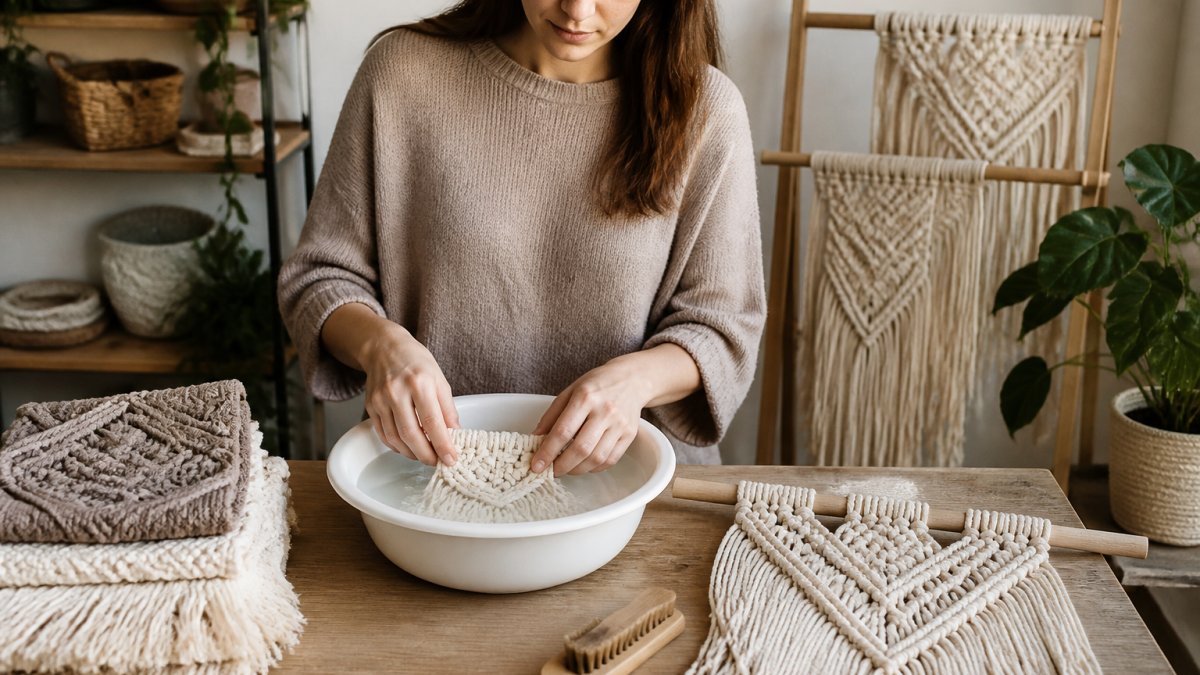
- Fill a bathtub or basin with cool water and add a small amount of mild detergent, mixing gently.
- Submerge the macramé and soak for 10-15 minutes, agitating the water gently, do not scrub or wring.
- Drain and refill with cool water, repeating until all soap is gone.
- Gently squeeze out excess water without wringing the fibers, then lay flat on a clean towel or hang to air dry.
Never machine-wash handmade macramé. The agitation and spinning can distort knots and damage delicate fibers. Hand-washing gives you control and protects the structure of your piece.
Drying and Preventing Damage After Cleaning
How you dry your macramé matters as much as how you clean it. Improper drying leads to mold, mildew, and fiber damage.
The best drying method:
Hang your macramé in a well-ventilated area away from direct heat. A bathroom with a window or a shaded outdoor space works well.
Never use a dryer, hair dryer, or heat source. Heat damages natural fibers and causes colors to fade unevenly.
Avoid direct sunlight while drying. The sun can bleach colors and weaken fibers, especially cotton cord pieces.
How to Store Macramé Wall Hangings
Proper storage protects your macramé when you're not displaying it. Poor storage leads to dust, mold, and fiber damage.
Storage tips:
- Keep macramé in a cool, dry place away from direct sunlight.
- Avoid damp basements or attics where humidity and temperature fluctuate.
- Store in a breathable bag or cloth, never plastic, which traps moisture.
- Roll the macramé loosely rather than folding it tightly. Tight folds can crease fibers permanently.
- Add a small sachet of dried herbs or cedar to discourage moths and keep the piece smelling fresh.
- Store away from pets and children to prevent accidental damage.
If you're storing a plant hanger, make sure it's completely dry first. Retained moisture causes mold during storage.
Check stored macramé every few months. Unfold or reroll it to prevent permanent creasing.
Protecting Your Macramé from Sun, Moisture, and Weather
Where you hang your macramé affects how quickly it ages. Direct sunlight fades colors. High humidity encourages mold.
Sunlight and fading:
Natural dyes used in eco-friendly macramé can fade in direct sun.
Humidity and moisture:
Damp environments create conditions for mold and mildew. Avoid hanging macramé directly above sinks, in steamy bathrooms, or near humidifiers.
Outdoor macramé:
Outdoor plant hangers face rain, wind, and temperature swings. Bring them inside during heavy rain or snow.
Outdoor macramé needs more frequent cleaning because it collects dust, pollen, and debris faster.
Repairing Tangles, Fraying, and Misshapen Fringe
Even with great care, macramé can develop issues.
Loose and fraying fibers:
If you notice loose fibers sticking out, trim them carefully with sharp scissors rather than pulling them.
Tangles in the cord:
Tangles happen when macramé sits in storage or gets bumped.
Never force a tangle or use heat to loosen it. Patience prevents fiber damage.
Misshapen or bent fringe:
The fringe at the bottom of wall hangings can bend or curl over time.
For stubborn bends, lay the macramé flat with the fringe hanging off the edge of a table.
Frequently Asked Questions
Can you machine wash handmade macramé decor?
Machine washing is not recommended for handmade macramé. The agitation can damage delicate fibers, loosen knots, and distort the shape. Hand washing with cold water and mild detergent is the safest way to care for handmade macramé pieces, whether they're wall hangings, plant hangers, or other decor items. Always test a small hidden area first to check for dye bleeding.
How often should you clean handmade macramé decor?
Light dusting every 2-4 weeks helps prevent dirt buildup on your macramé. Spot-clean stains as soon as you notice them to prevent them from setting. A full hand wash is typically needed only once or twice per year, depending on how much dust and dirt your piece accumulates. Plant hangers in high-use areas may need more frequent attention.
What's the best way to dry macramé after washing?
After washing, gently squeeze out excess water without wringing. Hang your macramé in a well-ventilated area away from direct sunlight to air dry completely. This may take 24-48 hours depending on humidity. Never use a dryer or place it near a heat source, as this can damage the fibers and cause fading. Ensure the piece is fully dry before hanging it back in place.
How do you prevent mold and mildew on macramé?
Keep your macramé in a dry environment with good air circulation. Avoid placing pieces in high-humidity areas like bathrooms or basements. If your macramé gets wet, dry it thoroughly as soon as possible. Store pieces in a breathable bag in a cool, dry location. If you notice mold or mildew, gently clean with a damp cloth and mild detergent, then air dry completely in a well-ventilated space.
Caring for handmade macramé decor keeps these beautiful pieces looking fresh and lasting for years. Regular dusting, gentle cleaning, and smart storage protect your investment. At Stitched Creations, we design our macramé pieces to be durable and long-lasting, but they thrive when you give them the attention they deserve. Follow these steps and your handmade macramé will remain a cherished part of your home.