 listicle
Best Eco-Friendly Macrame Plant Hangers for Beginners
Table of Contents
- What Makes a Macrame Plant Hanger Eco-Friendly?
- Comparison Table: Best Eco-Friendly Macrame Plant Hangers for Beginners
- 1. Stitched Creations: Handmade Macrame Plant Hanger
- 2. The Little Botanical Sustainable Cotton Hanger
- 3. Bobbiny Macrame Cord: DIY Eco-Friendly Hanger
- 4. Amazon 5-Pack Natural Cotton Hangers
- 5. Creativebug Macrame Workshop: Learn to Make Your Own
- 6. Etsy Handmade Eco-Friendly Hangers: Unique Artisan Options
- How to Choose the Right Option for Your Space
- Sustainable Macrame Cord Materials: A Quick Guide
- Best Indoor Plants for Hanging Planters
- How to Style Macrame Plant Hangers
- Frequently Asked Questions
Last Updated: September 28, 2026
What Makes a Macrame Plant Hanger Eco-Friendly?
An eco-friendly macrame plant hanger uses natural, biodegradable fibers like cotton, jute, or hemp instead of synthetic rope, and is made in a way that limits waste. The material matters most: synthetic nylon cord sheds microplastics and sits in a landfill for decades.
For beginners, the easiest way to get this right is to buy a finished hanger from a small studio that names its fiber source. At Stitched Creations, we hand-knot every piece in small batches using natural materials, so you know exactly what you are hanging in your home.
Three things separate a genuinely eco-friendly hanger from a greenwashed one:
- Fiber type: organic cotton, jute, hemp, or recycled cotton, not acrylic or nylon
- Production scale: small-batch handmade pieces waste far less cord than factory runs
- End of life: natural fibers break down, and worn hangers can be composted or unraveled for reuse
Comparison Table: Best Eco-Friendly Macrame Plant Hangers for Beginners
| Option | Material | Format | Cord Thickness | Best For |
|---|---|---|---|---|
| Stitched Creations | Natural cotton | Finished hanger | 4-5 mm | Ready-to-hang artisan decor |
| The Little Botanical | Sustainable cotton | Finished hanger | 3-4 mm | Minimalist, modern spaces |
| Bobbiny Cord | Recycled cotton | DIY supplies | 3 mm, 5 mm | Crafters who want to knot their own |
| Amazon 5-Pack | Natural cotton | Finished hangers | 3-4 mm | Multiple plants on a budget |
| Creativebug Workshop | Video course | DIY learning | Varies | Beginners who want guided lessons |
| Etsy Artisans | Varies by maker | Finished hangers | Varies | One-of-a-kind designs |
1. Stitched Creations: Handmade Macrame Plant Hanger
The Stitched Creations handmade macrame plant hanger is hand-knotted in small batches from natural, eco-friendly cotton, so there is no synthetic rope and no factory waste.
2. The Little Botanical Sustainable Cotton Hanger
The design is space-saving, which helps when hanging plants near a window without crowding the sill. The tradeoff is that the styling is deliberately plain, so it will not add much visual drama.
3. Bobbiny Macrame Cord: DIY Eco-Friendly Hanger
The catch is obvious: you supply the effort and the pattern. If you have never knotted before, budget an afternoon for your first hanger and expect a learning curve on tension.
4. Amazon 5-Pack Natural Cotton Hangers
The value is real, but so is the tradeoff. These are mass-produced rather than artisan-made, so expect less consistency in knotting and a shorter lifespan than a hand-knotted piece. For a rental or a quick refresh, that may be fine.
5. Creativebug Macrame Workshop: Learn to Make Your Own
The downside is the subscription model. You pay monthly for access, which only makes sense if you will use the wider craft library too. For a one-off hanger, buying finished is cheaper.
6. Etsy Handmade Eco-Friendly Hangers: Unique Artisan Options
Quality varies widely by seller, so read reviews carefully and check the stated fiber before buying. Shipping times also vary, which matters if you need a gift by a specific date.
How to Choose the Right Option for Your Space
Match the choice to your goal. If you want a hanger on the wall this week, buy finished. If you want to learn a skill and make several, buy cord and a pattern.
A few practical checks before you commit:
- Weight capacity: a natural cotton hanger comfortably holds a small to medium potted plant, but test the knot and ring with a light pot first before hanging anything heavy
- Indoor vs. outdoor: natural cotton breaks down faster in direct sun and rain, so keep cotton hangers indoors and reserve jute or hemp for covered porches
- Pot choice: a self-watering pot adds weight, so size the hanger to the pot plus wet soil, not the empty pot
- Length: measure from your ceiling hook to where you want the pot to sit before ordering a custom length
Sustainable Macrame Cord Materials: A Quick Guide
| Cord | Feel | Best Use | Weight It Holds Well | End of Life |
|---|---|---|---|---|
| Organic cotton | Soft, matte | Indoor hangers | Small to medium pots | Biodegradable, compostable |
| Recycled cotton | Soft, slight texture | DIY projects | Small to medium pots | Reusable, low-waste |
| Jute | Rough, stiff | Outdoor or rustic decor | Medium to heavy pots | Biodegradable |
| Hemp | Strong, earthy | Heavy-duty hangers | Medium to heavy pots | Biodegradable |
Best Indoor Plants for Hanging Planters
Trailing and low-light plants work best in hanging planters, because they grow downward and tolerate the reduced light near a ceiling. Good beginner choices include pothos, spider plants, and heartleaf philodendron, all of which forgive occasional missed waterings.
How to Style Macrame Plant Hangers
Styling comes down to grouping and height. Hang hangers at two or three levels near a window to create depth, and keep the cord color consistent so the plants, not the rope, draw the eye.
A few styling ideas that work in most homes:
- Cluster three hangers at staggered heights in one corner for a focal point
- Pair a natural cotton hanger with a simple ceramic pot for a modern look
- Mix one macrame hanger with shelf plants to avoid an overly busy wall
- Use a wooden dowel or macrame ring as a mounting point for a cleaner ceiling line
Frequently Asked Questions
What types of plants are best for hanging in macrame plant hangers?
Trailing plants like pothos, spider plants, and string of pearls thrive in hanging planters because their vines cascade naturally. For low-light spaces, try heartleaf philodendron or neon pothos. If you want a statement piece, consider a small monstera or hoya. Always check the plant's mature size and weight; a 6-inch pot with moist soil can weigh 5 to 10 pounds, so choose a hanger rated for that capacity. Stitched Creations offers hangers designed for small to medium indoor plants.
What are some good patterns for beginners to make a macrame plant hanger?
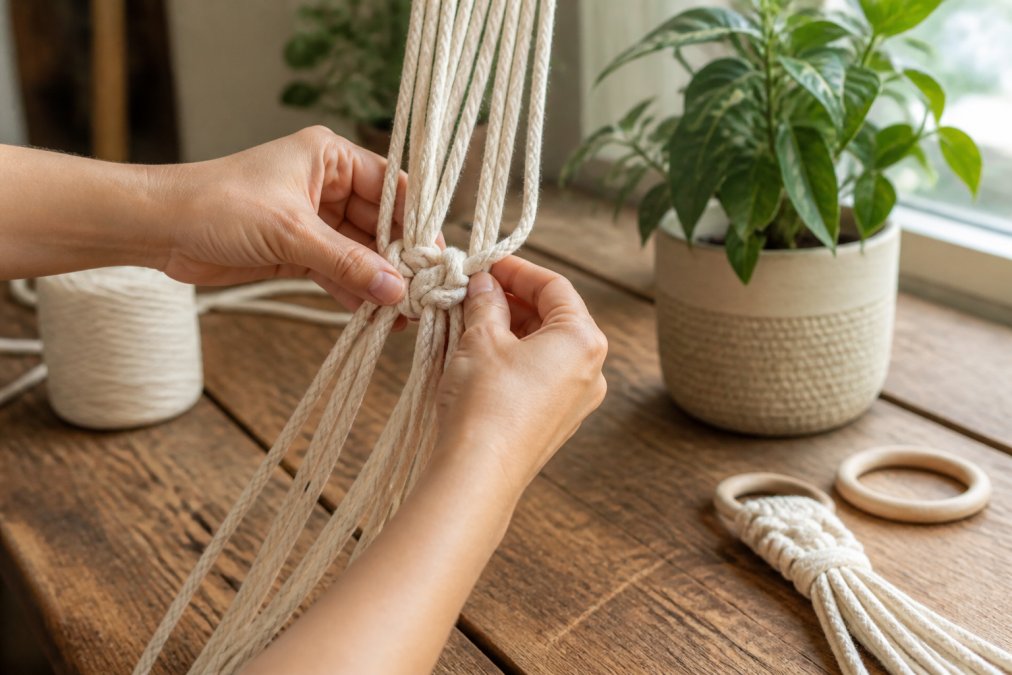
Start with a simple pattern using only square knots and half square knots. A classic four-strand hanger with a gathering knot at the top and a few square knots down the length is easy to master. Many free tutorials online, like those from Marching North, provide step-by-step photos. Practice with 3mm or 4mm cord, which is easier to knot than thinner twine. Once comfortable, add beads or a decorative weave for extra style.
Is macrame out of style in 2026?
No, macrame remains a popular choice for boho and modern interiors. Its focus on natural materials and handmade craftsmanship fits well with the ongoing demand for sustainable home decor. In 2026, expect to see macrame incorporated into minimalist spaces, not just bohemian ones. Designers are pairing neutral cotton hangers with sleek pots and trailing greenery. The trend leans toward eco-friendly fibers like recycled cotton and jute, making it a lasting style rather than a passing fad.
What materials work best for DIY plant hangers?
For durability and a soft look, 3mm or 4mm natural cotton rope is ideal. It is strong, easy to knot, and biodegradable. Jute and hemp are more rustic and sturdy but can be rough on hands. Recycled cotton cord, like Bobbiny, offers an eco-friendly option with a smooth texture. Avoid synthetic ropes like nylon, which do not break down and can stretch. Whichever you choose, ensure the cord is at least 3mm thick to support the weight of a potted plant.
Why choose recycled cotton for macrame projects?
Recycled cotton reduces textile waste and uses less water and energy than virgin cotton. It is often softer than jute or hemp, making it gentle on beginners' hands. The production process diverts fabric scraps from landfills, aligning with eco-conscious values. When you buy recycled cotton cord, look for certifications like GRS (Global Recycled Standard) to verify content. Stitched Creations uses eco-friendly materials, including recycled fibers, in its small-batch handmade goods.
The hardest part of going eco-friendly is trusting that a handmade piece will actually hold up. At Stitched Creations, every hanger is hand-knotted in small batches from natural, eco-friendly cotton, backed by durable construction and a 5.0-star rating from real customers. If you want decor that is kind to your home and the planet, shop our handmade macrame collection and hang your first plant this week.