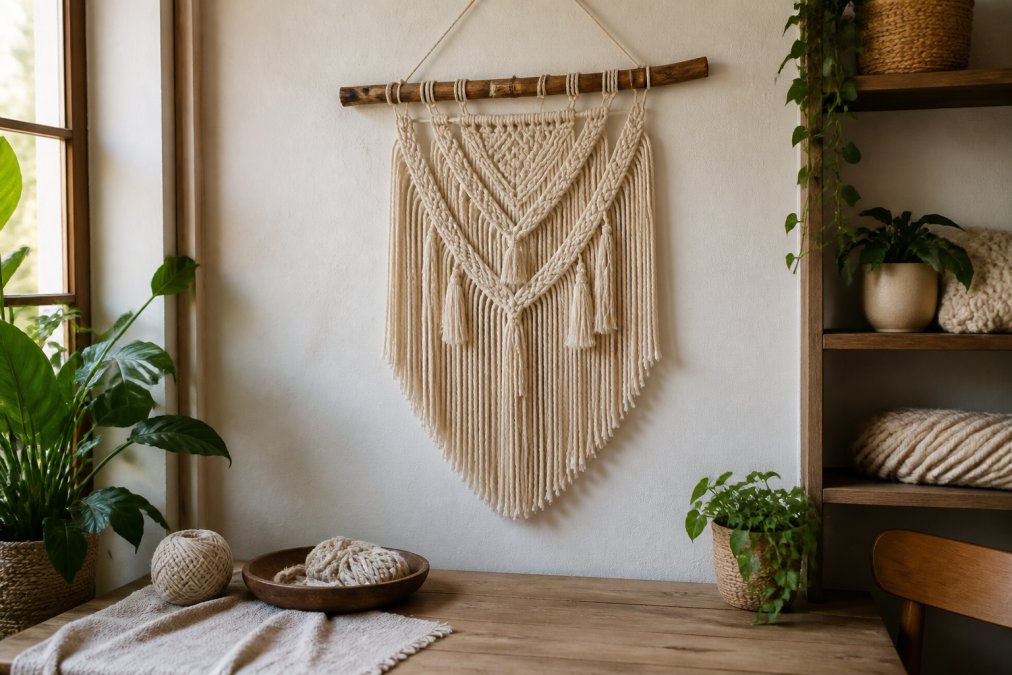
 how-to
Eco Friendly Macrame Wall Hanging Ideas: 2026 Guide
Table of Contents
- Eco Friendly Macrame Wall Hanging Ideas: Why They Matter in 2026
- Sustainable Macrame Cord Materials: What to Look For
- Beginner Macrame Wall Hanging Patterns You Can Start Today
- Essential Tools and Knotting Techniques for Eco-Friendly Projects
- How to Style Handmade Macrame Decor in Any Room
- Zero-Waste Knotting and Upcycling Old Textiles
- Sourcing Sustainable Materials and End-of-Life Care
- Conclusion
- Frequently Asked Questions
Last Updated: September 18, 2026
Eco Friendly Macrame Wall Hanging Ideas: Why They Matter in 2026
Eco friendly macrame wall hanging ideas start with one simple choice: the cord. Natural cotton yarn, hemp fiber, and recycled textiles break down far better than synthetic ropes, and they feel softer against a wall too. At Stitched Creations, we knot every piece by hand in our small studio, so we think about fiber choice before we tie the first square knot.
Here's the part most guides skip. A wall hanging made from polyester cord will outlive you in a landfill. One made from biodegradable materials returns to the earth. That difference is the whole point of this guide.
Below, we'll walk through the materials worth buying, the beginner patterns that actually look good, and the styling tricks that make handmade decor fit a modern room.
Sustainable Macrame Cord Materials: What to Look For
Sustainable macrame cord materials fall into three main groups: natural cotton yarn, hemp fiber, and recycled or upcycled textiles. Each has a different feel, weight, and environmental cost.
Natural Cotton, Hemp, and Recycled Fibers
Natural cotton yarn is the easiest starting point. It's soft, takes dye well, and holds a clean square knot. Look for organic or unbleached options when you can.
Hemp fiber is rougher and stronger. It suits rustic, earthy designs and ages into a nice weathered tone. It's also one of the most low-impact crops to grow.
Recycled fibers come from reclaimed fabric, old t-shirts, or mill offcuts. They give you texture no new cord can match.
- Cotton: soft, beginner-friendly, easy to dye
- Hemp: strong, rustic, long-lasting
- Recycled: unique texture, keeps waste out of landfills
- Braided cotton: smooth finish, great for fringe
How to Verify Eco-Friendly Claims
Vague labels are everywhere. "Green" and "natural" mean almost nothing on a package.
Check for specific wording instead. Look for organic certification, recycled content percentages, or a named fiber source. If a seller won't say where the cord comes from, that's your answer.
The Federal Trade Commission's Green Guides explain what environmental marketing claims are allowed, which helps you spot the empty ones.
Beginner Macrame Wall Hanging Patterns You Can Start Today
Beginner macrame wall hanging patterns rely on just two or three knots, but the difference between a piece that hangs straight and one that sags comes down to cord math. Get the numbers right before you tie anything.
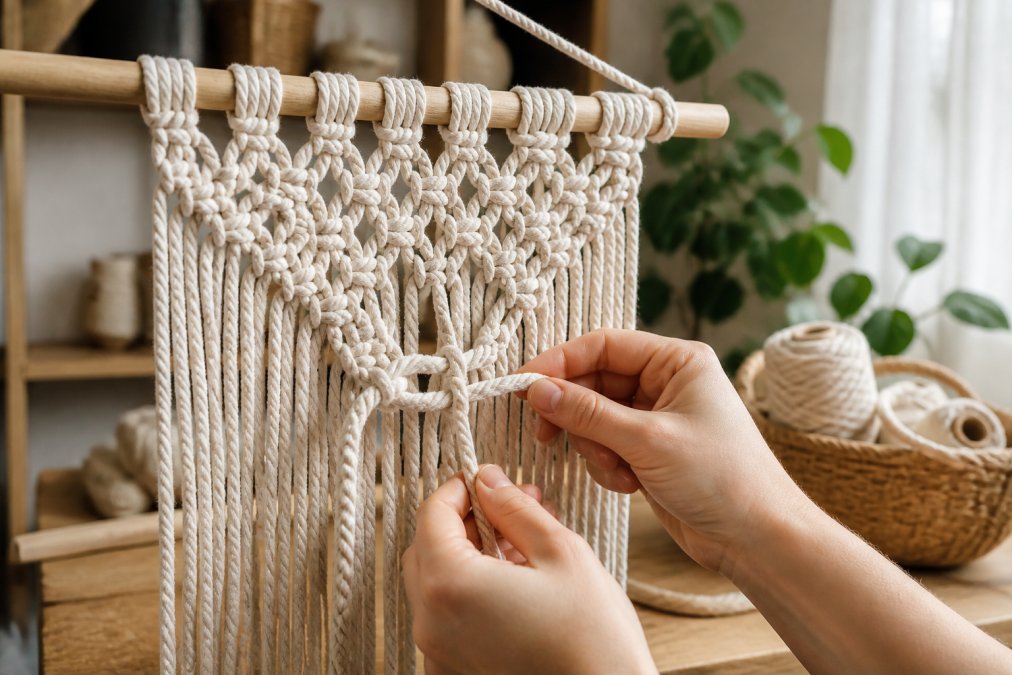
The Cord Math That Makes or Breaks a Beginner Piece
Every beginner pattern starts with one measurement: the finished length you want, multiplied by four. That four-to-one ratio covers the length you lose to knotting, which shortens cord by roughly a third, plus the tail you need for fringe.
A standard small wall hanging finishes around 12 inches wide by 18 inches tall. For that size, cut twelve strands at 72 inches each and mount them on a 14-inch dowel. A larger statement piece at 24 inches wide by 36 inches tall needs sixteen strands at 144 inches on a 26-inch dowel. Cut every strand at the same time against a tape measure rather than eyeballing, because a half-inch difference shows up as a crooked bottom edge.
Mounting is the same for every pattern below. Fold each strand in half, place the loop behind the dowel, pull the two tails through the loop, and tighten. That is a lark's head knot, and it holds the whole piece.
Simple Square Knot and Fringe Design
This is the pattern to learn first, and it is the one most beginners finish in a single sitting.
- Mount twelve strands on the dowel with lark's head knots, giving you twenty-four working ends.
- Take the four strands on the far left. Tie a square knot: left strand over the two center strands, right strand over the left tail and under the center strands, then pull.
- Skip the next four strands and tie a square knot with the following four. Repeat across the row.
- On the second row, shift over by two strands so the new knots sit between the knots above. This is the alternating pattern that gives the piece its texture.
- Work five to seven rows, then stop and let the remaining cord hang as fringe.
Trim the fringe to a straight line with sharp scissors. A piece this size uses about 60 feet of cord total.
V-Shaped and Minimalist Patterns
The v-shaped design is a square knot pattern worked outward from the center, and it is the fastest way to make a beginner piece look intentional.
- Mount twelve strands and find the two center strands.
- Tie a square knot with the four center strands.
- On the next row, tie one square knot to the left of center and one to the right, each shifted out by two strands.
- Keep shifting outward each row until the knots reach the dowel ends. The shape opens into a clean chevron.
For a modern look, keep the palette neutral and the knots spaced wide. Less really is more here, and undyed cotton shows the chevron shape better than a busy color.
At Stitched Creations, every wall hanging is knotted by hand in our small studio using these same beginner-friendly structures.
Essential Tools and Knotting Techniques for Eco-Friendly Projects
Essential tools are few, which is one reason macrame is such a low-waste craft. You need cord, a dowel or driftwood branch, sharp scissors, and a measuring tape.
That's the whole list to start. No machine, no electricity, no plastic packaging to throw away.
Knotting technique matters more than gear.
- Square knot for structure
- Lark's head knot to mount cord
- Clove hitch for shaping and fringe
How to Style Handmade Macrame Decor in Any Room
How to style handmade macrame decor comes down to scale and placement. A large wall art piece anchors a room. A small one adds texture without shouting.
Modern, Minimalist, and Boho Interiors
For a boho style room, layer a macrame wall hanging with plants, warm wood, and woven textiles. Let it blend into the mix.
- Above a bed or couch: large statement piece
- Entryway: narrow vertical hanging
- Nursery: soft cotton in neutral tones
- Home office: small piece to soften the screen glare
Zero-Waste Knotting and Upcycling Old Textiles
Zero-waste knotting means planning your cuts before you make them, and the planning starts with a scrap map. Before you cut a single strand, sketch the finished piece and write the strand count and length next to each section. That one habit is what separates a project that wastes a third of a spool from one that uses nearly all of it.
Cutting to Minimize Waste
Cut the longest strands first. Long strands can be trimmed down for shorter sections, but short strands can never be stretched. Work from the center of the piece outward, because center strands are usually the longest and the outer strands the shortest.
- 3 to 6 inches: tassel filler and fringe accents
- 6 to 12 inches: keychains, plant hangers, and small ornaments
- 12 inches and up: a second small wall hanging on its own dowel
Upcycling Old Textiles Into Cord
Upcycling old textiles is the other half of the story, and it is the fastest way to make a one-of-a-kind hanging with no new material at all.
A few practical notes before you start:
- Knit t-shirt yarn stretches, so tie your knots slightly looser than you would with cotton cord. It will tighten on its own.
- Fabric strips do not slide the way cord does, so lark's head knots hold very well but square knots can be hard to adjust after they are pulled tight.
- Wash and dry all textiles before cutting. Shrinkage after knotting will distort the piece.
- Mix one part fabric strips with two parts cotton cord if you want the texture without losing structure.
Sourcing Sustainable Materials and End-of-Life Care
Sourcing sustainable materials starts with asking questions. Buy from sellers who name their fiber, their dye process, and their mill.
A few things to check before you buy:
- Organic or recycled certification
- Undyed or plant-based dye options
- Plastic-free shipping and packaging
- Local suppliers when possible
Conclusion
Making an eco friendly macrame wall hanging isn't hard. It just asks you to think about the fiber before the pattern.
Frequently Asked Questions
Is macrame considered eco-friendly home decor?
Yes, macrame can be eco-friendly when made with natural, biodegradable materials like cotton, hemp, or jute. Unlike synthetic textiles, these fibers break down at the end of their life. Choosing undyed or plant-dyed cord and avoiding plastic beads further reduces environmental impact. Stitched Creations uses eco-friendly materials in all handmade macrame pieces, so you can decorate your home with confidence.
What materials are best for sustainable macrame projects?
Natural cotton yarn, hemp fiber, and recycled cotton are top choices. Organic cotton uses less water and no pesticides. Hemp is durable and grows with minimal resources. Look for unbleached or naturally dyed cords to avoid chemical treatments. For a soft, workable cord that holds knots well, braided cotton is ideal. Stitched Creations sources eco-friendly materials for all its finished goods.
How do I choose eco-friendly cord for wall hangings?
Check the fiber content first: natural fibers like cotton, hemp, or jute are biodegradable. Avoid polyester or nylon. Look for certifications like GOTS (Global Organic Textile Standard) for organic cotton. Consider the cord's thickness and twist; a 3-4 mm braided cotton cord works well for most wall hangings. If you can, buy from small studios that disclose their sourcing. Stitched Creations offers finished pieces made with eco-friendly materials.
Are there beginner-friendly eco-conscious macrame patterns?
Absolutely. Start with a simple square knot pattern on a wooden dowel, using natural cotton cord. A basic wall hanging with a few rows of square knots and fringe takes about an hour. V-shaped designs and minimalist geometric patterns are also beginner-friendly. Many free tutorials online use sustainable materials. Stitched Creations crafts beginner macrame wall hangings that include eco-friendly cord.