 how-to
How to Clean Delicate Handmade Macrame Decor Items
Table of Contents
- Understanding Your Macrame Before You Clean
- Routine Dusting and Maintenance for Macrame Decor
- Spot Cleaning Techniques for Quick Fixes
- Best Detergent for Cotton Macrame Cord and Hand Washing
- How to Detangle Macrame Fringe and Restore Shape
- Preventing Dust Buildup on Macrame Decor
- Drying Methods and Fiber Preservation
- Frequently Asked Questions
Last Updated: September 26, 2026
Understanding Your Macrame Before You Clean
Handmade macrame decor brings warmth and texture to any space. Before you start cleaning delicate handmade macrame, you need to understand what you're working with. Macrame is made from cotton cord, wool fibers, or acrylic yarn tied into knots to create wall hangings, plant hangers, and other decorative pieces.
The fibers in handmade macrame are delicate. They can absorb water, dust, and odors over time. Knowing your macrame's fiber type matters because different materials need different care approaches. Cotton cord is the most common and forgiving. Wool fibers require gentler handling. Acrylic yarn sits somewhere in the middle.
At Stitched Creations, we craft macrame pieces with care and quality materials designed to last. Understanding your piece's construction helps you preserve its integrity for years to come.
Before cleaning, check for any weak spots, loose knots, or frayed ends. Run your fingers gently along the cord. Look for areas where the fibers seem thin or damaged. This assessment tells you whether your piece needs gentle spot cleaning or if it can handle a more thorough wash.
Routine Dusting and Maintenance for Macrame Decor
Dusting is your first line of defense against dirt buildup. Regular dusting keeps your handmade macrame looking fresh and prevents dust from settling into the knots. Most macrame pieces need dusting every two to four weeks, depending on your home's dust levels.
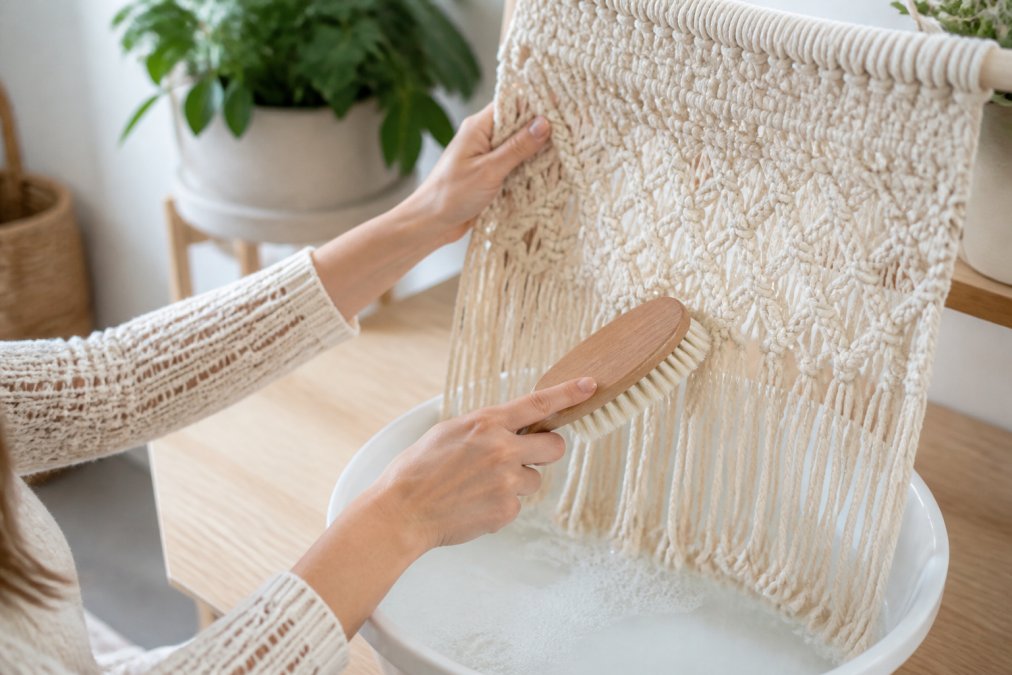
Use a soft-bristled brush for dusting. Hold the macrame gently with one hand and brush downward with light pressure. Work from top to bottom so dust falls away naturally. A soft-bristled brush won't damage the delicate fibers the way a stiff brush might.
You can also use a handheld vacuum with a soft brush attachment. Set it to low suction and move slowly across the piece. This works especially well for wall hangings where dust tends to collect on horizontal surfaces.
For fringe at the bottom of macrame pieces, dust gently downward. Fringe tangles easily, so avoid brushing upward or sideways. If fringe becomes matted, you can carefully separate strands with your fingers once the piece is clean and dry.
| Maintenance Task | Frequency | Best Tool |
|---|---|---|
| Light dusting | Every 2-4 weeks | Soft-bristled brush |
| Fringe check | Monthly | Fingers (gentle separation) |
| Spot cleaning | As needed | Damp cloth or soft brush |
| Deep cleaning | 1-2 times per year | Hand wash method |
Spot Cleaning Techniques for Quick Fixes
Spot cleaning handles small stains without soaking your entire piece. This method works well for fresh spills, dust marks, or isolated discoloration on your handmade macrame.
Treating Liquid Stains and Fresh Spills
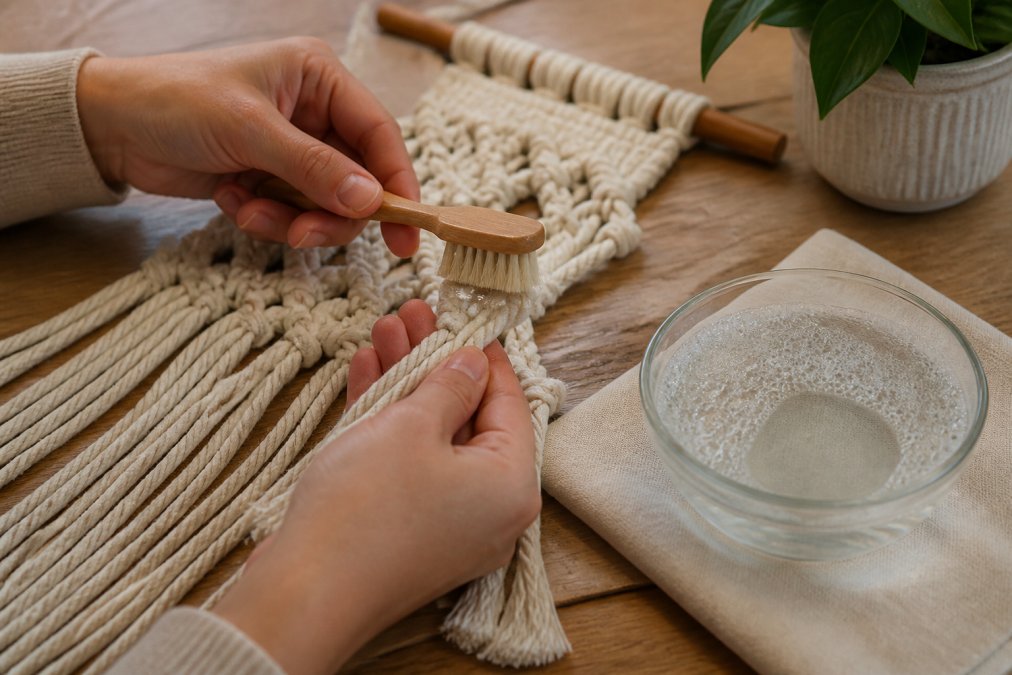
Start with cool water and a clean cloth. Dampen the cloth slightly, then gently dab the stained area. Don't rub or scrub. Rubbing pushes the stain deeper into the fibers and can damage the cord. Let the moisture sit for a minute, then blot with a dry cloth.
For stubborn spots, make a paste with baking soda and cool water. Apply the paste directly to the stain and let it sit for 10-15 minutes. Use a soft-bristled brush to gently work the paste into the fibers. Rinse with a damp cloth and blot dry. This approach works on coffee, tea, and food residue without requiring full submersion.
Removing Pet Hair Without Damaging Knots
Pet hair clings to macrame easily and is one of the most common complaints from owners of wall hangings and plant hangers. Use a lint roller or your fingers to gently pull hair from the surface. For stubborn pet hair embedded in knots, lightly dampen your fingers and run them along the cord in a downward motion. The moisture helps hair release without damaging the delicate fibers. Work slowly and avoid pulling sideways, which can loosen knots.
For heavily shedding pets, a soft-bristled brush used very gently can help lift hair before it becomes matted. Always brush downward to follow the natural direction of the cord.
Eliminating Odors Without Full Washing
Many macrame pieces hang in living spaces where they absorb cooking smells, pet odors, or mustiness over time. Full washing isn't always practical for wall hangings or pieces with delicate dyes, so dry odor removal is essential.
Baking soda is the most effective dry method. Sprinkle it generously over the entire piece, paying special attention to areas near the base where odors tend to concentrate. Let it sit for 8-12 hours or overnight. The baking soda absorbs odor molecules without adding moisture to the fibers. Brush it away thoroughly with a soft-bristled brush, working from top to bottom so the powder falls away naturally. You may need to brush multiple times to remove all residue.
For pieces that can tolerate light misting, a fabric freshener designed for upholstery can help between cleanings. Test any product on a hidden area first to ensure it doesn't affect color or fiber texture. Spray lightly and allow to air dry completely.
Sunlight and fresh air are also powerful odor eliminators. On a dry day, hang your macrame outside in a shaded area (never direct sun, which fades colors) for 2-4 hours. Air circulation naturally removes trapped odors without any chemicals or moisture.
Stitched Creations handmade pieces are crafted with natural fibers that respond well to these gentle, dry-cleaning methods. Our macrame decor maintains its appearance when you address odors before they become deeply embedded.
Best Detergent for Cotton Macrame Cord and Hand Washing
When spot cleaning isn't enough, hand washing cleans your entire piece safely. This method works best for cotton macrame cord, which tolerates water well when handled gently. Before you wash, however, you must verify that dyes won't bleed, a critical step many owners skip.
Testing Color Fastness Before Full Washing
Handmade macrame often uses natural dyes or artisan color treatments that may shift or bleed in water. Testing prevents ruined pieces and gives you confidence to proceed.
Choose a hidden area of your macrame, the back of a knot, an area that hangs against the wall, or the underside of fringe. Dampen a white cloth with cool water and gently press it against this hidden spot for 10-15 seconds. If color transfers to the cloth, your piece has loose dyes. If the cloth remains white or shows only faint color, the dyes are stable.
For multi-colored pieces, test each color separately. A piece might have stable black dye but loose red or blue. Test the lightest colors too; they often bleed first.
If dyes bleed, skip full submersion and use spot-cleaning methods only. If dyes are stable, proceed to hand washing with confidence.
Choosing the Right Detergent
Fill a basin with cool water.
The Hand-Washing Process
Washing Multi-Colored and Naturally Dyed Pieces
How to Detangle Macrame Fringe and Restore Shape
Fringe at the bottom of macrame wall hangings and plant hangers gets tangled easily. Detangling requires patience and a gentle touch to avoid breaking the delicate cord.
Preventing Dust Buildup on Macrame Decor
Prevention is easier than cleaning. A few simple habits keep your handmade macrame cleaner longer and reduce how often you need deep cleaning.
Drying Methods and Fiber Preservation
How you dry macrame matters as much as how you wash it. Improper drying causes shrinkage, color fading, and fiber damage.
Frequently Asked Questions
How do I wash handmade macrame products without damaging the fibers?
Use cool, room-temperature water with a mild detergent specifically formulated for delicate fibers. Submerge your macrame gently and squeeze the soapy water through the knots, never twist or wring. Rinse thoroughly with clean, cool water until all soap residue is gone. For pieces like those from Stitched Creations, hand washing is the safest method to preserve the integrity of handmade cotton cord and acrylic yarn. Avoid bleach entirely and never use a washing machine.
Can macrame cord get wet during the cleaning process?
Yes, macrame cord can safely get wet during cleaning when you use the right approach. Cool water is essential, warm or hot water can damage delicate fibers and cause colors to bleed, especially on dyed or multi-colored items. The key is to submerge and rinse gently without aggressive agitation. Cotton cord and wool fibers used in handmade decor are designed to handle moisture when treated carefully. Always air dry completely to prevent mildew and maintain fiber preservation.
What's the best detergent for cotton macrame cord?
Choose a mild, pH-neutral detergent labeled for delicate fabrics or wool. Avoid products with bleach, enzymes, or heavy perfumes that can weaken fibers or cause discoloration. Brands formulated for hand-washing fine garments work well. Mix a small amount with cool water to create a gentle solution. For handmade pieces from Stitched Creations made with eco-friendly materials, a plant-based or hypoallergenic detergent is ideal. Test any new product on a hidden area first to ensure it won't affect the cord's color or texture.
How do I remove dust from intricate macrame wall hangings?
Start with a soft-bristled brush or old toothbrush to gently dust the knots and cords. Work from top to bottom, brushing in the direction of the fringe to avoid tangling. For stubborn dust trapped in tight knots, use a hair dryer on the coolest, lowest setting held at least 12 inches away. Regular dusting every two weeks prevents heavy buildup and reduces the need for deep cleaning, extending the life of your handmade macrame decor.
Keeping your handmade macrame decor clean doesn't require harsh chemicals or complicated techniques. Regular dusting, gentle spot cleaning, and occasional hand washing with mild detergent preserve your piece for years. At Stitched Creations, we design our macrame pieces to be durable and long-lasting when cared for properly. Follow these methods to maintain the beauty and integrity of your handmade decor, and enjoy your macrame wall hangings and plant hangers for a lifetime.