 Comparison
Is Sustainable Home Decor Worth the Cost?
Table of Contents
- The Real Cost of Fast Furniture vs. Investment Pieces
- Benefits of Sustainable Home Decor Beyond Aesthetics
- Eco-Friendly Materials for Home Decor and Why They Matter
- How to Decorate Sustainably on a Budget
- Spotting Greenwashing: What Actually Makes Decor Sustainable
- The Hidden Savings: Durability, Resale Value, and Maintenance
- Handmade Decor as a Long-Term Investment
- Frequently Asked Questions
Last Updated: October 20, 2026
The Real Cost of Fast Furniture vs. Investment Pieces
When you buy a cheap dresser online, it arrives in a flat box. You assemble it in an hour. Within two years, the drawers stick. Within five, the particleboard sags. You donate it or throw it away and buy another one.
A handcrafted piece tells a different story. It costs more upfront. But it lasts decades. The difference between these two paths is what this guide explores: is sustainable home decor worth the cost?
The answer isn't simple. It depends on how you measure value. Ultimately, is sustainable home decor worth the cost? If you measure purely by the sticker price, it loses. If you measure by years of use, quality of life, and what you actually spend per year, it wins decisively.
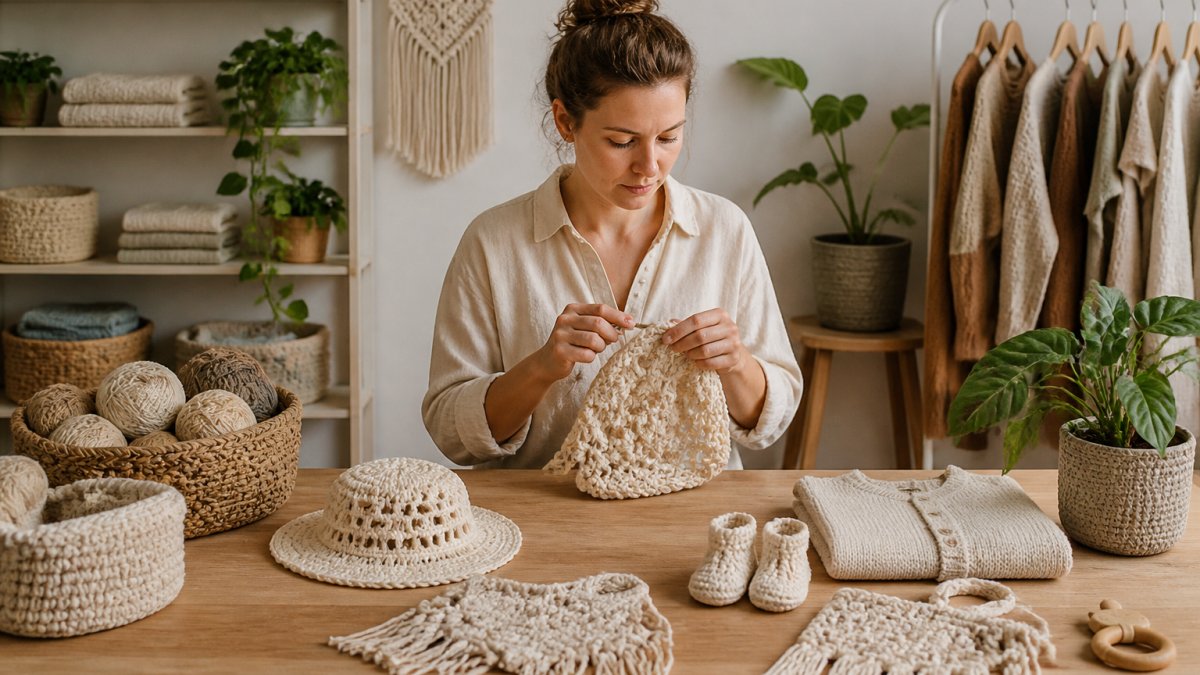
At Stitched Creations, we craft pieces designed to last. Our handmade crochet and macramé home decor uses eco-friendly materials and thoughtful construction. This article breaks down whether that investment makes financial sense.
Benefits of Sustainable Home Decor Beyond Aesthetics
Sustainable home decor isn't just about looking good. It affects how you live.
Health and air quality matter more than most people realize. Mass-produced furniture often contains volatile organic compounds (VOCs) and synthetic materials that off-gas into your home. Sustainable pieces made with organic textiles and natural materials don't. If you or your family has respiratory sensitivity, this difference is noticeable within weeks.
Durability changes the math. A handcrafted piece withstands daily use. The stitching holds. The materials don't degrade. You don't replace it every few years. That longevity compounds over time.
Conscious consumerism affects your peace of mind. When you buy something made with ethical labor practices and sustainable sourcing, you're not funding exploitation. That matters to many people. It's not just about the object, it's about what the purchase represents.
Artisan craftsmanship creates uniqueness. Mass production creates copies. Handmade pieces are one-of-a-kind. Your home reflects your taste, not a warehouse algorithm's inventory.
These benefits aren't quantifiable on a receipt. But they're real. They affect daily life.
Eco-Friendly Materials for Home Decor and Why They Matter
Not all sustainable materials are created equal. Some genuinely reduce environmental impact. Others are marketing.
Reclaimed wood comes from old buildings, barns, or fallen trees. It requires no new logging. It carries history. It's genuinely sustainable because the environmental cost was already paid decades ago.
Organic cotton and linen are grown without synthetic pesticides. They biodegrade at the end of their life. Conventional cotton uses significant water and chemicals. Organic versions use less of both.
Bamboo grows rapidly without pesticides. It regenerates after harvest. It's renewable. But not all bamboo products are equal, some come from unsustainable monocultures. Look for certifications.
Wool and natural fibers are biodegradable. They regulate temperature naturally. They age gracefully. Handcrafted pieces using these materials improve with time instead of degrading.
Upcycled materials repurpose what already exists. A macramé wall hanging made from reclaimed rope uses materials that would otherwise become waste. The environmental cost is minimal.
The key: genuine eco-friendly materials reduce carbon footprint, require fewer chemicals, and biodegrade. They're not perfect. But they're better than petroleum-based synthetics that will sit in landfills for centuries.
How to Decorate Sustainably on a Budget
Sustainable doesn't have to mean expensive. It means intentional. The trick is to stop comparing sticker prices and start comparing cost per year of use, the number that actually determines whether a piece is a bargain or a money pit.
Run the cost-per-use math before you buy. Divide the price by the number of years you expect to use the piece. A mass-produced throw that pills and sheds after two seasons looks cheap at the register but costs more per year than a handcrafted crochet throw blanket from Stitched Creations that you keep for a decade or more.
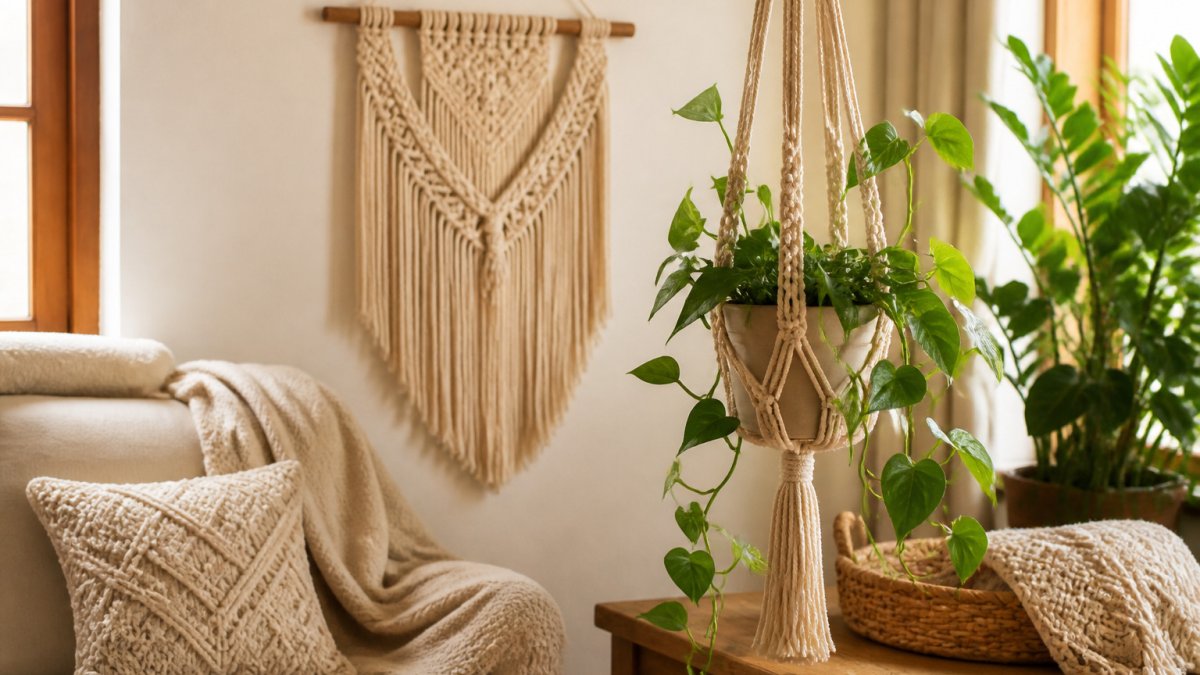
Buy fewer pieces, choose better ones. Instead of filling your space with ten cheap items, invest in two or three quality pieces. This approach costs less overall and creates a more cohesive aesthetic. A single Stitched Creations macramé wall hanging can anchor a room while you build around it gradually, spreading the cost over months instead of one painful checkout.
Start with one statement piece. A handcrafted throw blanket or wall hanging sets a tone. It anchors a room. Build around it slowly. This spreads cost over time and lets you live with a piece before committing to more.
Look for artisan makers, not just big brands. Small studios like Stitched Creations offer handmade pieces at lower price points than luxury retailers because you're buying directly from the creator, not through multiple markups. You also get transparency about materials and labor that mass retailers rarely provide.
Shop secondhand first, but know what holds up. Vintage and thrifted decor is already paid for environmentally. The catch is that not all secondhand pieces are worth rescuing: particleboard furniture that's already sagging won't survive a second life, while solid wood, wool, and hand-knotted textiles often improve with age. Prioritize materials that can be cleaned, repaired, and re-loved.
Focus on timeless design. Trendy pieces become dated. Timeless design stays relevant for decades. That longevity is what makes the cost-per-use math work in your favor.
DIY when you can, and buy materials, not finished goods. If you crochet or macramé, making your own decor is sustainable and affordable. Patterns and materials cost less than finished pieces, and you control quality. If you don't craft, buying a Stitched Creations piece supports a woman-owned studio and skips the retail markup entirely.
Budget-conscious sustainability isn't about deprivation. It's about being selective. You spend less money overall by buying less frequently and choosing pieces that earn their keep year after year.
Spotting Greenwashing: What Actually Makes Decor Sustainable
Not everything labeled "eco-friendly" is. Greenwashing is real. Companies use green marketing without backing it up.
Red flags:
- No information about materials or sourcing
- Vague claims like "natural" or "green" without specifics
- No third-party certifications
- Prices that seem too low for handmade quality
- No transparency about labor practices
Green signals:
- Specific material descriptions (organic cotton, reclaimed wood, etc.)
- Supply chain transparency, you know where materials come from
- Third-party certifications (Fair Trade, GOTS, FSC)
- Clear information about production methods
- Higher prices that reflect actual handcrafted labor
Real sustainable decor costs more because it's made responsibly. If the price seems unreasonably low, something's off.
When you buy from Stitched Creations, you know exactly what you're getting: handmade pieces using eco-friendly materials, created by a woman-owned studio with transparent practices. No greenwashing. Just honest craftsmanship.
The Hidden Savings: Durability, Resale Value, and Maintenance
This is where sustainable home decor's financial case becomes clear, and where most buying guides stop short. They tell you quality lasts longer. They rarely show you the math, the resale mechanics, or the health costs you avoid. Here's the full picture.
Durability compounds savings, run the numbers. A handcrafted piece priced at $200 that lasts 20 years costs $10 per year. A mass-produced piece priced at $40 that lasts 2 years costs $20 per year. The "expensive" piece is half the cost over time. Most shoppers compare sticker prices and walk away from the better deal. The cost-per-use metric flips the comparison, and it's the single most useful number in this entire decision.
Resale value is real, if you buy the right materials. Handmade pieces hold value in a way fast furniture never does. Solid wood, wool, hand-knotted textiles, and well-made crochet and macramé decor resell on secondary markets because buyers know they'll last. Fast furniture has essentially zero resale value; it's often cheaper to give it away than to move it. A Stitched Creations throw blanket or wall hanging can be resold, gifted, or passed down, recovering part of your cost if you move or redecorate.
Maintenance is minimal, and repair is possible. Quality pieces need occasional dusting and gentle cleaning. That's it. Cheap furniture needs constant repairs or replacement, and the time and frustration add up. More importantly, handcrafted decor can be repaired: a loose thread can be re-secured, a seam reinforced, a fringe re-tied. Particleboard furniture can't be repaired economically, it's replaced. Repairability is the quiet advantage that keeps cost-per-use low for decades.
Health costs are the savings nobody calculates. Mass-produced furniture and textiles often contain volatile organic compounds (VOCs) and synthetic finishes that off-gas into your home. Sustainable pieces made with organic textiles and natural materials don't. If anyone in your household has respiratory sensitivity, the difference is noticeable within weeks, and the avoided cost of air purifiers, extra cleaning, and discomfort is real, even if it never shows up on a receipt. This is the angle most competitors skip entirely.
The hidden savings emerge over years. You spend less on replacement. You spend less on repairs. You spend less on maintenance. You avoid health-related costs. The upfront investment pays for itself, and then keeps paying.
When you buy from Stitched Creations, you're buying into that math: handmade pieces using eco-friendly materials, built to be repaired, resold, and kept for years rather than seasons.
Handmade Decor as a Long-Term Investment
Handmade pieces are investments in your space and your life.
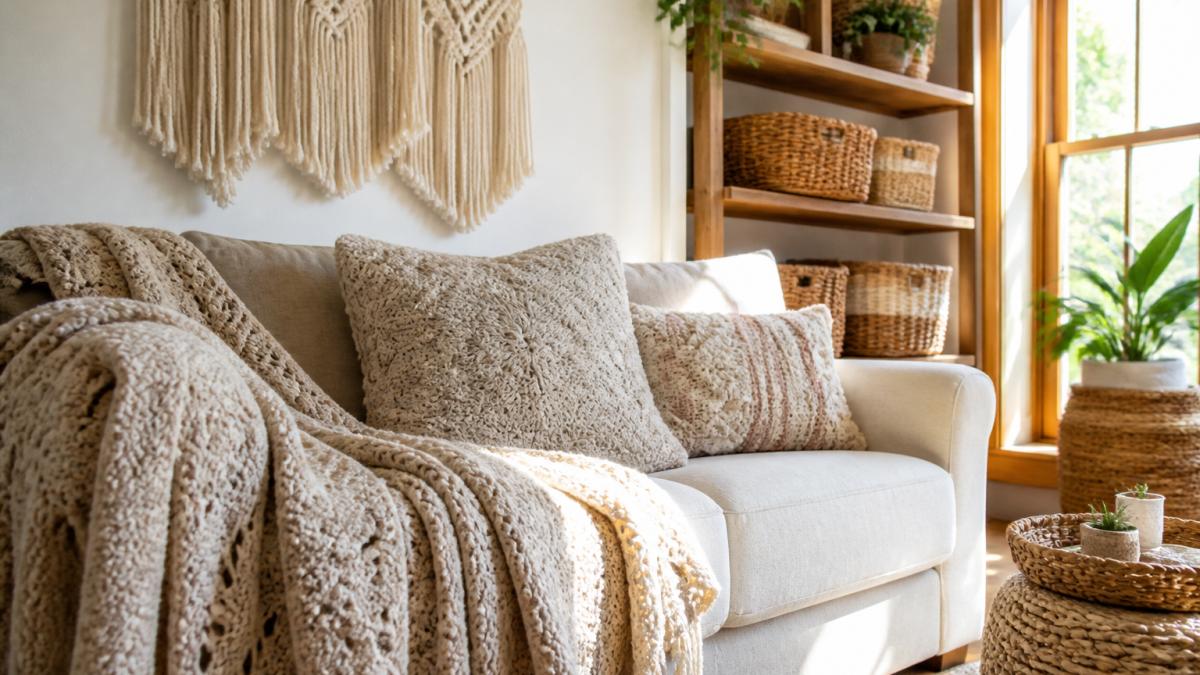
When you choose handmade, you're choosing quality over quantity. Artisan craftsmanship means attention to detail. Every stitch matters. Every material choice is deliberate.
These pieces age beautifully. They don't fall apart. They don't look dated. They become part of your home's character. A handcrafted crochet throw blanket becomes a family heirloom. A macramé wall hanging becomes a conversation piece.
The financial case is straightforward:
- Lower replacement costs over time
- Potential resale value
- Minimal maintenance
- Durability measured in decades, not years
The emotional case is equally strong:
- You support artisans and small businesses
- You reduce environmental impact
- You fill your space with intentional, beautiful objects
- You own something unique
| Factor | Fast Furniture | Sustainable Handmade |
|---|---|---|
| Initial Cost | Low | Higher |
| Lifespan | 2-5 years | 15-30+ years |
| Cost Per Year | High | Low |
| Resale Value | None | Moderate |
| Repair Possible | No | Yes |
| Environmental Impact | High | Low |
| Uniqueness | Mass-produced | One-of-a-kind |
Frequently Asked Questions
Does sustainable home decor last longer than mass-produced decor?
Yes. Sustainable pieces, especially handmade items like those from Stitched Creations, are typically constructed with better materials and more attention to detail. Mass-produced fast furniture often uses cheaper materials and weak joints that fail quickly. Handcrafted pieces using quality fibers and careful stitching withstand regular use for years or decades, making the upfront cost spread across a longer lifespan.
How can I tell whether a home decor brand is genuinely sustainable?
Look for transparency about materials, production methods, and labor practices. Genuine sustainable brands share their sourcing story and explain why materials matter. Watch for vague terms like 'eco-friendly' without specifics. Brands like Stitched Creations openly discuss their eco-friendly materials and handmade process. Ask questions: Where are materials sourced? Who makes the pieces? What certifications do they hold? Greenwashing hides behind pretty language without substance.
Is handmade home decor more sustainable than mass-produced alternatives?
Often, yes. Handmade pieces typically generate less waste during production, use higher-quality materials, and avoid the environmental cost of large-scale manufacturing and shipping. Artisan-made items also tend to last longer, reducing the need for replacements. However, sustainability depends on materials and practices. A handmade item using sustainable, non-toxic fibers and ethical labor practices is significantly more sustainable than mass-produced decor made from synthetic materials.
How can I decorate sustainably on a budget?
Start by investing in one or two quality, handmade pieces from makers like Stitched Creations rather than buying many cheap items. Mix sustainable finds with items you already own. Shop secondhand for vintage decor pieces with lasting appeal. Choose timeless designs over trendy styles so pieces stay relevant longer. Focus on materials that age well, like natural fibers and reclaimed wood. Quality over quantity means fewer purchases overall, saving money while reducing environmental impact.
Is sustainable home decor worth the cost? Yes. The math works. The quality works. The impact works. When you invest in handmade pieces from makers like Stitched Creations, you're not just buying decor, you're choosing durability, ethics, and beauty that lasts. Start with one piece. Build intentionally. You'll feel the difference immediately and see the financial sense over time.