 How-to
How to Create an Eco-Friendly Nursery Decor Space
Last Updated: October 26, 2026
Quick Summary
Eco-friendly nursery decor prioritizes non-toxic materials like organic cotton, natural wood, and plant-based dyes to reduce what your baby breathes, touches, and sleeps near during the 12-16 hours spent in the nursery each day. Choosing sustainable pieces from trusted brands like Stitched Creations creates a safe, beautiful space without compromising on style or budget.
- Babies spend 12-16 hours daily in the nursery, making non-toxic materials essential for their health and safety.
- Natural materials like organic cotton, linen, wool, and solid wood regulate temperature better and last longer than synthetics.
- You can build a sustainable nursery on any budget by prioritizing the sleep layer first, then adding care items and decor gradually.
- Set up the nursery 2-4 weeks before baby arrives to allow new furniture, paint, and textiles to air out and off-gas.
- Handmade pieces from Stitched Creations add warmth and personality while supporting eco-friendly, intentional nursery design.
Table of Contents
- Why Choose Eco-Friendly Nursery Decor
- Non-Toxic Nursery Decor Materials That Keep Babies Safe
- Natural Materials for Nursery Decor: Wood, Organic Textiles, and More
- Sustainable Nursery Ideas: Building a Thoughtful Room on Any Budget
- Nursery Decor Safety: What You Need to Know Beyond Materials
- Handmade and Artisan Pieces for a Personal Touch
- Start Building Your Eco-Friendly Nursery Today
- Frequently Asked Questions
Why Choose Eco-Friendly Nursery Decor
Creating a safe, beautiful nursery starts with one choice: prioritizing eco-friendly nursery decor. Discover trusted sustainable home decor brands that offer eco-friendly nursery options. It's about reducing what your baby breathes, touches, and sleeps near every day.
At Stitched Creations, we believe handmade pieces matter. Our crochet and macramé goods are made with eco-friendly materials and designed for lasting comfort and style.
Non-Toxic Nursery Decor Materials That Keep Babies Safe
Non-toxic materials are the foundation of a safe nursery. Your baby spends 12-16 hours a day there, face pressed against fabrics and hands exploring surfaces.
Look for these safer material choices:
- Organic cotton and linen, grown without synthetic pesticides or fertilizers
- Natural wood, untreated or finished with non-toxic sealers
- Wool and natural fibers, naturally flame-resistant without chemical treatments
- Plant-based dyes, instead of synthetic dyes that contain heavy metals
- Low-VOC or water-based finishes, instead of solvent-based paints and stains
Avoid materials treated with flame retardants, phthalates, or formaldehyde, these off-gas over time, especially in warm, enclosed spaces.
When shopping, ask sellers: What's this made from? How was it finished? Are there certifications?
Focus on these safer material choices when selecting items for your nursery.
| Material | Why It's Safer | What to Avoid |
|---|---|---|
| Organic cotton and linen | Grown without synthetic pesticides or fertilizers | Synthetic dyes with heavy metals |
| Natural wood | Untreated or finished with non-toxic sealers | Particleboard or plywood with formaldehyde |
| Wool and natural fibers | Naturally flame-resistant without chemicals | Synthetic flame retardants |
| Plant-based dyes | Safe color option for textiles | Synthetic dyes |
| Low-VOC or water-based finishes | Safer for air quality | Solvent-based paints and stains |
Natural Materials for Nursery Decor: Wood, Organic Textiles, and More
Natural materials create a calming environment and age beautifully, so you can pass pieces down or repurpose them later.
Natural wood is the gold standard for nursery furniture: durable, non-toxic, and timeless. Look for solid wood cribs, dressers, and shelving finished with non-toxic stains or left unfinished.
Organic textiles matter just as much. Bedding, blankets, and wall hangings should be organic cotton, linen, or wool, they breathe better than synthetics and don't trap heat like polyester.
Natural fibers also offer practical benefits:
- Regulate temperature better than synthetics
- Reduce dust and allergen buildup
- Soften with washing instead of pilling
- Last years longer with proper care
Wall coverings matter too. Choose low-VOC or eco-friendly paint, or wallpaper made from natural materials like grasscloth or paper.
Sustainable Nursery Ideas: Building a Thoughtful Room on Any Budget
You don't need a fortune to create a sustainable nursery. Explore whether sustainable home decor is worth the cost for your family's needs and budget. Prioritize the pieces your baby uses most, then build gradually. This checklist helps you decide what to buy new, reuse, or skip.
The Prioritized Purchasing Checklist
Think in three layers, sleep, care, and ambiance, and spend in that order.
Layer 1: Sleep (highest priority)
- Crib mattress: Choose a firm, organic or low-toxin mattress that fits snugly. This is the surface your baby touches for 12-16 hours a day.
- Fitted sheets: Two or three organic cotton sheets are enough. Skip bumpers, pillows, and loose blankets.
- Sleep sack: A lightweight, natural-fiber sleep sack replaces loose blankets safely.
- Crib: A solid wood crib finished with non-toxic sealers. If buying new is out of reach, a secondhand solid wood crib in good condition is a smart choice, just verify it meets current safety standards and has all original hardware.
Layer 2: Care (daily use)
- Changing table or dresser with a changing pad: A solid wood dresser that converts to storage later outlasts a dedicated changing table.
- Washable rug or mat: A small natural-fiber rug near the changing area is easier to clean than wall-to-wall carpet.
- Storage baskets: Woven natural fiber baskets keep clutter down and are easy to wipe clean.
Layer 3: Ambiance (decor and comfort)
- Wall color: Low-VOC or zero-VOC paint in a soothing, nature-inspired shade.
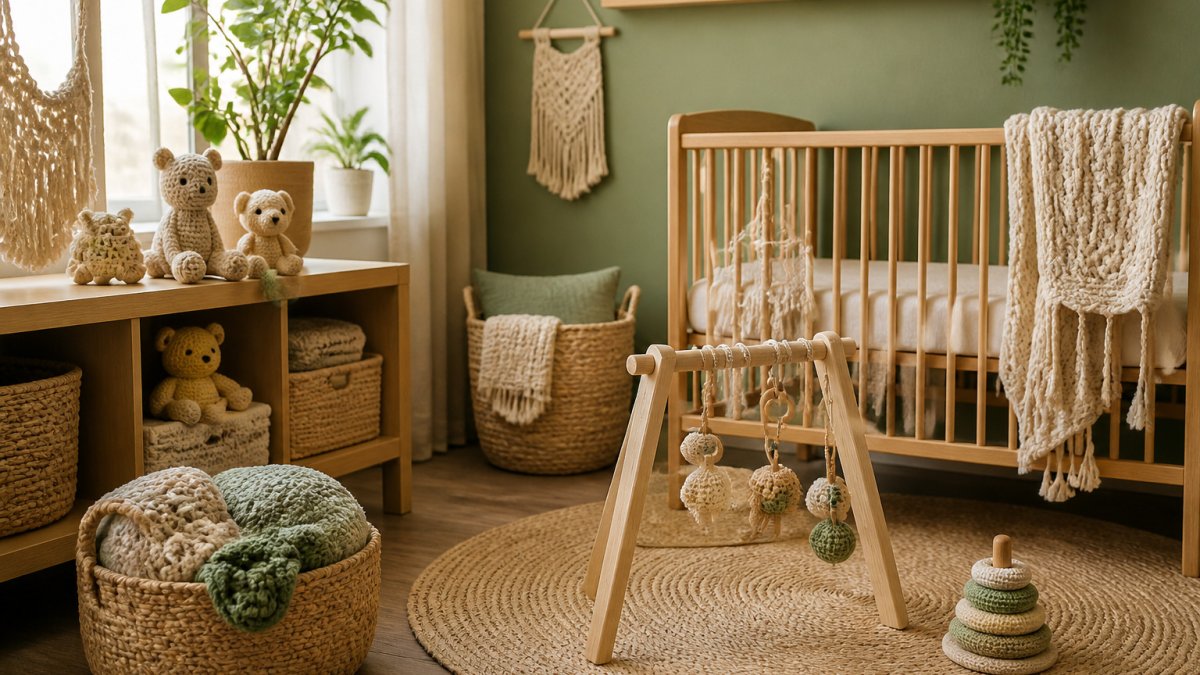
- Wall hangings: A handmade macramé wall hanging or crochet wall decor from Stitched Creations adds warmth.
- Blankets: A handmade baby essential from Stitched Creations is a thoughtful addition to the nursery.
- Plants: One or two easy-care plants placed out of reach can support air quality, but they are optional.
Budget Tiers: Where to Spend and Where to Save
You can build a safe, sustainable nursery at three rough budget levels, just never compromise on the sleep layer.
Tier 1: Thrifty (reuse and secondhand first)
- Source a secondhand solid wood crib and dresser from consignment shops or online marketplaces. Inspect for stability, missing hardware, and recalls.
- Use hand-me-down organic cotton sheets and sleep sacks if they are in good condition.
- Make your own wall art or use a single handmade piece from Stitched Creations as the focal point.
- Choose zero-VOC paint and paint one accent wall instead of the whole room.
Tier 2: Moderate (mix new and reused)
- Buy a new organic or low-toxin crib mattress, this is the one item worth buying new.
- Pair it with a secondhand solid wood crib and a handmade baby essential from Stitched Creations.
- Add a natural fiber rug and woven storage baskets.
- Use low-VOC paint throughout and one handmade macramé wall hanging.
Tier 3: Invest (buy well once)
- Choose a new solid wood crib and dresser finished with non-toxic sealers.
- Select an organic mattress and two to three organic cotton sheet sets.
- Add handmade pieces from Stitched Creations to create a cohesive, long-lasting look.
- Finish with zero-VOC paint and a washable natural fiber rug.
Smart Ways to Save Without Compromising Safety
- Buy secondhand for furniture, new for mattresses. Wood furniture off-gasses less over time and can be refinished; mattresses are best purchased new for hygiene and safety.
- Choose pieces that adapt. A dresser with a removable changing pad becomes storage; a handmade blanket becomes a toddler comfort item; a macramé wall hanging moves to another room later.
- Start with one handmade focal piece. A single Stitched Creations home decor piece can anchor the room's style.
- Repurpose what you have. A sturdy bookshelf or basket from elsewhere in your home can serve the nursery with a fresh coat of zero-VOC paint.
EPA guidance on indoor air quality emphasizes that reducing chemical exposure early in life matters. Every non-toxic choice you make contributes to a healthier environment for your baby.
Nursery Decor Safety: What You Need to Know Beyond Materials
Safety goes deeper than material choice. These practical steps, furniture anchoring, crib setup, cord management, and airing out a new room, pair with sustainable decor.
Anchor Every Piece of Furniture
Anchor any dresser, shelving unit, or changing table taller than a few feet to the wall with anti-tip straps or brackets. Babies pull up earlier than many parents expect, and a lightweight dresser can tip. Use the included hardware or buy a safety strap kit, a one-time step that takes minutes and prevents the most common nursery furniture injury.
Set Up the Crib Correctly
- Firm mattress, snug fit: The mattress should be firm and fit so tightly that you cannot fit more than two fingers between the mattress and the crib frame.
- No bumpers, pillows, or loose blankets: Even organic ones pose suffocation risks. A fitted sheet and a sleep sack are all your baby needs.
- Lower the mattress as your baby grows: Move the mattress to the lowest setting before your baby can sit up.
- Check for recalls: Before using a secondhand crib, verify it meets current safety standards and has not been recalled.
Manage Cords and Small Parts
- Cords: Keep monitor cords, lamp cords, and blind cords at least three feet away from the crib. Use cord covers or clips to secure them to the wall.
- Small parts: Wall art, decorative hooks, and shelf brackets should be secured so they cannot fall into the crib. Avoid decor with small removable pieces within reach.
- Window treatments: Choose cordless blinds or secure cords out of reach.
Ventilation and Timing Before Baby Arrives
New furniture, paint, and textiles release chemicals for weeks or months. Set up the nursery 2-4 weeks before your baby arrives so the room can air out.
- Paint first: Paint at least two weeks before the due date, then ventilate daily.
- Air out new furniture and textiles: Unpack and assemble furniture early, and wash new sheets, blankets, and sleep sacks before use. Handmade pieces from Stitched Creations should also air out in a well-ventilated room for a few days before use.
- Ventilate daily: Open windows for 15-30 minutes a day when weather allows, even in cooler months. Use a fan to circulate air.
- Test the room: Spend time in the nursery before your baby arrives. If you notice a strong smell from paint or furniture, continue ventilating and consider adding an air purifier with a HEPA filter.
Temperature, Humidity, and Dust
- Temperature: Aim for 68-72°F. A room that is too hot increases SIDS risk. Natural fibers help regulate temperature better than synthetics.
- Humidity: Keep humidity between 30% and 50% if you use a humidifier; clean it regularly to prevent mold.
- Dust: Natural fibers trap less dust than synthetics. Hard flooring with a washable rug is easier to keep clean than wall-to-wall carpet. Minimize clutter and decorative items that collect dust.
A Simple Pre-Baby Safety Walkthrough
Two weeks before your due date, do a final walkthrough:
- Tug on every anchored furniture piece to confirm it is secure.
- Check that all cords are at least three feet from the crib and secured.
- Confirm the crib mattress is firm and snug, with no bumpers or loose bedding.
- Verify wall art and shelves are secure and free of small parts within reach.
- Open windows and run a fan for a few hours, then spend time in the room to check for odors.
Watch out: Never use crib bumpers, pillows, or blankets inside the crib, even if they're made from organic materials. These pose suffocation risks regardless of what they're made from.
Consumer Product Safety Commission guidelines on nursery furniture provide detailed safety standards for cribs and other nursery items. Review these before purchasing furniture.
Handmade and Artisan Pieces for a Personal Touch
Handmade decor transforms a nursery from generic to genuinely yours, bringing intentionality to the space.
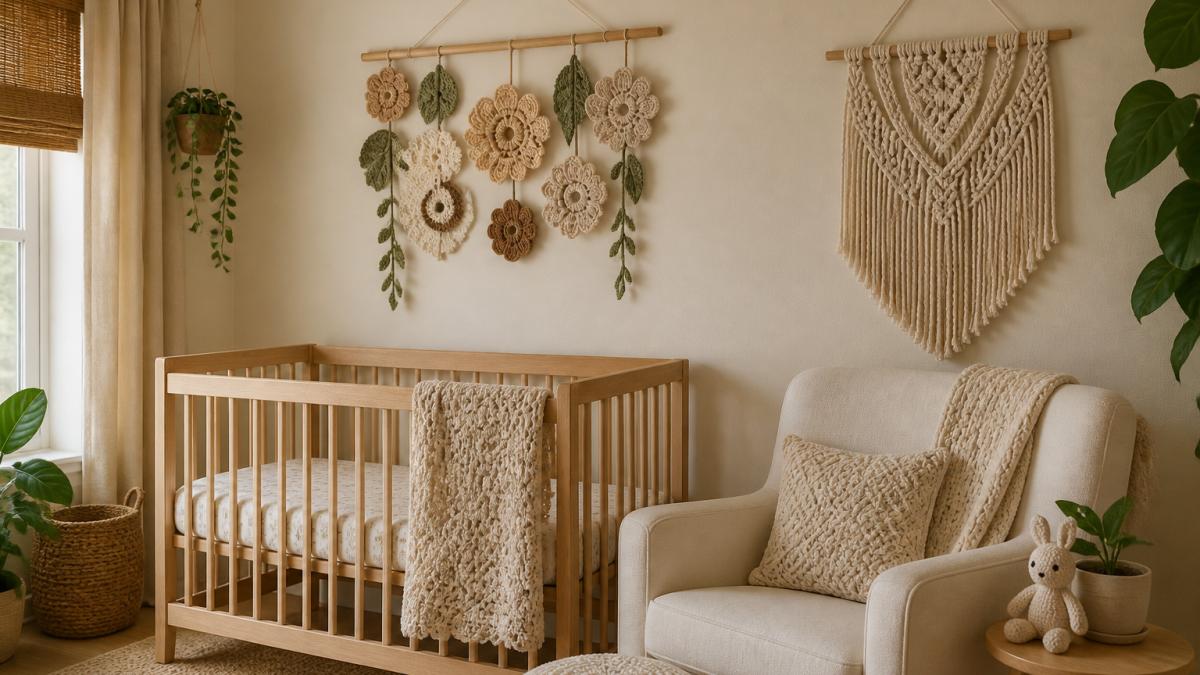
Stitched Creations is a woman-owned studio offering handmade crochet and macramé goods, including home decor, made with eco-friendly materials.
Handmade pieces can add warmth and style to everyday life. Learn how crib name signs combine personalized safety and style for your nursery.
Start Building Your Eco-Friendly Nursery Today
Creating an eco-friendly nursery decor space is about conscious choices, one piece at a time.
This approach works on any budget.
Consumer Product Safety Commission guidelines on nursery furniture provide detailed safety standards for cribs and other nursery items.
Your baby deserves a room that's safe, beautiful, and made with care.
Building a beautiful, safe nursery doesn't have to be complicated.
Frequently Asked Questions
Why should you choose eco-friendly nursery decor?
Eco-friendly nursery decor can be one way to make thoughtful choices for a baby's room. Stitched Creations offers handmade crochet and macramé goods made with eco-friendly materials, including home decor and baby essentials.
What materials are best for non-toxic nursery decor?
Stitched Creations offers handmade crochet and macramé goods made with eco-friendly materials, including home decor and baby essentials.
How can I make a nursery more sustainable without replacing everything?
Start by reusing and repurposing what you already have, then gradually swap items as they wear out. Stitched Creations offers handmade crochet and macramé goods, including home decor and baby essentials.
How do I know if nursery decor is actually safe for babies?
For handmade pieces, Stitched Creations offers small-batch crochet and macramé goods made with eco-friendly materials.