 How-to
Why Natural Cotton Makes the Best Macrame Plant Hanger
Quick Summary
Natural cotton is soft, ties into clean, even knots, and has a neutral color that fits most indoor decor. It suits indoor plant hangers best, while outdoor use calls for a weather-resistant cord.
- Natural cotton feels soft and is gentle to work with.
- It ties into clean, even knots that look polished.
- Choose cord thickness based on the weight of your full, watered pot.
- Cotton absorbs moisture and fades in sun, so keep outdoor hangers covered or shaded.
- Dust with a soft brush and spot clean; let the hanger air dry fully before rehanging.
Table of Contents
- What Makes Natural Cotton a Strong Choice for Plant Hangers
- Natural Cotton Versus Jute and Other Fibers
- Choosing the Best Cord for Macrame Plant Hangers
- Cord Thickness and How It Affects Pot Weight
- Indoor Use, Outdoor Exposure and Sustainability
- How to Clean and Care for a Cotton Macrame Hanger
- Ordering Your Stitched Creations Plant Hanger
- Frequently Asked Questions
Why Natural Cotton Makes the Best Macrame Plant Hanger
Last Updated: October 31, 2026
What Makes Natural Cotton a Strong Choice for Plant Hangers
Natural cotton is one of the most popular materials for macrame plant hangers, and for good reason. Our guide to the benefits of macrame decor explains why this style appeals to so many homes. It is soft on the hands, easy to knot, and looks right at home in almost any room. At Stitched Creations, we work with natural cotton because it balances comfort with a relaxed look.
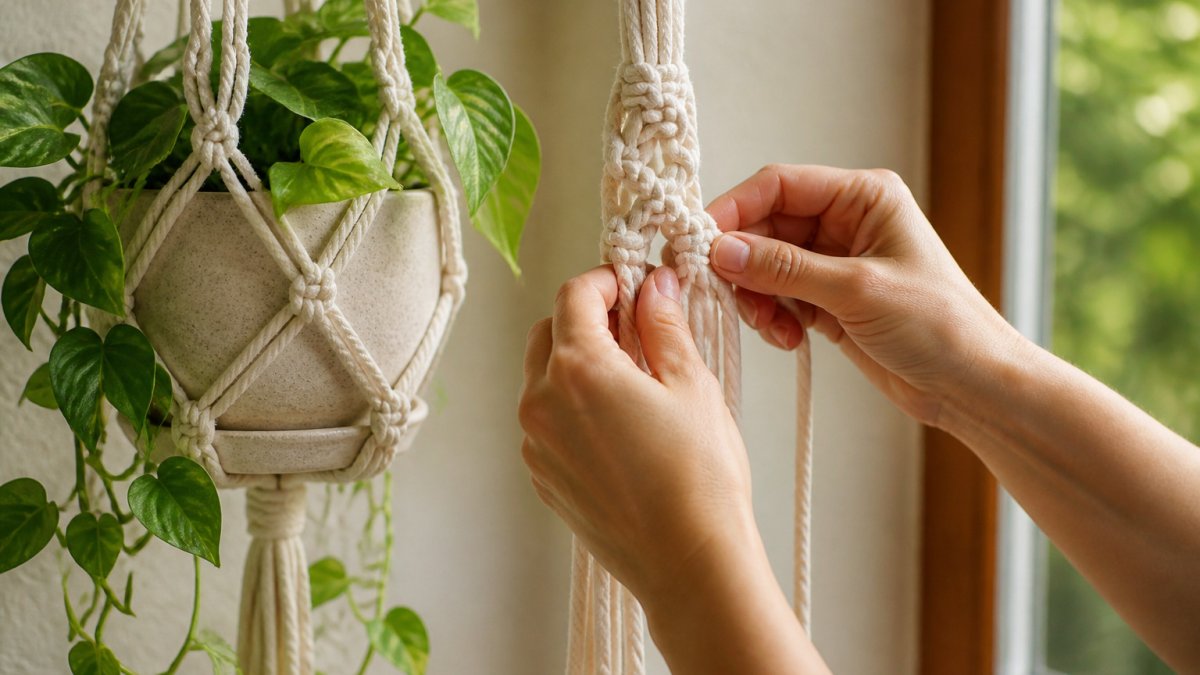
Hands tying a cream-colored cotton knot beside a trailing pothos planter in soft window light make the appeal clear. You can see finished examples in our handmade macrame wall art pieces. The cord is easy to work with, and the finished piece looks warm and natural.
Here is why many people choose natural cotton:
- It feels soft and is gentle to work with
- It ties into clean, even knots
- It has a neutral, natural color that fits most decor
- It comes from a plant fiber, which many buyers prefer
Natural cotton is not perfect, though. It can hold moisture, so it needs care around wet soil. We cover that in the sections below.
Natural Cotton Versus Jute and Other Fibers
Cotton is rarely the only fiber on the table. Most makers weigh it against jute, hemp, and synthetic cord, and the right pick depends on where the hanger will live and how it will be handled.
Natural cotton versus jute. Jute is stiffer and has a rougher, more rustic hand. It holds a chunky, farmhouse look well, but the coarse fibers can feel scratchy while you knot and may shed onto light walls. Cotton is softer, bends more easily, and produces cleaner, more even knots. For a polished indoor hanger, cotton is usually the easier material to work with; jute suits a deliberately rustic style and heavier, chunkier designs.
Natural cotton versus hemp. Hemp is stronger and more abrasion-resistant than cotton, and it has a slightly rougher, earthier texture. It resists moisture better than cotton, which makes it a reasonable choice for a covered porch. The trade-off is feel: hemp is firmer under the fingers and less forgiving on tight, decorative knots. Cotton wins on softness and knot quality; hemp wins on toughness.
Natural cotton versus synthetic cord. Synthetic cord, such as nylon or polyester, does not absorb water the way cotton does and holds up better to rain and persistent humidity. It is also stronger for its thickness. But it feels slicker, can be harder to knot tightly, and does not have the natural look many buyers want. For indoor decor, cotton's softness and appearance usually matter more than weather resistance.
Natural versus recycled cotton. Recycled cotton cord is made from recovered textile waste and can reduce the demand for new fiber. It behaves much like conventional cotton for knotting, though color and texture can vary more from batch to batch.
The short version: choose natural cotton for softness, clean knots, and a warm indoor look; choose jute or hemp for a rougher, tougher finish; choose synthetic cord only when weather exposure is the deciding factor.
Choosing the Best Cord for Macrame Plant Hangers
The best cord depends on your pot and your space. For most home plants, a soft, well-twisted cotton cord gives you the easiest knots and the cleanest look.
When you shop, check for these things:
- A tight, even twist with no loose strands
- A cord size that matches your pot weight
- Natural, undyed color if you want a neutral look
- Clear product details about the fiber content
Cord Thickness and How It Affects Pot Weight
Cord thickness matters more than most people expect. Thin cord looks delicate but can stretch or weaken under a heavy pot. Thicker cord is stronger and holds its shape.
- Thinner cord suits small, light pots and tabletop plants
- Medium cord works for most standard indoor pots
- Thicker cord is better for larger, heavier planters
Pot weight includes the soil and water, not just the empty pot. A wet, full pot can weigh much more than you expect, so choose a cord that is sturdy enough for the heaviest version of your plant.
The table below sums up how cord thickness should match the planter you plan to hang.
| Cord thickness | Best for | Key note |
|---|---|---|
| Thinner cord | Small, light pots and tabletop plants | Looks delicate but can stretch under weight |
| Medium cord | Most standard indoor pots | Balances strength and appearance |
| Thicker cord | Larger, heavier planters | Stronger and holds its shape better |
Indoor Use, Outdoor Exposure and Sustainability
Natural cotton is at its best indoors, where humidity and sun are easy to manage. Outdoors, the fiber faces three stressors that shorten its life: moisture, ultraviolet light, and repeated wet-dry cycles.
Moisture. Cotton absorbs water. A hanger left out in rain or persistent humidity stays damp longer than a synthetic cord would, and damp cotton is more prone to mildew and fiber breakdown. Wet soil in the pot makes this worse, because moisture wicks into the cord where it touches the planter.
Sun exposure. Ultraviolet light gradually weakens cotton fibers. A hanger in direct afternoon sun will fade and lose strength faster than one in shade. If you want a cotton hanger outside, a covered porch or a shaded spot is far kinder than full sun.
When to choose a weather-resistant cord instead. If the hanger will be rained on, sit in steady humidity, or hang in strong sun, a synthetic or weather-resistant cord is the more practical choice. Cotton is a decor material, not an all-weather one. If you're weighing value and sustainability, see whether our handmade pieces are worth the price. Bring cotton hangers inside during storms and long wet spells.
A cautious approach to hanging limits. No cord is unlimited. Pot weight includes soil and water, and a fully watered pot can be far heavier than the empty one. Before hanging a finished piece, test it low and close to the floor with the pot in place, then raise it only after it holds steady. Check the knots and the ceiling hardware, not just the cord, and re-check after the first watering. If anything stretches or slips, move to a thicker cord or a lighter pot.
Sustainability. Cotton is a renewable plant fiber. Natural, undyed cord avoids some of the dyes used in colored cord, and recycled cotton can lower demand for new fiber. Buyers who care about sourcing can ask whether a cord is conventional, organic, or recycled, and look for clear fiber-content details on the product. Keep expectations realistic: cotton is a strong indoor choice, but it is not built for constant outdoor exposure.
How to Clean and Care for a Cotton Macrame Hanger
Cotton needs gentle care to stay looking fresh. Dust it with a soft brush or a handheld vacuum on low. For more detail, see our guide to cleaning delicate handmade macrame items. If it gets dirty, spot clean with a damp cloth and let it air dry fully before you hang it again.
- Remove the hanger from the plant before cleaning
- Use only lukewarm water and a mild soap if needed
- Air dry away from direct heat
- Avoid soaking, which can weaken knots and cause odor
Common mistake: putting a damp cotton hanger back on a wet pot. Let both dry first to prevent mildew.
Ordering Your Stitched Creations Plant Hanger
Ready to add a handmade hanger to your space? Pricing depends on the size, style, and quantity you choose, so please check the Stitched Creations website for current prices or to request a quote. Our ordering FAQ walks you through the process and what to expect.
Frequently Asked Questions
Is natural cotton strong enough for a plant hanger?
Natural cotton works well for most indoor plant hangers because a tightly twisted or braided cord holds its shape under ordinary pot weights. Strength depends on the cord's thickness and how the knots are tied, not only on the fiber. For heavier pots, choose a thicker, tightly constructed cord and check that the anchor point can carry the full weight of the plant, soil and water. Cotton's softness also makes it easier to tie secure knots that stay put over time.
Can cotton macrame plant hangers be used outdoors?
Cotton is best kept indoors or under a covered porch. Prolonged rain, humidity and direct sun can weaken natural cotton and encourage mildew over time. If you want to hang a plant outside, keep the hanger sheltered from weather, bring it in during wet seasons, and check the cord regularly for fraying or discoloration.
How do you clean a cotton macrame plant hanger?
Remove the plant and soil first, then gently shake or brush off loose dirt. Hand wash the cord in cool water with a mild, fragrance-free soap, rinse thoroughly and let it air dry completely away from direct heat. Avoid soaking the knots for long periods, since trapped moisture can cause odor or rot. Dry the hanger fully before replanting to protect both the cord and the plant.
Is cotton or jute better for macrame plant hangers?
Cotton is softer, easier to knot and gives a smoother finish, which suits indoor decor and most beginner projects. Jute is coarser, more rigid and has a rustic look, but it can be less comfortable to handle and may shed fibers. Both are natural fibers, so the better choice depends on your look, your skill level and where the hanger will live.
Natural cotton is a smart, versatile choice for macrame plant hangers. It is soft, easy to style, and works beautifully indoors. Choose the right cord thickness for your pot, care for it gently, and it will stay a lovely part of your home for years.