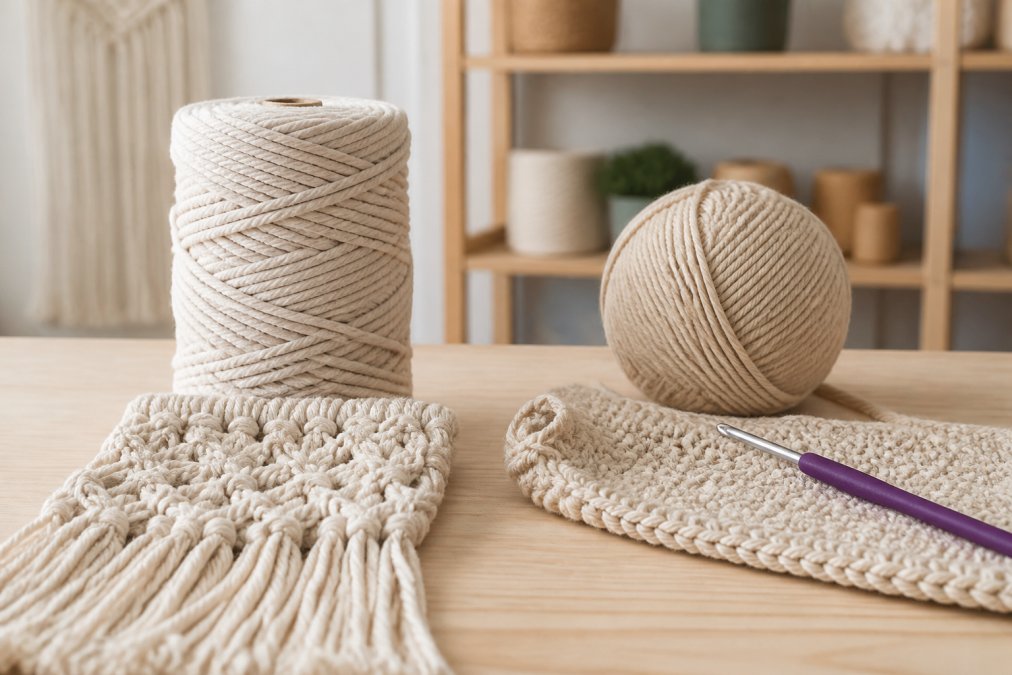
 comparison
Macrame Cord vs Crochet Yarn: Key Differences
Table of Contents
- Defining Macrame Cord vs. Crochet Yarn
- Macrame Cord vs. Yarn Durability: What Lasts Longer?
- The Best Macrame Cord for Beginners (and What to Avoid)
- Crochet Hook Sizes for Thick Cord: A Practical Guide
- Cost-per-Meter Analysis and Environmental Impact
- Frequently Asked Questions
Last Updated: September 22, 2026
Defining Macrame Cord vs. Crochet Yarn
The difference between macrame cord and crochet yarn comes down to structure and purpose: macrame cord is a thick, tightly constructed rope made for knotting, while crochet yarn is a softer, thinner strand made for looping with a hook. This guide from Stitched Creations breaks down exactly how each material behaves, so you can pick the right one before you buy.
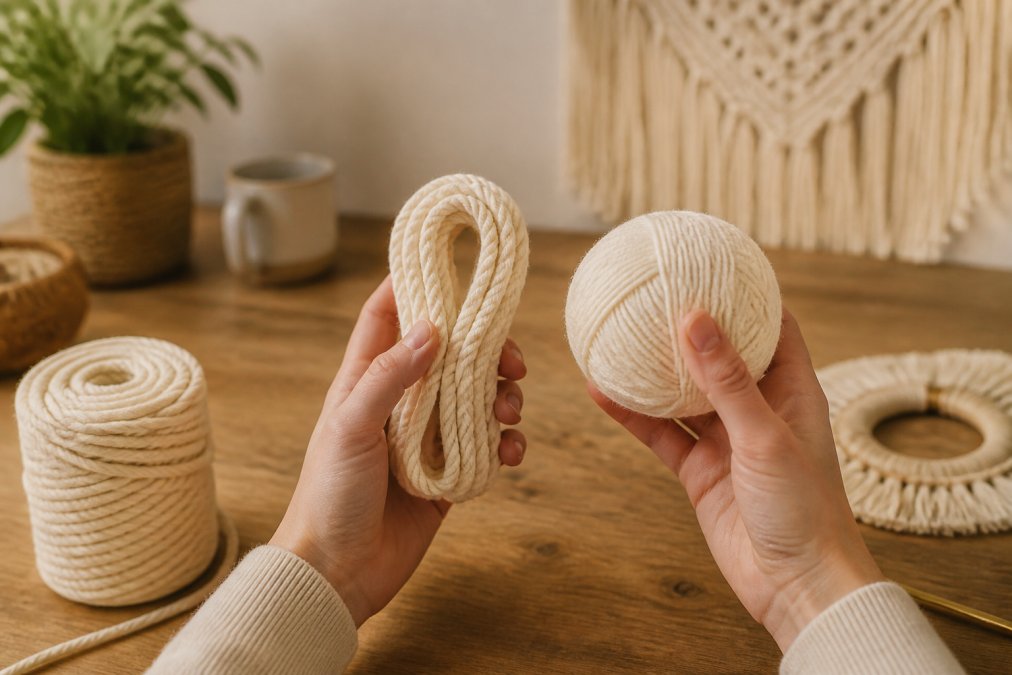
Macrame cord is a heavy, rope-like material built to hold firm knots without slipping. Crochet yarn is a flexible, spun strand designed to bend smoothly around a hook.
That single structural gap shapes everything else: the tools you need, the stitches or knots you can make, how long a finished piece lasts, and how you clean it. Below, we cover the full comparison, plus a table you can scan in seconds.
(/how-to-choose-sustainable-yarn-for-crochet-projects) || --- | --- | --- | | Main tool | Hands | Crochet hook | | Core technique | Knotting | Looping stitches | | Typical thickness | Thick, rope-like | Thin to medium | | Best for | Wall hangings, plant hangers | Garments, blankets | | Stretch | Low | Moderate to high |
Macrame Cord vs. Yarn Durability: What Lasts Longer?
Macrame cord generally outlasts crochet yarn in structural pieces, while yarn wins for soft, flexible items. Durability depends on fiber, construction, and how the finished piece gets used.
Tensile Strength and Structural Integrity
Cord's tight construction gives it higher tensile strength, so it resists snapping under weight. This is why plant hangers and wall pieces hold up for years. Yarn's looser spin prioritizes softness over load-bearing, so it suits items that don't carry heavy weight.
Washability and Long-Term Maintenance
Here's the practical breakdown most guides skip:
- Cotton cord and cotton yarn: Hand wash in cool water with a mild detergent, then press water out in a towel and lay flat to dry. Cord may take a full day or more to dry through; yarn dries faster because air moves through its looser spin.
- Wool yarn: Use cool water and avoid wringing, which causes felting. Lay flat to dry away from direct heat. Wool's elasticity means a garment can bounce back after washing, but a knotted wool piece will not hold its shape the same way.
- Synthetic cord and yarn: These tolerate a gentle machine cycle better, but friction causes pilling on yarn and a slight sheen change on cord. Air-drying still extends the life of both.
At Stitched Creations, we design our small-batch pieces with these care realities in mind, choosing cord for structure and yarn for softness so each finished item holds up to the way it's actually used.
The Best Macrame Cord for Beginners (and What to Avoid)
The best macrame cord for beginners is a soft, three-ply cotton cord in a medium thickness. It holds knots without fighting back, and it's forgiving when you need to undo a mistake.
Crochet Hook Sizes for Thick Cord: A Practical Guide
Thick cord needs a much larger hook than standard yarn, and skipping up in size is the fix. When you crochet with cord, choose a hook big enough that the cord slides without squeaking or splitting.
Cost-per-Meter Analysis and Environmental Impact
Cost per meter and environmental impact both favor buying with intention rather than volume. Cord often costs more per meter than yarn because it uses more fiber per length, but a single cord project may use far less total material than a large crocheted blanket.
A Simple Cost-per-Meter Framework
Most crafters compare prices by the skein or spool, which hides the real number. Here's a framework that works for any material:
- Find the total length. Check the label for yards or meters per skein or spool.
- Divide price by length. This gives you cost per yard or meter, the only fair comparison across package sizes.
- Estimate project usage. A small wall hanging might use a few dozen yards of medium cord, while a crocheted blanket can use well over a thousand yards of yarn. Multiply your cost per yard by your estimated usage.
- Add tool and time costs. Cord work needs no hook, but it is slower per inch. Yarn work needs hooks in multiple sizes, and a large project may take many hours.
Environmental Impact: What Actually Matters
On sustainability, natural fibers like cotton and hemp break down more readily than synthetics, and organic or recycled options reduce water and chemical use. The Textile Exchange's materials reporting tracks how fiber choices affect land, water, and carbon. The FTC guidance on textile and fiber labeling explains what fiber claims on a label actually mean, so you can spot vague marketing.
A few practical points competitors tend to miss:
- Conventional cotton is thirsty. It takes a lot of water to grow, so organic or recycled cotton reduces the footprint of an otherwise natural fiber.
- Hemp needs less water and fewer inputs than cotton, which is why it shows up in more eco-focused cord lines.
- Synthetics last a long time but shed microfibers in the wash. A mesh laundry bag or hand washing cuts that shedding.
- The longest-lasting piece is the most sustainable one. A well-made cord wall hanging that stays up for a decade beats a fast project that pills and gets tossed.
Frequently Asked Questions
Can I use crochet yarn for macrame?
You can, but the results will differ from projects made with macrame cord. Crochet yarn is thinner, softer, and has more drape, so it produces smaller knots with less definition. For wall hangings or plant hangers that need to hold weight, yarn alone will sag over time. If you want to try macrame with yarn, choose a bulky or super bulky weight and expect a finer, more delicate look. Stitched Creations Premium Cotton Yarn works well for small decorative knots, but for structural pieces, a dedicated macrame cord is the better choice.
Can you crochet using macrame cord?
Yes, crocheting with macrame cord is possible and popular for structured projects like baskets, bags, and plant pot covers. The key is matching your hook size to the cord thickness. A 5mm to 8mm cord typically needs a 10mm to 15mm crochet hook. Because cord is stiffer than yarn, your hands may tire faster, and the stitches will be larger and more open. Multi-purpose cords bridge the gap nicely for crocheters who want more structure than standard yarn provides.
What size crochet hook for macrame cord?
The right hook size depends on your cord diameter. For 3mm cord, try a 5mm to 6mm hook. For 5mm cord, use an 8mm to 10mm hook. For 8mm cord or thicker, a 12mm to 15mm hook works best. Always check your gauge with a small swatch first, because cord stiffness varies by fiber and ply count. If your stitches feel tight or your hand aches, go up one hook size.
Is macrame cord or yarn more durable?
Macrame cord generally wins on durability for structural projects. Its higher tensile strength, tighter twist, and thicker fiber diameter resist stretching and unraveling better than most yarns. Yarn, however, is more durable for items that need to bend, drape, and be washed frequently, like clothing and blankets. The best choice depends on the job: cord for wall hangings, plant hangers, and bags that hold weight; yarn for apparel, baby essentials, and anything that touches skin. Stitched Creations uses eco-friendly cotton yarn for soft, long-lasting wearables.
Does macrame cord shrink or behave differently than yarn when washed?
Yes, and the difference matters. Natural fiber macrame cord, especially cotton and hemp, can shrink 5% to 10% after the first wash and may stiffen as it dries. Synthetic cords hold their shape but can fray at cut ends. Crochet yarn, particularly wool and cotton blends, is designed to be washed and typically softens with each cycle. Always hand wash macrame pieces in cool water and air dry flat. For crochet garments and baby items, follow the yarn label and use a gentle cycle to protect stitch definition and drape.
Choosing between macrame cord and crochet yarn gets much easier once you know your project's job: structure or softness. Stitched Creations crafts premium, small-batch handmade crochet and macrame goods using eco-friendly materials, from cozy apparel to home decor and baby essentials, each piece made for lasting comfort. Shop now with Stitched Creations and bring warmth and style to your everyday life.