 How-to
Boho Nursery Decor Styling Tips for a Cozy Room
Quick Summary
Boho nursery decor works best with calm, earthy colors such as cream, sage green, and terracotta, kept low in saturation. Arrange the room into four zones for sleep, changing, feeding, and storage, and keep heavy decor and cords away from the crib.
- Pick one warm base color for the walls, such as cream, oatmeal, or soft sand.
- Use the 60-30-10 rule: 60% base color, 30% secondary tone, 10% accent.
- Keep at least 3 feet of clear space on the sides and foot of the crib.
- Leave about 2 feet of clearance behind the glider so it can recline safely.
- Hang macrame well away from the crib and avoid long cords or tassels near it.
Table of Contents
- Start With a Calm, Earthy Boho Nursery Color Palette
- Planning the Layout So Your Boho Nursery Stays Practical
- Building Your Boho Nursery Wall Decor Step by Step
- Layering Boho Nursery Textiles for Warmth and Texture
- Adding Macrame Nursery Decor Safely Above the Crib Zone
- Budget Options and Easy-Care Choices for Your Boho Nursery
- Order Your Handmade Nursery Pieces From Stitched Creations
- Frequently Asked Questions
Start With a Calm, Earthy Boho Nursery Color Palette
Last Updated: October 30, 2026
A boho nursery decor scheme works best when the colors feel like they came from nature. Warm neutrals, soft greens, and dusty clay tones make the room feel calm.
Choosing Warm, Muted Base Tones
Pick one warm base color for the walls. Cream, oatmeal, and soft sand are easy choices. They make a small room feel bigger and let your decor stand out.
Muted tones are the heart of this style. Think sage green, terracotta, and faded mustard. Keep the saturation low. Bright colors pull attention away from the natural materials you want to highlight.
Adding Accent Colors Without Overwhelming the Room
Choose two or three accent colors at most. Use them in small doses, like a throw blanket, a rug border, or a set of wall art.
Here is an easy rule to follow:
- 60% base color on walls and large furniture
- 30% secondary tone on textiles and rugs
- 10% accent color on small decor pieces
Handmade pieces, like a multi-colored baby blanket from Stitched Creations, can work well as a bridge between the base and accent colors.
Planning the Layout So Your Boho Nursery Stays Practical
A cozy boho room still has to work at 3 a.m. Feeding, changing, and sleep all depend on clear paths and reachable surfaces. Most nursery planners find that dividing the room into four zones, sleep, change, feed, and store, prevents the cluttered, furniture-packed look that makes small rooms feel tight.
Zone 1: The Sleep Zone
Place the crib first, on the longest uninterrupted wall if you can. Keep it away from windows, cords, and heavy hanging items. A common guideline is to leave at least 3 feet of clear space on the sides and foot of the crib so you can reach the baby without stepping over furniture. If the room is tight, a mini crib or a crib on casters buys back floor space.
Watch out: heavy wall decor placed directly above the crib can fall during the night. Keep anything hung in that zone light and well secured, and never run monitor cords or lamp cords within reach of the crib.
Zone 2: The Changing Zone
Put the changing table within arm's reach of the diapers, wipes, and a change of clothes, ideally on the same wall as the crib so you are not crossing the room in the dark. Macrame baskets are useful here for storing diapers and wipes within easy reach of the changing area, not above the crib. Keep one hand on the baby at all times, and skip changing-table decor that can be grabbed or pulled down.
Zone 3: The Feed and Rest Zone
A glider or rocking chair needs about 2 feet of clearance behind it so it can recline without hitting the wall. Add a small side table for a water bottle and burp cloth, and angle the chair toward the crib so you can see the sleep zone.
Zone 4: The Storage Zone
Use vertical storage such as open shelves, woven baskets, or a low dresser instead of floor piles. Keep the top of the dresser clear and anchor the dresser to the wall; furniture tip-over is a well-known nursery hazard. Our table decor accents are a good fit for shelves and dressers, where they finish the room without adding clutter.
Small and Awkward Rooms
- Put the crib on the longest wall and float the glider in a corner rather than centering it.
- Use a narrow dresser as both changing surface and storage to save a piece of furniture.
- Choose a round rug to soften corners and make a tight floor plan feel intentional.
- Mount shelves above the changing table, not above the crib, to keep the sleep zone clear.
Lighting and Windows
Layer lighting instead of relying on one overhead fixture: a dimmable ceiling light, a small lamp on the dresser, and a clip-on reading light on the glider. For windows, blackout curtains or a blackout shade help with naps and early mornings, and cordless window treatments are the safer choice in a nursery. Keep all cords secured and out of reach.
The four-zone layout comes down to a few concrete measurements and placements that keep the room practical at night.
| Zone | Key placement or measurement | Safety note |
|---|---|---|
| Sleep zone | At least 3 feet clear on the sides and foot of the crib | Keep heavy decor and cords out of reach |
| Changing zone | Within arm's reach of diapers, wipes, and clothes | Skip decor that can be grabbed or pulled down |
| Feed and rest zone | About 2 feet of clearance behind the glider | Angle the chair so you can see the crib |
| Storage zone | Vertical storage instead of floor piles | Anchor the dresser to the wall |
Building Your Boho Nursery Wall Decor Step by Step
Wall decor is where boho nursery decor really shines. Follow these steps to build a balanced look.
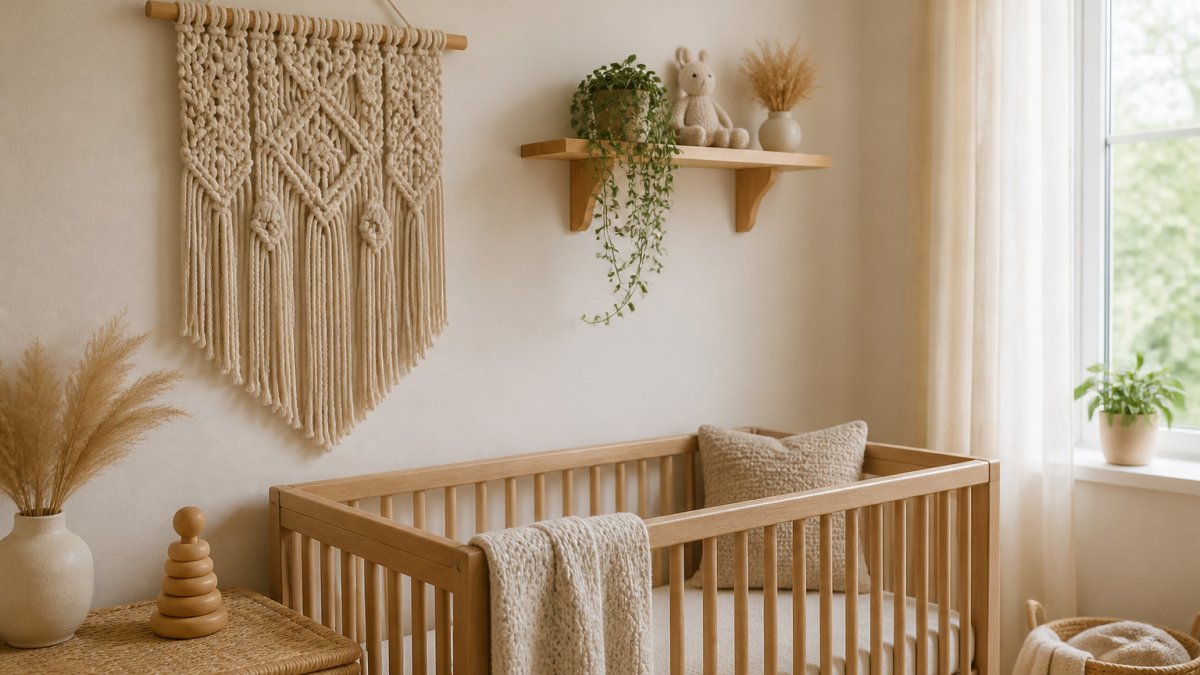
- Choose one focal point, such as a large macrame hanging or a feature wall.
- Add two or three smaller pieces at different heights.
- Mix textures, like woven, wood, and fabric.
- Step back and check the balance from the doorway.
- Adjust spacing until the wall feels relaxed, not crowded.
Our table decor accents are a good fit for shelves and dressers, where they finish the room without adding clutter.
Layering Boho Nursery Textiles for Warmth and Texture
Layered textiles make a nursery feel soft and inviting. Start with a rug, then add a crib blanket, and finish with a throw or pillow.
A multi-colored crib blanket can add warmth while matching an earthy palette. Choose lightweight layers for warm months and heavier ones for cooler nights.
Keep the crib itself simple. Use a fitted sheet and a single blanket that fits your baby's sleep guidelines. Extra bedding inside the crib can be unsafe.
Adding Macrame Nursery Decor Safely Above the Crib Zone
Macrame is a favorite boho material. It adds texture and a handmade feel to any room.
Hang macrame pieces well away from the crib. A good rule is to keep them at least several feet from where the baby sleeps. Use sturdy hooks and check them often. Avoid long cords or tassels that could reach into the crib.
Our heart-shaped macrame baskets are useful for storing diapers and wipes within easy reach of the changing area, not above the crib.
Budget Options and Easy-Care Choices for Your Boho Nursery
You do not need to spend a lot to get the look. The trick is to spend on the pieces you touch every day and save on the pieces that only add texture. Most parents find that a few key handmade pieces plus simple, washable basics carry the whole room.
Where to Spend and Where to Save
Spend on:
- The crib mattress and a fitted sheet that washes well
- A glider you will sit in nightly
- One or two handmade focal pieces, like a crib blanket or a macrame wall hanging
Save on:
- Baskets and storage, woven baskets from a thrift store or discount retailer work as well as boutique versions
- Wall art, a framed print or a simple woven piece costs far less than a gallery wall
- Rugs, a washable cotton rug in a muted tone reads boho without the price of a wool vintage rug
Affordable Swaps for the Boho Look
- Instead of a large macrame wall hanging, use a smaller handmade piece paired with a woven basket on a shelf.
- Instead of a vintage wool rug, choose a washable cotton or jute rug in cream or sage.
- Instead of a designer glider, use a simple rocking chair with a washable slipcover and a throw.
- Instead of new shelving, paint or stain a secondhand bookcase in a warm neutral.
Easy-Care Materials That Hold Up
Choose materials that wash well and hold up to daily use:
- Cotton and natural fibers are soft and easy to clean
- Solid wood shelves resist wear better than thin particleboard
- Washable throws make spit-up and spills less stressful
- Removable, machine-washable slipcovers on the glider and ottoman extend their life
Choose lightweight layers for warm months and heavier ones for cooler nights, and keep the crib itself simple, a fitted sheet and a single blanket that fits your baby's sleep guidelines. Extra bedding inside the crib can be unsafe.
A Simple Care Routine
- Wash blankets and throws on a gentle cycle and air-dry when possible to keep the handmade texture intact.
- Vacuum or shake out rugs weekly, and spot-clean spills right away.
- Dust macrame and woven pieces with a soft brush or a vacuum brush attachment.
- Check hooks and wall anchors monthly, especially above the changing area and shelves.
Pricing depends on the piece, quantity, and delivery details, so visit the Stitched Creations website for current prices or a quote.
Order Your Handmade Nursery Pieces From Stitched Creations
Ready to bring this style home? Visit the Stitched Creations website to shop handmade crochet and macramé pieces for your nursery.
Frequently Asked Questions
How do you style a boho nursery?
Start with a warm, muted color palette, then choose one focal point such as a handmade wall hanging or a textured rug. Layer soft textiles like knit blankets and woven baskets, and keep surfaces mostly clear so the room feels calm. Add a few natural wood accents and limit decor to what serves a purpose. Work in stages, living with each addition for a few days before you add the next piece, so the room grows into its look rather than feeling crowded. Handmade items from Stitched Creations, such as crocheted blankets and macrame hangings, fit this approach well.
What colors work best in a boho nursery?
Warm neutrals work best as a base: cream, oatmeal, sand, and soft terracotta. Sage green, dusty blue, and muted mustard make good accents because they stay gentle against the base tones. Avoid high-contrast color combinations that make the room feel busy. Use the same palette across textiles, wall decor, and rugs so the room feels cohesive. A simple three-color plan, with one base, one accent, and one highlight, keeps the nursery easy to update later.
How can you make a boho nursery feel cozy without clutter?
Choose fewer, larger pieces instead of many small ones. A single oversized woven wall hanging or a plush rug creates more warmth than a dozen tiny decor items. Store toys and clothing in closed baskets or bins, and rotate accessories seasonally. Keep the crib area clear of hanging items, and follow current safe sleep guidance from the American Academy of Pediatrics. Soft layers such as a knit throw on a chair add comfort without adding visual noise.
What natural materials work well in a boho nursery?
Cotton, wool, jute, and wood are common choices because they are durable and easy to clean. Look for washable textiles and finishes that are labeled as low-toxicity when possible. Cotton yarn is a practical choice for handmade wall hangings and blankets, since it can be machine washed on a gentle cycle. Solid wood accents such as a shelf or a small tray add warmth without bulk. Check care labels before purchase to confirm that a piece will hold up to frequent washing.