 listicle
Sustainable Fashion Alternatives for Everyday Wear
Table of Contents
- What Makes Fashion Sustainable? A Simple Breakdown
- The Benefits of Handmade Clothing Over Mass Production
- Eco-Friendly Fabrics for Everyday Wear
- How to Build a Capsule Wardrobe With Sustainable Pieces
- Care Tips for Handmade Crochet and Macramé
- Repair and Mending: Extending Garment Longevity
- Cost-Per-Wear: The Real Math Behind Sustainable Fashion
- Where to Find Sustainable Fashion Alternatives
- Frequently Asked Questions
Last Updated: September 25, 2026
What Makes Fashion Sustainable? A Simple Breakdown
Sustainable fashion is clothing designed, made, and worn in a way that reduces harm to people and the planet. That means lower-impact materials, fair treatment of workers, and garments built to last rather than be replaced each season.
This guide from Stitched Creations covers the sustainable fashion alternatives for everyday wear that actually hold up, from handmade pieces to organic cotton basics. We'll show you how to build a wardrobe you keep, not one you replace.
The contrast with fast fashion matters. Fast fashion is built on rapid trend cycles, synthetic fabrics, and low prices that hide real costs. Sustainable fashion alternatives for everyday wear take the opposite approach: fewer pieces, better materials, longer wear.
But first, here's what most guides get wrong. They focus on what to buy and skip how to keep it. The biggest environmental win isn't a new purchase. It's wearing what you already own for years longer.
The Benefits of Handmade Clothing Over Mass Production
Handmade clothing wins on durability, fit, and waste. A hand-crocheted sweater is made one at a time, so the maker can adjust tension, check seams, and fix flaws before the piece ships. Mass-produced garments move too fast for that level of attention.
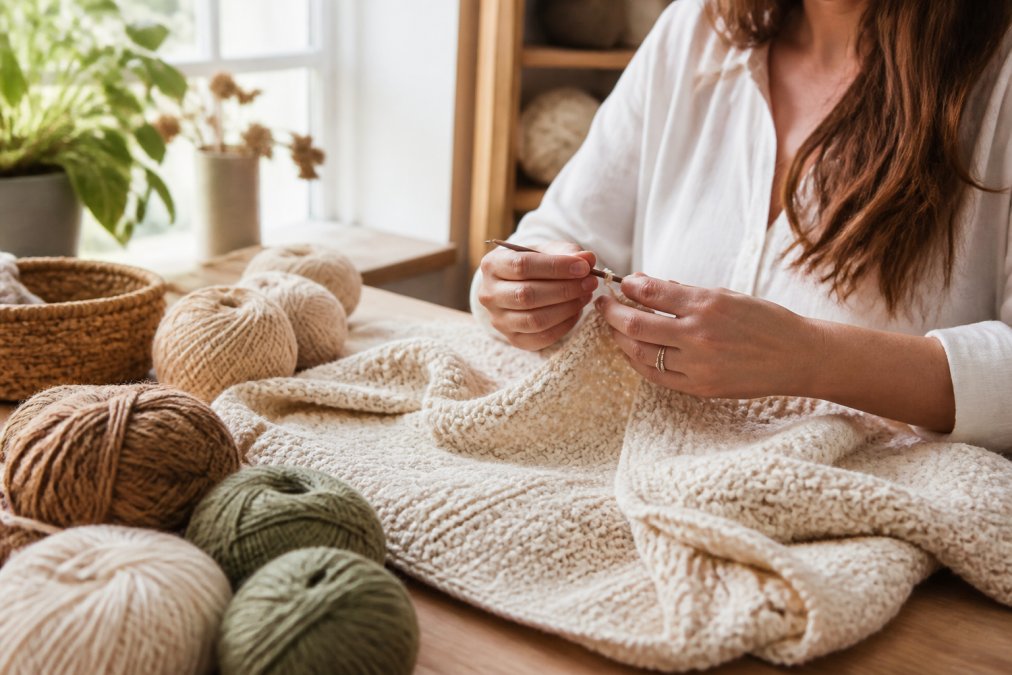
The benefits of handmade clothing go beyond the individual piece. Small-batch production creates less textile waste because makers produce to order rather than to forecast. It also supports independent artisans instead of anonymous factories.
A common mistake is assuming handmade means fragile. In practice, the opposite is often true. Handmade crochet and macramé pieces are built stitch by stitch, which means weak points get caught early.
Eco-Friendly Fabrics for Everyday Wear
The best eco-friendly fabrics for daily wear are natural fibers and recycled materials that hold up to repeated washing. Look for organic cotton, linen, hemp, bamboo, alpaca, and recycled polyester. Each behaves differently in the wash, and knowing those differences is what keeps a garment in rotation for years instead of months.
Here's how the main options compare on feel, best use, and the care routine that actually preserves them:
| Fabric | Feel | Best For | Care Level | Wash Routine |
|---|---|---|---|---|
| Organic cotton | Soft, breathable | Tees, baby items | Easy | Cold machine wash, tumble low |
| Linen | Cool, crisp | Summer wear | Medium | Cold hand wash, line dry |
| Hemp | Sturdy, textured | Durable basics | Easy | Cold machine wash, air dry |
| Bamboo | Silky, light | Undergarments | Delicate | Cold hand wash, lay flat |
| Recycled polyester | Smooth, stretchy | Activewear | Easy | Cold wash, no fabric softener |
| Alpaca | Warm, lightweight | Sweaters, wraps | Delicate | Hand wash cool, lay flat |
Natural fibers tend to biodegrade at end of life, while synthetic fabrics linger in landfills for decades. That's why low-impact materials matter for the environmental impact of any wardrobe. But the fiber alone doesn't determine the footprint. How you wash, dry, and store a garment often matters more than what it's made of. A cotton tee washed in hot water and tumble-dried every week will wear out faster than a recycled polyester top washed cold and air-dried.
A common pattern is that bamboo and alpaca degrade fastest when exposed to heat and agitation. Most practitioners find that a cold hand wash every few wears, followed by flat drying, adds years to these fibers. Hemp and linen, by contrast, get softer with each wash and can handle a gentle machine cycle.
Watch for greenwashing. A label that says "eco-friendly" means little without a certification behind it. FTC Green Guides on environmental marketing claims set the standard for what brands can legally claim in the United States. Look for third-party certifications rather than marketing language. Common ones to know include GOTS (Global Organic Textile Standard) for organic cotton, OEKO-TEX Standard 100 for chemical safety, and B Corp certification for overall social and environmental performance. A brand that lists a certification number you can verify is more trustworthy than one that uses vague terms like "natural" or "green."
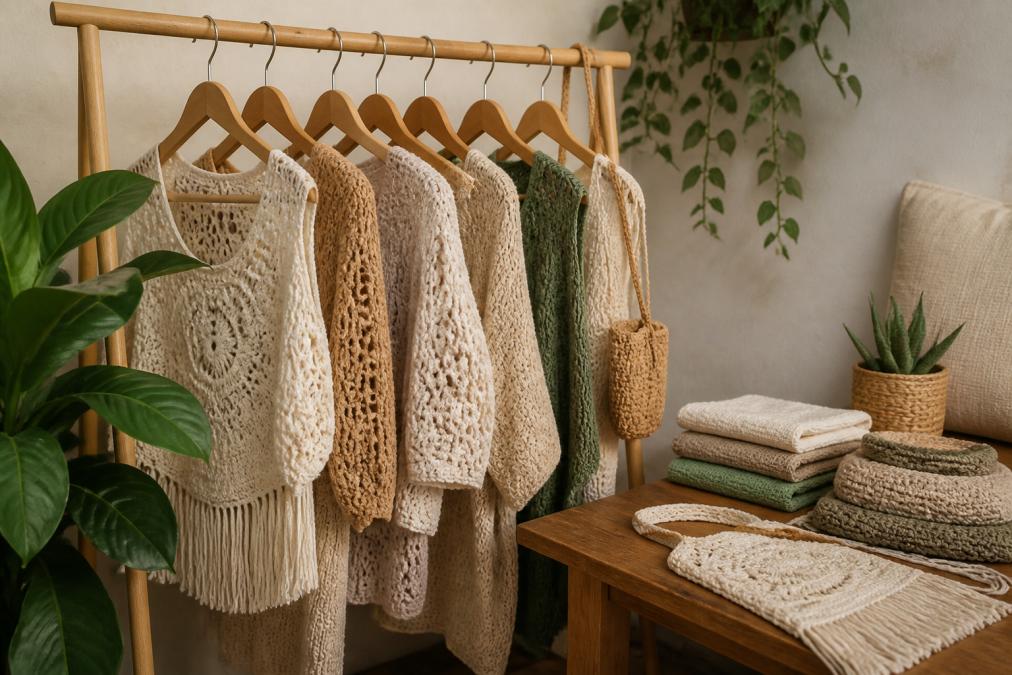
At Stitched Creations, our handmade crochet and macramé pieces use organic cotton and other low-impact fibers chosen for everyday durability. Because we make each piece in small batches, we can tell you exactly what fiber is in it and how to care for it, which is the transparency that mass-market labels rarely offer.
How to Build a Capsule Wardrobe With Sustainable Pieces
A capsule wardrobe is a small, curated set of garments that mix and match across seasons.
Here's how to build one:
- Pull everything out of your closet and sort into keep, repair, and donate piles
- Identify the 10 pieces you actually wear every week
- Note the gaps, then fill them with durable, versatile items
- Choose a neutral base palette so everything coordinates
- Add one or two statement pieces for personality
- Commit to a one-in, one-out rule going forward
The goal isn't deprivation. It's a closet where every item earns its space. Handmade pieces fit this model well because they're made to last and often designed in timeless styles rather than fleeting trends.
Care Tips for Handmade Crochet and Macramé
Handmade crochet and macramé need gentler care than machine-knit garments. The stitches are structured by hand, so heat and agitation can distort them over time.
Care tips for handmade crochet and macramé:
- Hand wash in cool water with a mild detergent
- Never wring or twist the piece; press water out gently
- Lay flat to dry on a towel, reshaping while damp
- Store folded, not hung, to avoid stretching
- Keep macramé out of direct sun to prevent fiber fading
For cotton and linen pieces, a cold hand wash every few wears is usually enough. Wool and alpaca need even less frequent washing. Spot clean between full washes to extend time between cleanings.
The thing nobody tells you about handmade care is that it takes less effort than people fear. A five-minute hand wash beats replacing a sweater every year.
Repair and Mending: Extending Garment Longevity
Repair is the most overlooked sustainable fashion alternative, and it's nearly free. A dropped stitch, a loose seam, or a small hole can usually be fixed in under 30 minutes with basic tools.
Start with a simple mending kit: a needle, matching thread or yarn, small scissors, and a crochet hook if you work with knits. For crochet pieces, you can often catch a dropped stitch with a hook and weave the tail back in.
Garment longevity comes down to catching damage early.
Common repairs worth learning:
- Reattaching buttons and snaps
- Darning small holes in knitwear
- Reinforcing worn seams before they split
- Replacing drawstrings and ties
Cost-Per-Wear: The Real Math Behind Sustainable Fashion
Cost-per-wear is the price of a garment divided by the number of times you wear it. A $40 sweater worn 100 times costs $0.40 per wear. A $15 sweater worn five times costs $3.00 per wear.
Where to Find Sustainable Fashion Alternatives
You have more options than ever for sustainable fashion alternatives for everyday wear. The trick is matching the source to your priorities: budget, style, and how much transparency you want. But the source matters less than what you do with the garment after you buy it. The most sustainable wardrobe is the one you keep wearing, so look for pieces you can repair, rewear, and pass on.
Frequently Asked Questions
What are some sustainable clothing alternatives for everyday wear?
Sustainable fashion alternatives include organic cotton, linen, hemp, and recycled polyester. Look for handmade crochet and macramé pieces from small-batch studios like Stitched Creations, which use eco-friendly materials and durable construction. Thrifting and second-hand shopping also reduce textile waste. These options lower your carbon footprint while providing comfortable, long-lasting clothing for daily use.
How do I build a capsule wardrobe with sustainable pieces?
Start by choosing versatile items you wear often. Focus on neutral colors and quality fabrics like organic cotton or linen. Include handmade crochet sweaters or macramé accessories from Stitched Creations for unique texture. Choose pieces that work across seasons and occasions. This approach reduces impulse buys, supports ethical manufacturing, and makes getting dressed simpler each morning.
Why is handmade fashion considered more sustainable than mass-produced items?
Handmade fashion uses small-batch production, which minimizes textile waste and overproduction. Artisans like those at Stitched Creations select eco-friendly materials and focus on durable design, so garments last longer. Mass-produced fast fashion often relies on synthetic fabrics and unethical labor. Choosing handmade supports fair trade practices and reduces the environmental impact of your wardrobe.
How should I care for handmade crochet and macramé items?
Hand wash crochet and macramé pieces in cool water with mild soap. Gently squeeze out excess water without wringing. Lay flat to dry on a towel, reshaping as needed. Store folded rather than hung to prevent stretching. These care tips extend garment longevity and keep natural fibers looking new. Avoid bleach and high heat, which damage delicate stitches.
The hardest part of sustainable fashion isn't finding alternatives. It's resisting the pull of cheap, fast replacements when a durable piece costs more upfront. At Stitched Creations, we make that choice easier with small-batch handmade crochet and macramé built for lasting comfort and style. Our pieces use eco-friendly materials, come with durable, high-quality construction, and can be personalized for gifts. Get started with Stitched Creations and build a wardrobe you'll actually keep.