 ultimate-guide
Sustainable Baby Clothes for Sensitive Skin
Table of Contents
- Why Sustainable Baby Clothes for Sensitive Skin Matter
- The Benefits of Organic Cotton for Babies
- How to Identify Eczema-Friendly Clothing
- Organic Cotton vs. Bamboo Rayon: Which Is Better?
- How to Wash Baby Clothes for Sensitive Skin
- Best Handmade Gifts for New Parents
- The Importance of Chemical-Free Manufacturing
- Frequently Asked Questions
Last Updated: September 17, 2026
Why Sustainable Baby Clothes for Sensitive Skin Matter
A baby's skin is roughly 30% thinner than an adult's, which means everything that touches it, from detergent residue to dye chemicals, absorbs faster and irritates quicker. That single fact explains why so many parents find themselves searching for sustainable baby clothes for sensitive skin after a first flare-up. At Stitched Creations, we hear this concern constantly from new parents, and it's the reason we build our baby essentials around eco-friendly materials and gentle construction rather than fast-fashion shortcuts.
Sustainable baby clothes for sensitive skin are garments made from organically grown or low-chemical fibers, dyed without harsh synthetic agents, and finished without the chemical treatments that conventional manufacturing often relies on. The difference isn't just environmental. It's dermatological.
Here's what most guides get wrong: they treat "organic" as a marketing label rather than a set of verifiable production standards. Below, we'll break down what actually matters, from certification to laundry habits, so you can spot the real thing.
The Benefits of Organic Cotton for Babies
Organic cotton is grown without synthetic pesticides and processed without chlorine bleach, which reduces the chemical load against a baby's developing skin barrier. Parents often notice less redness and fewer reactive flare-ups after switching, though results vary by child.
The benefits of organic cotton for babies extend beyond the skin. The fiber is breathable, so it helps regulate temperature during sleep instead of trapping heat the way some synthetic blends do. It also softens with each wash rather than pilling, which matters when you're laundering the same onesie three times a week.
Why GOTS Certification Matters
GOTS, the Global Organic Textile Standard, is the certification that separates genuine organic cotton from a vague claim on a hangtag. It verifies organic farming, restricts chemical inputs at every processing stage, and requires traceability from field to finished garment. A GOTS-certified label tells you the supply chain was independently audited, not self-declared. You can read the full criteria through the Global Organic Textile Standard overview.
Understanding Hypoallergenic Fabrics
Hypoallergenic describes a fabric or finish that is unlikely to trigger an allergic response, though no textile is universally reaction-free. In practice, hypoallergenic baby clothing avoids synthetic dyes, formaldehyde-based finishes, and rough seam construction that causes friction. Look for OEKO-TEX or GOTS certification, which test for harmful substances rather than simply claiming safety.
How to Identify Eczema-Friendly Clothing
Eczema-friendly clothing is not just about soft fabric. It is about how a garment manages three physical triggers at once: friction, moisture, and heat. Most guides stop at "look for organic cotton" and never explain why a smooth fiber in a loose weave outperforms a plush fiber in a tight knit. That distinction is what separates a garment that calms a flare-up from one that quietly feeds it.
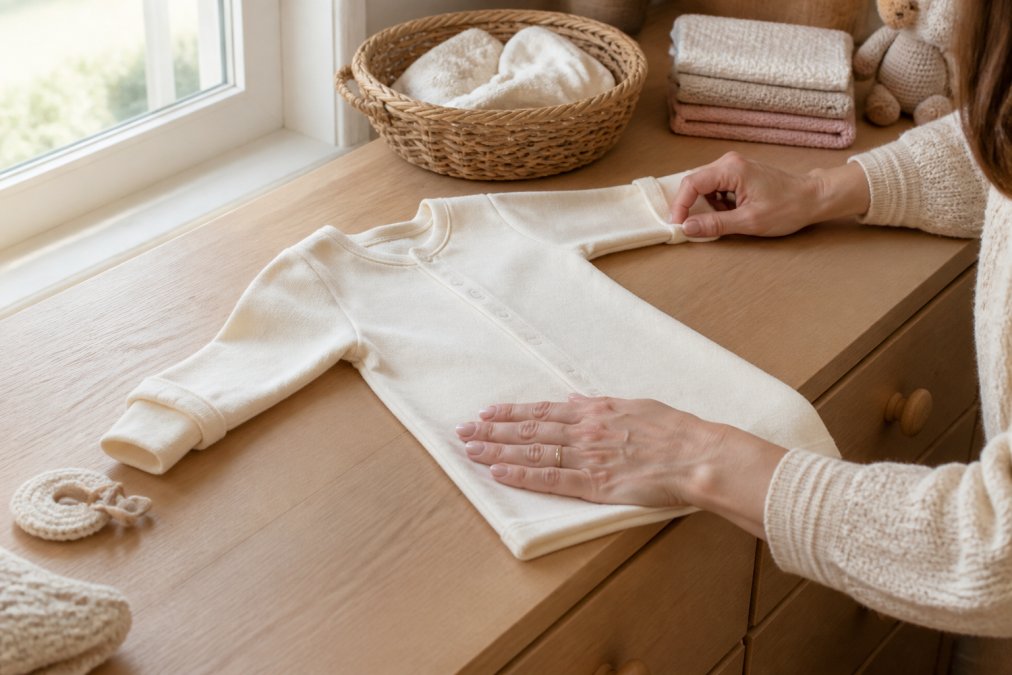
Friction. Rough interior seams, tags, and tight cuffs create micro-abrasions that break an already compromised skin barrier. Flatlock seams, tagless necklines, and a relaxed fit through the elbows and knees reduce that mechanical irritation. A common pattern pediatric dermatology practices note is that flare-ups cluster at friction points, not evenly across the body, which is why seam construction matters as much as fiber content.
Moisture. Damp skin is more permeable and more reactive. A fabric that holds sweat against the body keeps the skin in that reactive state. Look for weaves that move moisture away from the surface rather than trapping it. Single jersey and rib knits generally breathe better than dense interlock or fleece-backed fabrics.
Heat. Overheating is one of the most underrated flare-up triggers. A fabric that retains heat, whether through tight weave density or synthetic content, raises skin temperature and can set off itching within an hour of sleep. Breathability is not the same as thinness. A loosely knit organic cotton can regulate temperature better than a thick synthetic blend that feels soft to the touch.
Use this checklist when you are shopping:
- Fabric is GOTS-certified organic cotton or TENCEL lyocell
- No synthetic dyes, or only low-impact natural dyes
- Flatlock or tagless seams, no rough interior stitching
- Loose fit that avoids friction on elbows and knees
- No formaldehyde-based wrinkle-resistant finish
- Weave is breathable (single jersey or rib) rather than dense and heat-trapping
- Softens, not stiffens, after the first wash
At Stitched Creations, our baby essentials are built around these three triggers.
Features to Look for in Baby Sleepwear
Sleepwear deserves extra scrutiny because babies wear it for 10 to 12 hours at a stretch, which is long enough for heat and moisture to build up against the skin. Prioritize breathable natural fibers for thermal regulation, moisture-wicking properties to prevent damp skin, and a snug-but-not-tight fit. Snap closures beat zippers for sensitive skin because there is no metal hardware against the chest.
Organic Cotton vs. Bamboo Rayon: Which Is Better?
Organic cotton wins for sensitive skin in most cases, because its production path is more tightly regulated and easier to verify end to end. Bamboo rayon is soft, but the "rayon" part matters: most bamboo fabric is chemically processed, which strips it of the natural advantages the raw plant started with.
| Feature | Organic Cotton | Bamboo Rayon |
|---|---|---|
| Certification available | GOTS, OEKO-TEX | Limited, varies by mill |
| Breathability | High | High |
| Moisture handling | Good | Very good |
| Processing chemicals | Restricted | Often solvent-based |
| Durability | Excellent | Moderate |
| Best for | Eczema-prone, everyday | Warm climates, light layers |
How to Wash Baby Clothes for Sensitive Skin
Washing is where most sensitive-skin routines quietly fall apart. A GOTS-certified onesie washed in a fragranced detergent with fabric softener can irritate just as much as a cheap synthetic garment. This is the gap most guides miss: they tell you to buy organic fabric and then never explain that the detergent you use can negate every benefit of that fabric.
What to look for in a detergent:
- Fragrance-free and dye-free, not just "baby" branded
- No optical brighteners, which are designed to leave a residue
- No fabric softener or dryer sheets, ever
- A short ingredient list you can actually read
- Formulated for sensitive skin, ideally with a recognized certification
- Choose a fragrance-free, dye-free detergent formulated for babies.
- Skip fabric softener and dryer sheets entirely; both leave residue on fibers.
- Wash new clothes before the first wear to remove manufacturing finishes.
- Use an extra rinse cycle to clear leftover detergent.
- Wash in warm, not hot, water to protect fiber integrity.
- Dry on low or line dry to avoid shrinking and stiffness.
- Wash baby clothes separately from adult laundry, which carries its own detergent and softener residue.
Best Handmade Gifts for New Parents
Handmade gifts for new parents work best when they're practical and gentle on skin. A crocheted blanket, a soft cotton layette set, or a personalized name piece all beat another plastic toy that gets ignored by month two.
The Importance of Chemical-Free Manufacturing
Chemical-free manufacturing means restricting or eliminating the solvents, heavy-metal dyes, and formaldehyde finishes common in conventional textile production. For babies, this isn't an abstract environmental concern; it's the difference between a garment that supports a healthy skin barrier and one that quietly works against it.
Frequently Asked Questions
What kind of clothes are best for babies with sensitive skin?
Babies with sensitive skin do best in clothing made from natural fibers like GOTS-certified organic cotton. Look for hypoallergenic, non-toxic fabrics that are free from synthetic dyes and chemical finishes. Avoid synthetic blends that trap moisture and can trigger contact dermatitis. Breathable, soft materials with flat seams reduce friction and irritation. Stitched Creations offers handmade baby essentials crafted from eco-friendly materials that are gentle on delicate skin.
Why is organic cotton recommended for babies with eczema?
Organic cotton is grown without pesticides and processed without harsh chemicals, making it far less likely to irritate eczema-prone skin. It is breathable and moisture-wicking, which helps maintain thermal regulation and prevents sweat from triggering flare-ups. Unlike conventional cotton, organic varieties are typically free from formaldehyde-based finishes and synthetic dyes that can worsen contact dermatitis. For babies with eczema, choosing GOTS-certified organic cotton is one of the most effective ways to reduce skin irritation.
How do handmade baby clothes differ from mass-produced options?
Handmade baby clothes from a studio like Stitched Creations are crafted in small batches with careful attention to seam construction and softness. Mass-produced items often use synthetic dyes and chemical finishes to speed up manufacturing, which can irritate delicate skin. Handmade pieces let you choose eco-friendly materials and avoid irritant-free concerns. They also tend to be more durable and hold up better through repeated washing, which matters for how to wash baby clothes for sensitive skin.
How can I tell if baby clothes are truly non-toxic?
Check for third-party certifications like GOTS or OEKO-TEX, which verify that fabrics meet strict limits on harmful substances. Look for labels that say formaldehyde-free, pesticide-free, and non-toxic. Avoid clothing with strong chemical smells or brightly colored synthetic dyes, as these can indicate residual processing chemicals. When shopping handmade, ask the maker directly about their material sourcing. Stitched Creations uses eco-friendly materials and can answer questions about hypoallergenic safety for newborns.
Finding baby clothes that are genuinely gentle on sensitive skin takes more than reading a label that says "organic." It takes certification you can verify, seams that don't rub, and a wash routine that doesn't undo the good work. Stitched Creations builds small-batch baby essentials from eco-friendly materials, designed for lasting comfort and made to hold up through countless washes. Browse our handmade baby collection and gift sets to find a piece that's as gentle as it is beautiful.