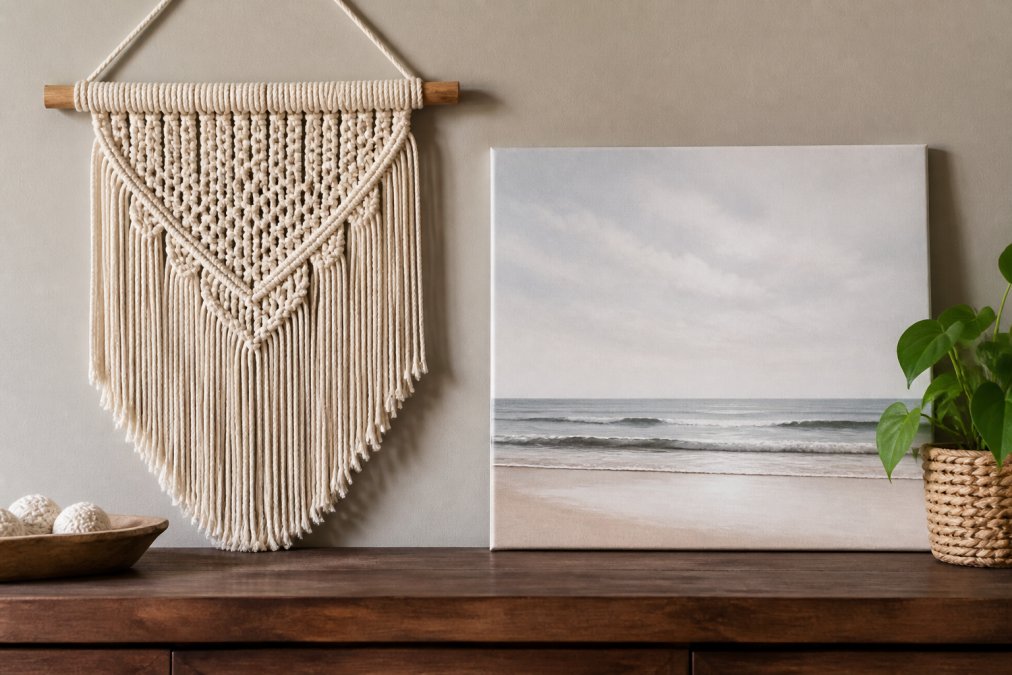
 comparison
Macrame Wall Art vs Canvas Prints for Living Rooms
Table of Contents
- Macrame Wall Art vs Canvas Prints: A Quick Comparison
- Texture and Visual Weight: Fiber Texture vs Painterly Feel
- Bohemian Living Room Decor Ideas That Actually Work
- Mixing Textures in Home Interior Design: Combining Woven and Flat Art
- How to Clean Macrame Wall Hangings (and Canvas Prints)
- Durability, Weight, and Installation Requirements
- Where Stitched Creations Fits Your Living Room
- Frequently Asked Questions
Last Updated: September 24, 2026
Macrame Wall Art vs Canvas Prints: A Quick Comparison
Macrame wall art is hand-knotted fiber decor made from cotton or similar cord, while canvas prints are printed images stretched over a wooden frame. The core difference comes down to texture: macrame brings a three-dimensional, tactile quality to a living room, and canvas prints deliver a flat, painterly feel that works well in modern minimalist spaces. This guide from Stitched Creations breaks down both options so you can choose with confidence.
Here's the short version. If you want warmth, fiber texture, and a piece that doubles as a soft acoustic buffer, macrame wins. If you want a specific image, a neutral palette, or an oversized print that fills a statement wall on a budget, canvas prints are hard to beat. Many homeowners end up mixing both, and that's often the smartest move.
Below, we'll compare texture, cleaning, durability, and installation side by side, plus share bohemian living room decor ideas that actually work in real homes.
Texture, Weight, and Visual Impact at a Glance
| Feature | Macrame Wall Art | Canvas Prints |
|---|---|---|
| Texture | Woven, three-dimensional | Flat, painterly |
| Weight | Light to medium | Light |
| Best style match | Bohemian, Japandi, farmhouse | Minimalist, contemporary |
| Cleaning | Gentle dusting, spot care | Dry cloth wipe |
| Installation | Single hook or rod | Nail or picture hanger |
| Focal point strength | High, due to depth | High, due to size |
Texture and Visual Weight: Fiber Texture vs Painterly Feel
Texture is where these two wall decor options part ways, and it shapes everything else. Macrame wall art adds fiber texture and visual weight through knots, fringe, and shadow. Canvas prints rely on color and image to hold a room's attention.
A woven piece catches light differently throughout the day. The raised cords create soft shadows, which gives a wall a three-dimensional quality that flat art simply can't match. In a living room with a neutral palette, that depth keeps the space from feeling flat.
Canvas prints work the other way. Their stretched canvas surface gives a subtle painterly feel, and because they're frameless, they read as clean and intentional. For contemporary spaces or a minimalist look, that flatness is a feature, not a flaw.
What most guides miss is that visual weight isn't about size alone. A small, deeply textured macrame piece can anchor a wall more effectively than a much larger flat print.
Bohemian Living Room Decor Ideas That Actually Work
Bohemian living room decor works best when texture leads and color supports, not the reverse. Start with one large woven piece as your focal point, then layer in softer elements around it.
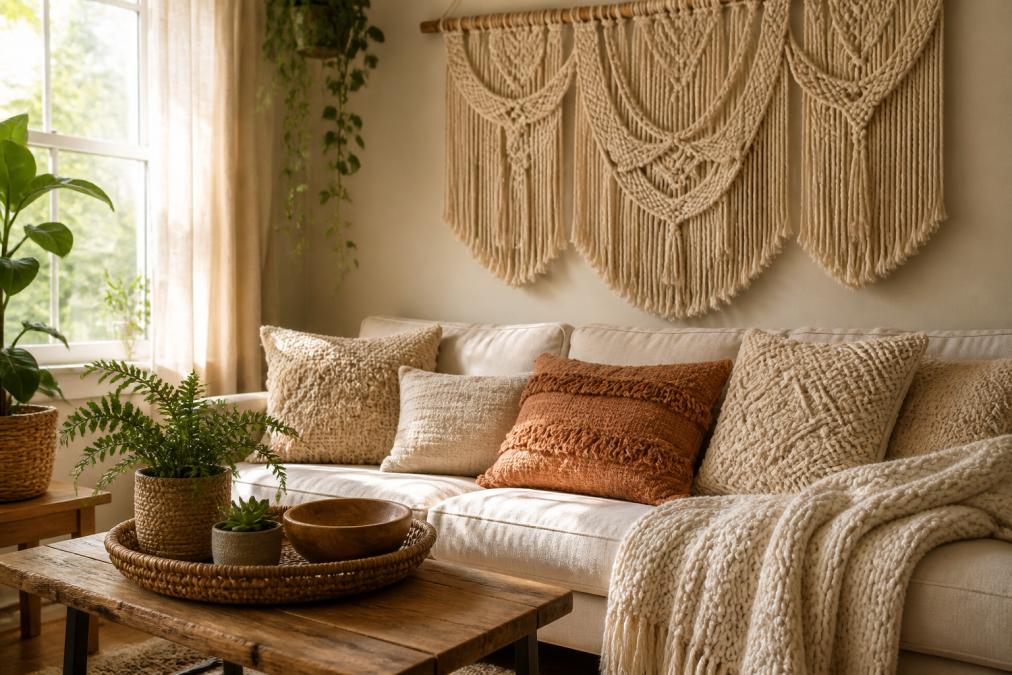
A common mistake is crowding the wall. One oversized macrame hanging above a sofa does more than five small pieces scattered across the same space.
Try these combinations:
- Pair a woven hanging with a neutral linen sofa and earthy tones
- Add a chunky knit blanket and woven throw pillows for layered texture
- Keep the rest of the wall simple so the fiber art stays the focal point
- Use natural materials like wood, rattan, and cotton to tie the room together
Mixing Textures in Home Interior Design: Combining Woven and Flat Art
Keep spatial balance in mind. If one side of the room is heavy with woven textures, balance it with a lighter print or open wall space on the other. This is where intentional design matters more than following a trend.
How to Clean Macrame Wall Hangings (and Canvas Prints)
Routine maintenance:
- Dust gently every two to three weeks with a soft brush, a clean paintbrush, or a vacuum on the lowest setting with a brush attachment. Work from top to bottom so dust doesn't resettle on cleaned sections.
- For deeper dust between knots, use a can of compressed air held at least six inches away. This is especially useful for tight, structured weaves where a brush can't reach.
- If your piece hangs near a window or entryway, expect more frequent dusting, once a week during pollen season is not excessive.
Spot treatment:
-
Blot liquid spills immediately with a clean, dry cloth. Do not rub, which can work the stain deeper into the fibers.
-
For oil-based stains, sprinkle a small amount of cornstarch or baking soda on the spot, let it sit for 15-20 minutes to absorb the oil, then brush it away.
-
For water-based stains, mix a tiny amount of mild dish soap with cool water. Dampen a cloth, it should be barely wet, and dab the stain gently. Follow with a clean, damp cloth to rinse, then blot dry.
-
Never soak or machine-wash a hanging piece. The knots can tighten unevenly, and natural fibers may shrink or warp.
-
Keep it out of direct, harsh sunlight to slow fading. Rotating the piece every few months helps it age evenly.
-
Wipe the surface with a dry, soft cloth or a microfiber duster. Avoid paper towels, which can leave lint or scratch the print surface.
-
For fingerprints or smudges, use a slightly damp cloth with plain water, never soap, which can break down the coating.
-
Dust the frame edges and the top edge of the canvas where buildup collects. A vacuum brush attachment on low works well here.
-
Avoid wet cloths, which can damage the print surface and cause the canvas to sag over time.
What most guides miss is that cleaning frequency depends on placement, not just material. A macrame piece above a sofa in a low-traffic living room may need dusting once a month, while one near an open window or a pet's favorite spot may need weekly attention. Canvas prints are more forgiving, but they still collect dust and can fade in direct sun.
Durability, Weight, and Installation Requirements
Installation: canvas prints
Installation: macrame wall hangings
Here's a simple weight guide:
- Small macrame pieces (under 2 feet wide): 1-3 pounds, single hook is fine
- Medium pieces (2-4 feet wide): 3-7 pounds, use a wall anchor or stud
- Large pieces (over 4 feet wide): 7-15 pounds, use a dowel rod with two mounting points
Durability and environment
The acoustic advantage
Our macrame wall hangings are designed with installation in mind. Each piece arrives ready to hang with a sturdy dowel or hanging loop, and our team is happy to help you choose the right size and mounting method for your space. Whether you're anchoring a large piece above a sofa or adding a smaller hanging to a reading nook, we'll help you get it right the first time.
Where Stitched Creations Fits Your Living Room
Stitched Creations is a woman-owned studio crafting small-batch handmade macrame and crochet decor, and a woven piece is often the easiest way to add warmth to a living room. Each hanging is hand-knotted from eco-friendly materials, so no two are exactly alike.
Frequently Asked Questions
What kind of wall art is best for a living room?
The best wall art depends on the mood you want. Canvas prints offer sharp, frameless images and work well in minimalist or contemporary spaces. Macrame wall art brings three-dimensional fiber texture and warmth, making it a natural focal point in bohemian or Japandi rooms. Many designers combine both: a large canvas as the anchor and a smaller woven piece beside it for contrast.
Is macrame wall art considered modern or bohemian decor?
Macrame wall art fits both. Traditional knotted designs lean bohemian, but contemporary makers now produce clean, geometric pieces with neutral palettes that suit modern minimalist and Japandi interiors. The material and color matter more than the technique. A white cotton macrame hanging in a simple shape reads as modern; earthy tones and dense knotting read as bohemian.
Can you mix macrame wall art with canvas prints in the same room?
Yes, and mixing textures in home interior design is one of the easiest ways to add depth. Use a large canvas print as the statement wall anchor, then place a macrame hanging nearby or on an adjacent wall to break up flat surfaces. Keep the color palette consistent, stick to two or three materials, and vary the sizes so the eye moves naturally across the room.
What are the maintenance differences between macrame and canvas wall art?
Canvas prints need little beyond occasional dusting with a dry cloth. Macrame wall hangings collect dust in the knots, so they need a gentle shake outdoors or a vacuum on low with a brush attachment every few weeks. For deeper cleaning, spot-treat with mild soap and cool water, then air dry. Canvas prints handle humidity better, while macrame should stay away from damp walls to protect the fibers.
Do canvas prints provide more durability than handmade fiber art?
Canvas prints are durable and resist fading when kept out of direct sun, but they can sag or dent over time. Handmade macrame wall art from a studio like Stitched Creations uses tight, quality knotting that holds its shape for years. The main trade-off is maintenance: canvas is lower-effort, while macrame rewards gentle, regular care with lasting beauty.
Choosing wall decor for a living room comes down to what you want the room to feel like. If you want warmth, texture, and a piece with a story, Stitched Creations offers handmade macrame wall hangings crafted in small batches from eco-friendly materials, each ready to hang and designed for lasting comfort and style. Get started with Stitched Creations and bring handcrafted warmth to your living room.