 ultimate-guide
Is Handmade Clothing Better Quality? A 2026 Guide
Table of Contents
- How to Identify High Quality Clothing: Construction and Materials
- The Benefits of Slow Fashion: Why It Matters for Your Wardrobe
- Handmade vs. Mass-Produced: Durability, Fit, and Comfort
- Best Handmade Gifts for New Parents: Thoughtful and Safe Choices
- The Stigma of Homemade vs. Artisan-Made: Understanding the Difference
- Cost-Benefit Analysis: Is Handmade Clothing Worth the Investment?
- Frequently Asked Questions
Last Updated: September 20, 2026
How to Identify High Quality Clothing: Construction and Materials
High quality clothing is defined by three measurable things: fabric weight and fiber content, seam integrity, and how the garment holds its shape after repeated washing. That definition matters because "is handmade clothing better quality" is a question you can answer with your hands, not just your feelings.
Here is what to check on any garment, handmade or not.
Fiber content. Natural fibers like cotton, wool, and linen breathe and age well. Synthetics can be durable but often pill and hold odor. Check the label first.
Fabric weight. A heavier knit drapes better and resists stretching at the elbows and knees. Thin fabric shows wear fast.
Stitch quality. Look for even tension and clean, flat seams. Uneven tension is the most common flaw in beginner handmade work, and it shows up as wonky sizing within a few wears.
Finishing. Hand-finishing at the neckline and cuffs is a strong sign of care. Raw, fraying edges are a warning.
- Check the fiber content label
- Pull gently at seams to test stitch integrity
- Hold the garment to light to check fabric weight
- Inspect the neckline and cuffs for clean finishing
The Benefits of Slow Fashion: Why It Matters for Your Wardrobe
The benefits of slow fashion come down to three things: fewer replacements, better cost per wear, and less textile waste. Slow fashion is an approach to making and buying clothes that prioritizes durability, ethical manufacturing, and garment longevity over volume and speed.
Fast fashion moves trends quickly and cheaply, which usually means thinner fabric and shorter garment lifecycles. Slow fashion does the opposite. A well-made piece stays in rotation for years, so you buy less often.
That shift also supports a circular economy. When a garment is repairable, it can be mended, passed on, or upcycled instead of thrown out. The EPA facts and figures on textiles in municipal solid waste show how much clothing and fabric ends up in landfills each year, which is the core argument for buying fewer, better pieces.
Many shoppers find that a small, carefully chosen wardrobe outperforms a large, cheap one. It takes more planning up front, but it pays off in wearability and aesthetic longevity.
Handmade vs. Mass-Produced: Durability, Fit, and Comfort
Handmade pieces usually win on fit and comfort, while mass-produced pieces win on speed and price. Durability depends on construction, not on whether a machine or a person made the item. That is the honest answer to "is handmade clothing better quality", it depends on how the piece is built, not where it came from.
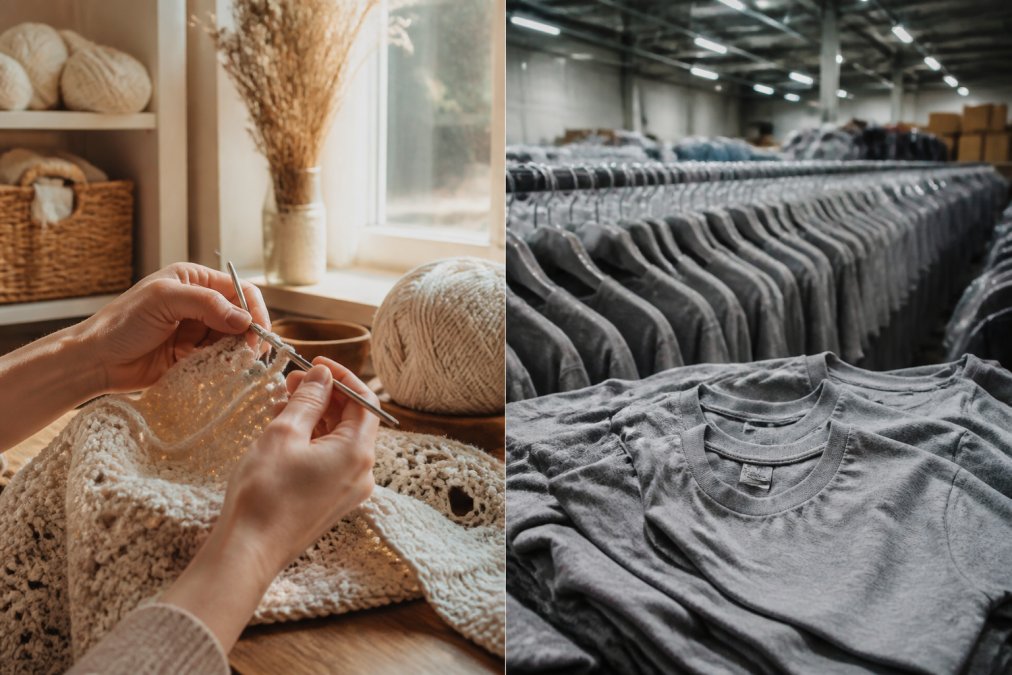
Where the real quality difference lives: the seams.
A seam is the stress point of any garment.
When you compare a handmade piece to a mass-produced one, turn it inside out. That single check tells you more than any label.
Stitch density and tension.
Most home sewing machines and hand-stitchers can produce 10-12 stitches per inch, which is a common industry benchmark for durable seams on medium-weight fabric. Sparse stitching (6-8 stitches per inch) pulls apart faster under stress. Uneven tension, where some stitches are tight and others loose, is the most common flaw in beginner handmade work, and it shows up as wonky sizing within a few wears. A practiced maker keeps tension even across the whole garment, which is why artisan-made pieces hold their shape.
Fabric weight and fiber.
Fabric weight is measured in ounces per square yard (oz/yd²) or grams per square meter (GSM). A lightweight cotton tee might run 4-5 oz/yd²; a durable sweatshirt fleece often runs 10-12 oz/yd². Heavier knits drape better and resist stretching at the elbows and knees. Thin fabric shows wear fast, regardless of who made it. Natural fibers like cotton, wool, and linen breathe and age well; synthetics can be durable but often pill and hold odor.
Fit and personalization.
Mass production is built for consistency at scale. Every size 8 is identical, which is efficient but ignores how real bodies differ. Bespoke fit and tailoring cost more time, so mass-market brands rarely offer them. Handmade work allows for personalization, a maker can adjust length, tension, and drape to a specific body. That is why a handmade sweater often feels better across the shoulders and sleeves.
At Stitched Creations, our crochet and macramé pieces are made in small batches. That is the practical difference between a garment made to a standard and one made to a person.
The trade-off is real.
Handmade means waiting, and quality still varies by maker. A poorly tensioned handmade piece can wear out faster than a well-constructed factory one. Construction decides durability, not the label.
| Factor | Handmade | Mass-Produced |
|---|---|---|
| Seam type | Often French or flat-felled | Often serged |
| Stitch density | 10-12 stitches per inch typical | Varies; often sparser |
| Fit | Adjustable, bespoke | Standardized sizing |
| Durability | Depends on construction | Depends on construction |
| Lead time | Longer, made to order | Immediate |
| Personalization | High | Low |
| Cost per wear | Often lower over time | Often higher over time |
A quick stress test you can do in the store or at home:
- Turn the garment inside out and check the seam type
- Gently pull the seam, it should not gap or show thread strain
- Count stitches per inch on a straight seam (10-12 is a good sign)
- Hold the fabric to light, thin spots mean faster wear
- Check the neckline and cuffs for clean finishing
That test works on any garment, handmade or not.
Best Handmade Gifts for New Parents: Thoughtful and Safe Choices
The best handmade gifts for new parents are soft, washable, and free of small detachable parts. New parents get flooded with plastic toys, so a useful, well-made item stands out.
A few practical tips before you buy:
- Choose machine-washable natural fibers
- Avoid loose buttons or detachable pieces
- Ask the maker about fiber sourcing if the baby has sensitive skin
- Pick a size the baby will grow into, not out of
The Stigma of Homemade vs. Artisan-Made: Understanding the Difference
- Repeatability. An artisan can make the same blanket to the same standard every time. A hobbyist might make one lovely piece and a wonky one next.
- Tension control. Even stitch tension is a trained skill. It is the single biggest predictor of whether a handmade garment keeps its shape.
- Finishing. Clean necklines, enclosed seams, and secured ends are signs of a practiced maker. Raw, fraying edges are a warning.
- Documentation. Artisans usually know their fiber sources and can tell you how to care for the piece. Hobbyists often cannot.
The care and maintenance gap most guides miss.
- Wash less, air more. Natural fibers like wool and linen freshen with airing. Over-washing is the fastest way to break down any garment.
- Turn inside out. This protects the visible surface and reduces abrasion on seams.
- Use cold water and mild detergent. Hot water and harsh detergent shrink natural fibers and strip oils from wool.
- Skip the dryer when you can. Heat is the enemy of elasticity. Lay flat to dry knits so they keep their shape.
- Store folded, not hung, for knits. Hanging stretches shoulders and necklines over time.
- Mend small issues early. A loose stitch caught now is a five-minute fix; the same stitch ignored becomes a hole.
Repairability and circularity.
At Stitched Creations, our small-batch crochet and macramé pieces are made with eco-friendly materials and a focus on lasting comfort. That is the practical difference between a craft project and a product worth paying for.
Why the stigma fades.
Cost-Benefit Analysis: Is Handmade Clothing Worth the Investment?
Handmade clothing is worth the investment when cost per wear is low and the piece gets repaired instead of replaced. The sticker price is higher, but the math changes over time.
Frequently Asked Questions
What are the primary benefits of choosing handmade clothing over mass-produced items?
Handmade clothing offers better durability, custom fit, and comfort. Each piece is carefully constructed, often with stronger seams and higher-quality natural fibers. This means your garment lasts longer and feels better. Additionally, handmade supports ethical production and reduces textile waste, aligning with slow fashion values. For example, Stitched Creations uses eco-friendly materials and small-batch methods to create pieces that are both stylish and sustainable.
How does the durability of handmade garments compare to fast fashion?
Handmade garments typically outlast fast fashion because they use reinforced stitching, quality fabrics, and careful construction. Fast fashion often relies on weak seams and synthetic materials that pill or tear quickly. In contrast, handmade items like those from Stitched Creations are built to withstand regular wear, offering a better cost per wear over time. Proper care, such as gentle washing, further extends their life.
What should I look for when evaluating the quality of handmade apparel?
Check for even stitching, clean seam finishes, and consistent tension. Feel the fabric: natural fibers like cotton or wool should feel soft yet substantial. Look for details like reinforced stress points and quality buttons or zippers. Ask about the maker's process and materials. A reputable artisan, like Stitched Creations, will happily share their sourcing and construction methods, ensuring you get a piece that's both beautiful and durable.
Does handmade clothing offer better comfort than factory-made alternatives?
Yes, handmade clothing often provides superior comfort because it's made with softer, natural materials and tailored to fit the wearer. Mass-produced items may use stiff synthetics and generic sizing that restricts movement. Handmade pieces, especially custom-fit ones, allow for better breathability and flexibility. For instance, Stitched Creations' crochet apparel is designed for lasting comfort, making it ideal for everyday wear.
Choosing well-made clothing comes down to reading construction, not labels. Stitched Creations makes that easier with small-batch crochet and macramé pieces built for lasting comfort, eco-friendly materials, and a fit you can customize. Our 5.0-star rating from 9 reviews reflects customers like Barb and Milli who noticed the difference in the details. Get started with Stitched Creations and add handmade pieces that earn their place in your wardrobe.