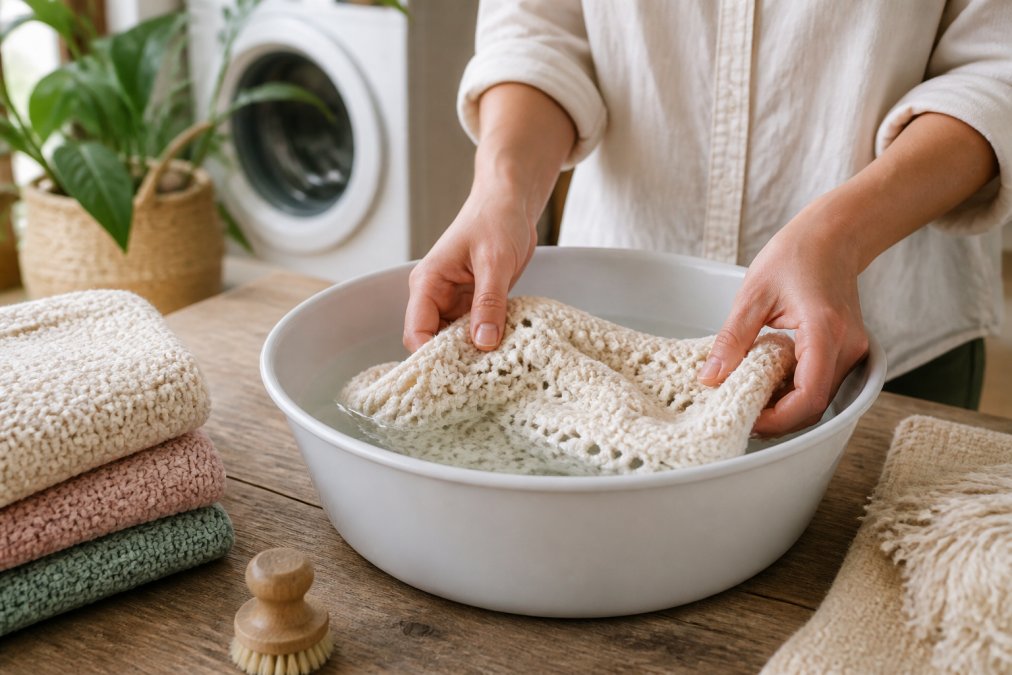
 how-to
How to Wash Handmade Crochet Items: 2026 Guide
Table of Contents
- Check the Fiber Content Before You Wash Crochet Items
- Hand Washing vs. Machine Washing Handmade Crochet
- How to Wash Acrylic Yarn Crochet Projects
- Choosing the Right Detergent and Water Temperature
- Stain Removal for Crochet Garments and Wearables
- How to Dry Crochet Blankets and Other Finished Items
- Storage, Eco-Friendly Practices, and Repairing Wash Damage
- Conclusion
Last Updated: August 10, 2026
Knowing how to wash handmade crochet items correctly is the difference between a piece that lasts decades and one that felts, stretches, or falls apart after a single cycle. At Stitched Creations, our Wisconsin studio has seen firsthand how improper washing ruins beautiful handmade work. The good news: washing crochet safely is straightforward once you understand the fiber. Below, this guide covers every step from reading yarn labels to blocking finished pieces, with a fiber-specific care chart and eco-friendly tips.
The most common mistake is treating all crochet the same. A superwash merino sweater and an acrylic baby blanket need completely different care.
Check the Fiber Content Before You Wash Crochet Items
The single most important step in washing handmade crochet items is identifying what the yarn is made of before water touches it. Fiber content determines water temperature, wash method, drying approach, and whether the piece can be machine washed at all.
Reading Yarn Labels and Care Tags
If the maker attached a yarn label or care tag to the piece, start there. Yarn labels follow standardized care symbols, which the ASTM International textile care labeling standards help establish for the US market. Look for symbols indicating hand wash, machine wash, dry clean only, or do not wash.
For finished items without a tag, check any documentation from the maker. If you have no label at all, identify the fiber by feel: wool feels slightly rough or springy, acrylic feels smooth and lightweight, cotton feels cool and dense, and blends combine these qualities.
Fiber-Specific Care Chart
Use this chart as your starting reference before washing any crochet item.
| Fiber Type | Wash Method | Water Temp | Drying Method | Special Notes |
|---|---|---|---|---|
| Acrylic | Machine or hand wash | Cold to warm | Lay flat or tumble low | Avoid high heat; can melt fibers |
| Wool / Merino | Hand wash only | Cold | Lay flat to dry | Agitation causes felting |
| Cotton | Machine or hand wash | Cold to warm | Lay flat or low tumble | May shrink in hot water |
| Alpaca | Hand wash only | Cold | Lay flat to dry | Very sensitive to heat and agitation |
| Bamboo / Rayon | Hand wash preferred | Cold | Lay flat to dry | Loses shape easily when wet |
| Blends | Follow the most delicate fiber | Cold | Lay flat to dry | Default to wool rules if wool is present |
Hand Washing vs. Machine Washing Handmade Crochet
Hand washing is the safest method for washing handmade crochet items. It gives you complete control over water temperature, agitation, and soak time. Machine washing is acceptable for acrylic and cotton pieces, but it requires the right settings and protective measures.
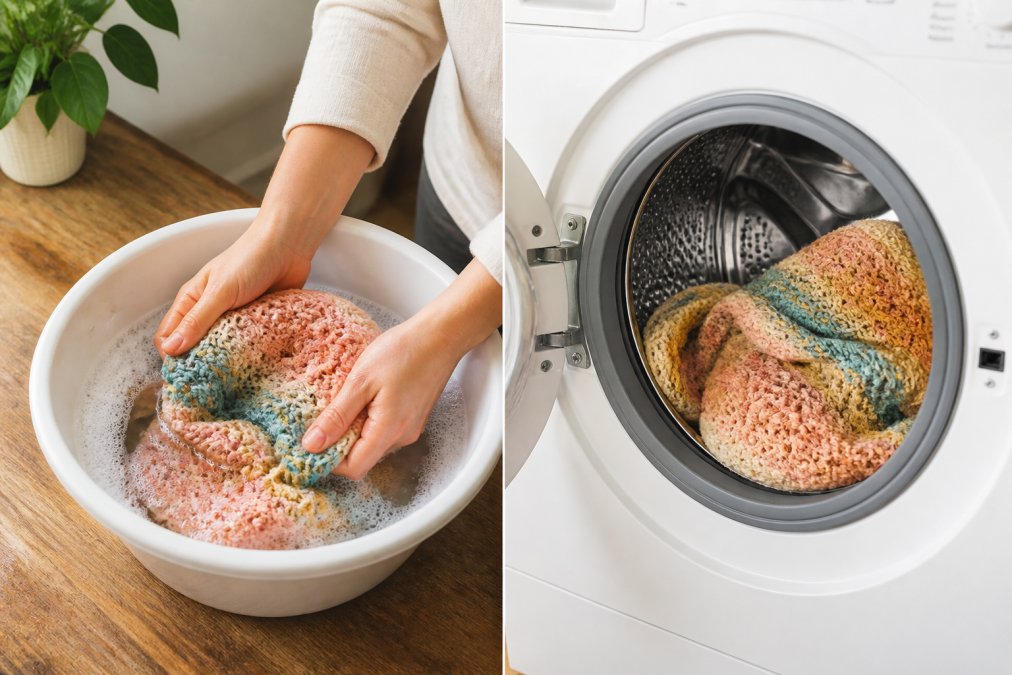
Step-by-Step Hand Wash Method
Follow these steps to hand wash crochet safely:
- Fill a clean basin or sink with cold water. Cold water is the default for almost every fiber.
- Add a small amount of mild detergent. A wool wash or gentle liquid detergent works well. Dissolve it in the water before adding the item.
- Submerge the piece and gently press it into the water. Do not rub, twist, or wring.
- Soak for 10 to 15 minutes. For lightly worn items, 5 minutes is enough.
- Drain the basin and gently press out excess water. Support the full weight of the piece as you lift it.
- Rinse with fresh cold water. Repeat until no suds remain.
- Press, do not wring. Lay the piece flat on a clean dry towel and gently press to remove water before drying.
Using a Washing Machine Safely
Machine washing is appropriate for acrylic and cotton crochet pieces when you follow these precautions:
- Place the item inside a mesh laundry bag to reduce friction and prevent snagging.
- Select the delicate cycle only.
- Use cold water and the lowest spin speed available.
- Skip fabric softener and bleach entirely.
How to Wash Acrylic Yarn Crochet Projects
Acrylic is by far the most common yarn used in handmade blankets, garments, and baby items. Acrylic is synthetic, which means it does not felt, does not shrink from cold water, and tolerates machine washing far better than natural fibers.
For acrylic crochet projects, machine washing on a gentle cycle in cold to slightly warm water is generally safe. Use a mesh laundry bag for anything with open lacework or long fringe. Avoid hot water, which can distort acrylic fibers permanently. High dryer heat is the main enemy of acrylic: it can cause fibers to melt slightly, leaving a shiny, stiff texture that cannot be reversed.
For hand washing acrylic, the same basin-and-soak method works well. Acrylic dries faster than natural fibers, so lay flat drying is efficient. Turning garments inside out before washing helps preserve surface texture and reduces pilling.
Choosing the Right Detergent and Water Temperature
For handmade crochet items, detergent choice matters more than you might expect.
Mild detergent is the correct choice for nearly every crochet fiber. Look for products labeled "gentle," "delicate," or "wool wash." These formulas have a neutral pH that cleans without stripping natural oils from wool or the finish from treated fibers. Harsh detergents and enzyme-based cleaners can break down yarn fibers over repeated washes.
As documented in The Woolmark Company's fiber care guidelines, wool and protein-based fibers require pH-neutral detergents to maintain their structure and softness.
Water temperature follows a simple rule: when uncertain, use cold water. Cold water is safe for every fiber type. Warm water is acceptable for sturdy cotton and acrylic. Hot water should never be used on any handmade crochet item.
Avoid fabric softener across the board. It leaves a residue that makes stitches look dull and feel slippery.
Stain Removal for Crochet Garments and Wearables
Stain removal is where people most often cause unintentional damage to handmade crochet items. The instinct to scrub hard is exactly wrong.
Act quickly, but act gently. Blot the stain with a clean cloth to absorb as much of the substance as possible before it sets. For most food and beverage stains, soaking the affected area in cold water with a small amount of mild detergent for 15 to 30 minutes is enough to lift the stain before a full wash.
For oil-based stains, apply a tiny amount of dish soap directly to the spot, work it in gently with your fingertips, and let it sit for 10 minutes before rinsing. For protein stains like blood or dairy, cold water is critical: hot water sets protein stains permanently.
Avoid stain sticks, bleach pens, and spray stain removers with strong solvents. These products can damage or discolor yarn fibers, especially hand-dyed or natural fiber yarns. If a stain does not respond to gentle treatment, a professional textile cleaner is a better option.
How to Dry Crochet Blankets and Other Finished Items
Drying is where most crochet damage actually happens. A piece can survive the wash perfectly and still be ruined by hanging it to dry or tossing it in a hot dryer.
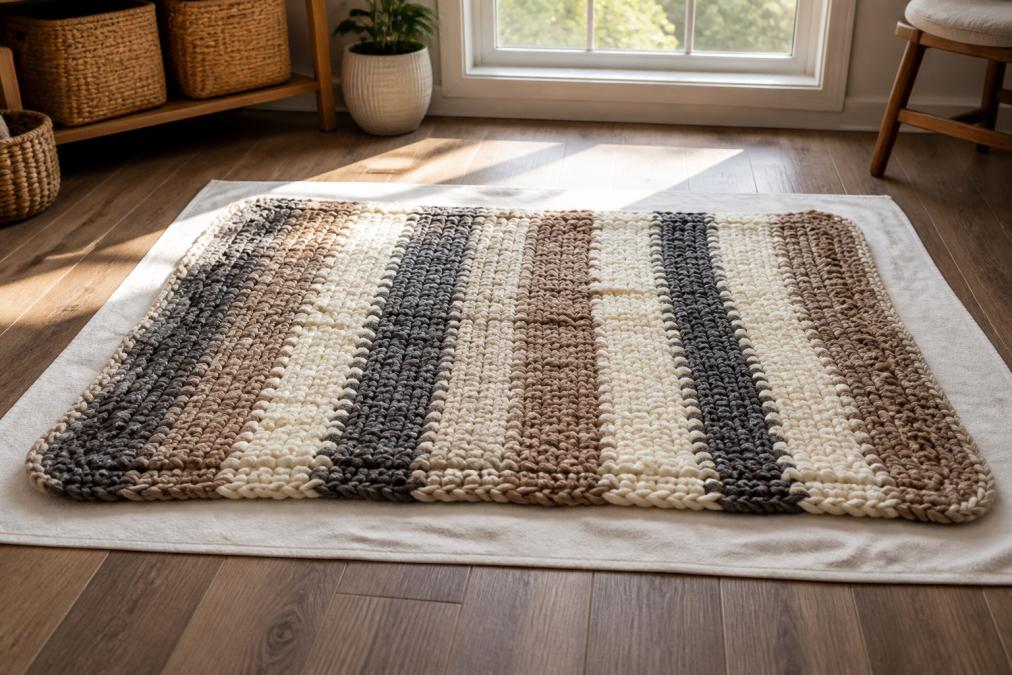
The rule for drying handmade crochet items is straightforward: lay flat to dry for anything made from natural fibers or any shaped garment. Hanging a wet crochet piece causes gravity to stretch the stitches downward, permanently distorting the shape. For acrylic blankets and dishcloths, low-heat tumble drying is acceptable.
The Towel Roll Method
The towel roll method is the most effective way to remove excess water from crochet before flat drying, without wringing or twisting.
- Lay the washed piece flat on a clean, dry towel.
- Roll the towel and the crochet piece together into a log shape.
- Gently press along the length of the roll to push water into the towel.
- Unroll, remove the piece, and lay it flat on a fresh dry towel or blocking mat to finish drying.
Blocking After Washing for Shape Retention
Blocking is the process of wetting a finished crochet item, shaping it to its correct dimensions, and allowing it to dry in that position. It is the single most effective technique for maintaining shape retention in handmade crochet items.
To block a crochet item after washing:
- After the towel roll step, lay the piece on a foam blocking mat or clean carpet.
- Use rust-proof pins to pin the piece to its correct measurements.
- For lace or open-stitch work, stretch gently to open up the pattern before pinning.
- Allow to dry completely before removing pins. This can take 24 hours or more for thick pieces.
According to Craft Yarn Council's guidelines for yarn care and finishing, blocking is especially important for natural fiber items and lace crochet, where stitch definition depends on the piece being properly shaped as it dries.
Storage, Eco-Friendly Practices, and Repairing Wash Damage
Once your crochet items are clean and dry, proper storage protects them between uses and washes.
Storage tips for crochet garments and finished items:
- Store folded, not hung, to avoid stretching.
- For wool and alpaca items, store in breathable cotton bags or pillowcases. Avoid plastic bags, which trap moisture.
- Add cedar blocks or lavender sachets near wool items to deter moths.
- Keep items away from direct sunlight, which fades yarn color over time.
Eco-friendly washing practices are a natural fit for handmade crochet care. Cold water washing uses significantly less energy than warm or hot cycles. Gentle detergents are less harmful to waterways. Washing only when a piece is actually soiled extends the life of the yarn and reduces water and detergent use. Air drying instead of machine drying eliminates dryer energy use entirely.
Repairing wash damage is possible in many cases. If a wool item has begun to felt slightly, gentle re-wetting and careful stretching while wet can partially restore the shape. For stretched-out acrylic pieces, light steam from a garment steamer can help relax and reset the fibers. For broken or pulled stitches caused by snagging, a crochet hook in the correct size can often work the stitch back into place.
The handmade pieces from small-batch studios like Stitched Creations are built for longevity. With the right care, a well-made crochet garment or blanket can outlast mass-produced alternatives many times over. The Stitched Creations team uses eco-friendly materials specifically chosen for lasting comfort and washability, which means proper care pays off in years of use rather than months.
For anyone who wants to go deeper on fiber care, the Textile Exchange fiber sourcing and care resources offer detailed guidance on sustainable fiber handling that aligns with responsible slow-fashion values.
Frequently Asked Questions
Can you put crocheted items in the dryer?
Most handmade crochet items should not go in the dryer. High heat causes wool and cotton to shrink and can melt or warp acrylic fibers. The safest approach is to air dry flat on a clean towel, away from direct sunlight or heat sources. If a yarn label explicitly states tumble-dry safe, use the lowest heat setting only. When in doubt, flat drying is always the right call for preserving the shape and structure of your crochet projects.
Does crochet shrink when washed?
It depends on the fiber. Wool and other animal fibers can shrink significantly in warm or hot water, especially with agitation. Cotton may shrink slightly on the first wash. Acrylic yarn is generally shrink-resistant but can stretch or warp under high heat. To keep handmade crochet items their original size, always wash in cold water, skip the spin cycle for delicate pieces, and dry flat rather than hanging, which causes stretching under the item's own weight.
How should I wash acrylic crochet projects?
Acrylic yarn crochet projects are among the easiest to wash. Most can go in the washing machine on a gentle or delicate cycle in cold water inside a mesh laundry bag. Use a small amount of mild detergent and skip fabric softener, which can coat acrylic fibers and reduce their softness over time. Avoid hot water and high-heat drying. After washing, reshape the item and lay it flat to air dry. This keeps acrylic crochet blankets and garments soft and looking their best.
What is the best detergent for handmade crochet?
A mild, pH-neutral detergent works best for most handmade crochet items. Look for detergents labeled gentle, free-and-clear, or wool wash. Avoid anything with bleach, enzymes, or optical brighteners, as these break down natural fibers over time and can fade color. For wool or delicate fibers, a dedicated wool wash product is ideal. For acrylic yarn, a standard gentle liquid detergent in a small amount is sufficient. Always use less detergent than you think you need to make rinsing easier.
Caring for handmade crochet items takes a little more attention than tossing things in a standard wash cycle, but the process is genuinely simple once it becomes habit. The biggest challenge most people face is not knowing where to start. Stitched Creations crafts every piece with eco-friendly materials and lasting construction, designed to hold up beautifully when cared for correctly. Shop the Stitched Creations collection and bring home pieces made to be loved and kept for years.
This article was written using GrandRanker