 ultimate-guide
How to Choose Sustainable Yarn for Crochet Projects
Table of Contents
- What Makes Yarn Sustainable?
- Sustainable Fiber Properties for Crochet: What Works Best
- Certifications and Standards: GOTS, OEKO-TEX, and More
- How to Read Yarn Labels and Avoid Greenwashing
- Best Eco-Friendly Yarn Brands and Where to Find Them
- Caring for Handmade Crochet Items to Extend Their Life
- Cost-Per-Yard Analysis: Sustainable vs. Conventional Yarn
- Conclusion
- Frequently Asked Questions
Last Updated: September 19, 2026
What Makes Yarn Sustainable?
Sustainable yarn is fiber produced and processed in ways that reduce environmental harm, respect animal welfare, and support fair labor across the supply chain. At Stitched Creations, we work with eco-friendly materials daily in our small-batch crochet and macramé pieces, so we know how much fiber choice shapes a finished project. When you learn how to choose sustainable yarn for crochet projects, you're weighing three things: what the fiber is made of, how it was grown or recycled, and how it will hold up over years of use. A yarn can be plant-based but still dyed with harsh chemicals, or recycled but weak enough to pill after a few washes.
Natural Fibers vs. Synthetic Fibers
Natural fibers like cotton, wool, linen, and bamboo come from plants or animals and break down more readily at the end of a project's life. Synthetic fibers, chiefly acrylic and polyester, are petroleum-based and shed tiny plastic particles every time they're washed. That said, synthetics win on durability and price, which is why so many budget yarns rely on them. The honest trade-off: natural fibers carry a lighter environmental load but often cost more and need gentler care, while synthetics last longer but linger in landfills for generations.
Sustainable Fiber Properties for Crochet: What Works Best
The best sustainable fibers for crochet balance softness, stitch definition, and durability. Organic cotton holds crisp stitch patterns and works beautifully for baby essentials and home decor, which is exactly why we reach for it at Stitched Creations. Wool offers warmth and elasticity for wearables. Bamboo viscose drapes softly but can stretch. Linen and hemp are strong and breathable but can be stiff at first, softening with use. Recycled polyester adds strength for items that take a beating, but it sheds microplastics. At Stitched Creations, we select fibers based on these properties to ensure our handmade crochet and macramé pieces are both beautiful and durable.
Organic Cotton and Recycled Polyester
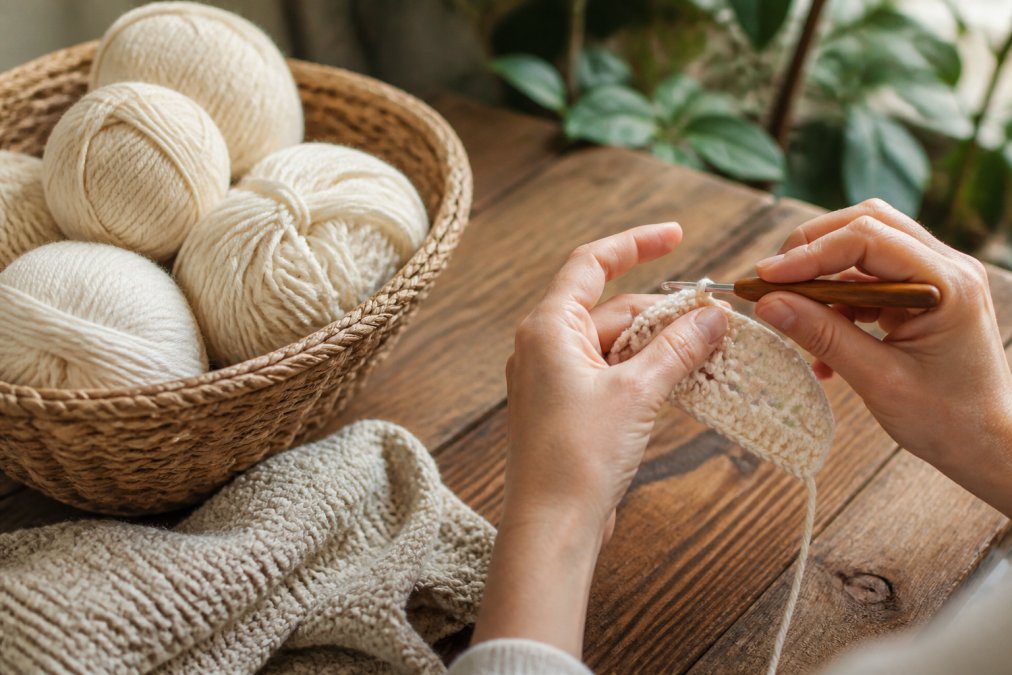
Organic cotton is grown without synthetic pesticides, using less water than conventional cotton and keeping harmful chemicals out of the soil and away from the people who farm it. Recycled polyester comes from post-consumer plastic bottles, diverting waste from landfills and cutting the need for new petroleum. For crochet, organic cotton gives you breathable, hypoallergenic comfort, while recycled polyester adds strength for items that take a beating. However, recycled polyester can shed microplastics during washing, so it's best for items that are used dry or washed infrequently. At Stitched Creations, we use organic cotton in our baby essentials and home decor for its softness and safety.
Bamboo Viscose and Plant-Based Options
Bamboo viscose is a soft, silky fiber made by processing bamboo pulp into a spinnable thread. It's fast-growing and needs little irrigation, but the chemical-heavy viscose process is worth understanding before you buy. Look for lyocell or closed-loop bamboo, which recapture most of the solvent instead of releasing it. Linen, hemp, and Tencel round out the plant-based shelf for crocheters who want breathable, low-irrigation fibers. At Stitched Creations, we incorporate these plant-based fibers into our macramé and crochet designs to offer a range of sustainable options.
Certifications and Standards: GOTS, OEKO-TEX, and More
Third-party certifications are your fastest shortcut past marketing claims. GOTS (Global Organic Textile Standard) verifies organic fiber content plus fair labor and chemical limits across the whole supply chain. OEKO-TEX Standard 100 confirms a finished yarn is free of harmful substances, which matters for anything touching a baby's skin. Neither label is required by law, so a skein without them isn't automatically bad, but a certified one gives you something concrete to trust. Check the Global Organic Textile Standard program for how certification is verified.
Animal Welfare and Ethical Sourcing
Wool and other animal fibers raise their own questions. Cruelty-free and fair trade labels signal that animals were treated humanely and workers paid fairly. If animal welfare matters to you, look for certified humane wool, and don't be shy about emailing a brand to ask where its fiber comes from.
How to Read Yarn Labels and Avoid Greenwashing
Reading a yarn label well is the single most useful skill for spotting greenwashing. Fiber content, weight, yardage, and care instructions are the essentials, but vague words like "natural" or "eco" mean almost nothing without a certification behind them. Watch for these red flags:
- "Eco-friendly" with no third-party certification named
- A single green leaf icon and no verifiable standard
- "Made with recycled materials" but no percentage given
- No fiber content listed at all
When a claim can't be checked, treat it as marketing until proven otherwise.
Best Eco-Friendly Yarn Brands and Where to Find Them
The best eco-friendly yarn brands publish their fiber sources and hold real certifications. At Stitched Creations, we choose yarns with documented supply chains for our apparel, baby essentials, and decor, because a label you can trace is a label you can trust. When you shop, look for brands that name their mills, list GOTS or OEKO-TEX status, and answer sourcing questions directly. Here's a quick way to compare what you'll encounter:
| Fiber Type | Best For | Main Trade-Off |
|---|---|---|
| Organic cotton | Baby items, decor | Pricier than conventional |
| Recycled polyester | Bags, durable items | Sheds microplastics |
| Bamboo viscose | Shawls, drapey wearables | Can stretch out |
| Mulesing-free wool | Warm wearables | Needs gentle washing |
Caring for Handmade Crochet Items to Extend Their Life
Caring for handmade crochet items properly is how you keep a project out of the landfill. These habits are the quiet backbone of a circular economy: the longer an item lasts, the smaller its carbon footprint per year of use.
Cost-Per-Yard Analysis: Sustainable vs. Conventional Yarn
Sustainable yarn usually costs more per skein, but cost-per-yard tells the real story. To compare fairly, divide the skein price by the yardage. For example, a 200-yard skein at $10 costs 5 cents per yard, while a 400-yard skein at $15 costs 3.75 cents per yard, the pricier skein is actually cheaper per yard. Conventional acrylic is often the least expensive upfront, yet it sheds microplastics in the wash and rarely biodegrades. Natural and recycled fibers cost more per yard but often wear longer and can be unraveled and reused. At Stitched Creations, we use organic cotton and recycled fibers in our small-batch crochet and macramé pieces because they hold up better over time, reducing the need for frequent replacements.
To make sustainable crochet affordable, consider these strategies:
By focusing on cost-per-yard and end-of-life planning, you can make sustainable choices without breaking the bank. Our products at Stitched Creations are crafted with these principles in mind, ensuring you get lasting value from every piece.
Conclusion
Choosing fiber that's kind to the planet and built to last takes a little homework, but it pays off in pieces you're proud to keep. Stitched Creations makes that easier with premium, small-batch handmade crochet and macramé goods crafted from eco-friendly materials, designed for lasting comfort and style, and backed by a 5.0-star rating from real customers. Whether you're after a cozy sweater, a handmade purse, or a charming gift basket, our woman-owned studio in Wisconsin crafts each piece with hands and heart. Shop now with Stitched Creations and bring warmth and style to your everyday life.
Frequently Asked Questions
What is the most environmentally friendly yarn for crochet?
Organic cotton and recycled polyester are among the most eco-friendly options. Organic cotton uses no pesticides and less water than conventional cotton. Recycled polyester diverts plastic waste from landfills. Look for GOTS certification on cotton and OEKO-TEX Standard 100 on any fiber to confirm low chemical use. Bamboo viscose is another plant-based choice, though its processing requires more scrutiny.
How do I know if a yarn brand is truly sustainable?
Check for third-party certifications like GOTS, OEKO-TEX, or Fair Trade. These verify fiber content, chemical limits, and labor practices. Brands that publish supply chain details and fiber origin information are more trustworthy than those using vague terms like 'natural' or 'eco-friendly' without proof. If a label does not name a certifying body, treat the claim with caution.
Is organic cotton better for the environment than bamboo yarn?
Organic cotton has a clearer sustainability profile because it is pesticide-free and GOTS-certified options are widely available. Bamboo viscose uses less water to grow but often relies on chemical-heavy processing. Look for lyocell (closed-loop bamboo) if you want bamboo with lower environmental impact. Both beat conventional synthetic fibers on biodegradability.
How can I make my crochet projects last longer?
Hand wash in cool water with mild soap, lay flat to dry, and store folded rather than hung. Avoid bleach and fabric softeners. Rotate items to prevent uneven wear. Repair loose stitches promptly. Choosing durable fibers like organic cotton or wool blends also extends a project's life, which keeps it out of landfills and supports a circular economy approach to crafting.