 listicle
Ethical Slow Fashion Apparel Brands 2026: Top Picks
Table of Contents
- What Makes a Brand a True Slow Fashion Brand?
- Ethical Fashion Certifications Explained
- Top Ethical Slow Fashion Brands to Know in 2026
- Pact: Everyday Organic Cotton at Accessible Prices
- Patagonia: Durability, Repair Programs, and Environmental Activism
- MATE the Label: Non-Toxic Loungewear with Circular Fashion Built In
- Harvest & Mill: 100% USA-Grown Organic Cotton, Farm to Finished Garment
- Girlfriend Collective: Size-Inclusive Activewear from Recycled Materials
- Toad&Co: Hemp, Tencel, and Timeless Design for Everyday Wear
- tentree: B Corp Certified Basics That Fund Reforestation
- Reformation: Trend-Driven Styles Backed by Transparent Sustainability Reports
- Blue Canoe: USA-Made Organic Women's Apparel Since 1989
- Stitched Creations: Small-Batch Handmade Crochet with Eco-Friendly Materials
- Affordable Sustainable Clothing Brands: Budget vs. Cost-Per-Wear
- How to Build a Capsule Wardrobe with Ethical Pieces
- How to Spot Greenwashing Before You Buy
- Which Slow Fashion Brand Is Right for You?
- Conclusion
Last Updated: August 9, 2026
Slow fashion is not a trend. It is a correction. The global apparel industry remains one of the largest contributors to water pollution and textile waste, and consumers are increasingly holding brands accountable for what happens before a garment reaches their closet. This guide from Stitched Creations breaks down the ethical slow fashion apparel brands 2026 buyers should know, what certifications actually mean, how to detect greenwashing, and how to calculate whether a $90 tee is actually cheaper than a $20 one.
The list below covers ten brands across a range of price points, material philosophies, and use cases. Whether you are rebuilding a wardrobe from scratch or adding a few investment pieces, the goal is the same: buy less, buy better, and know exactly where your clothes come from.
Quick Picks:
- Best Overall for Everyday Basics: Pact, GOTS-certified organic cotton at accessible prices
- Best for Durability and Repair: Patagonia, industry-leading Worn Wear program
- Best Size-Inclusive Activewear: Girlfriend Collective, 2XS-6XL in recycled materials
- Best Handmade Artisan Pick: Stitched Creations, small-batch crochet with eco-friendly materials
- Best Fully USA-Made: Harvest & Mill, farm to finished garment, all domestic
What Makes a Brand a True Slow Fashion Brand?
A slow fashion brand deliberately slows production to prioritize quality, ethical labor, environmental responsibility, and garment longevity over volume and trend turnover. Slow fashion brands typically share defining characteristics: transparent supply chains, natural or recycled fibers, fair wages, low-impact dyes, and timeless design. Brands that genuinely operate in this space publish supply chain information, hold third-party certifications, and offer repair or take-back programs.
What most guides get wrong is treating price as the primary indicator of ethics. The criteria that actually matter are documented sourcing, verified labor standards, and evidence of circular fashion thinking, not a premium price tag.
Ethical Fashion Certifications Explained
Certifications are the most reliable shortcut to verifying a brand's claims. Without them, sustainability language is marketing copy.
GOTS, Fair Trade, B Corp, and OEKO-TEX at a Glance
| Certification | What It Covers | Who Issues It |
|---|---|---|
| GOTS (Global Organic Textile Standard) | Organic fiber content and processing standards | Global Organic Textile Standard |
| Fair Trade Certified | Worker wages, safety, and community standards | Fair Trade USA |
| B Corp | Overall social and environmental performance | B Lab |
| OEKO-TEX Standard 100 | Absence of harmful substances in finished textiles | OEKO-TEX Association |
| SA8000 | Labor rights and working conditions | Social Accountability International |
According to Global Organic Textile Standard overview, GOTS certification requires that at least 70% of fibers be organic and that all processing stages meet strict ecological and social criteria. Fair Trade Certified factories must meet standards covering worker wages, safe conditions, and environmental practices. B Corp certification evaluates a company's entire business model, not just its products. OEKO-TEX Standard 100 certifies that every component of a garment has been tested for harmful substances.
Top Ethical Slow Fashion Brands to Know in 2026
The ten brands below represent a range of approaches to ethical slow fashion apparel brands 2026 shoppers are actively searching for. Each has been evaluated on material sourcing, labor standards, transparency, and circular fashion commitment.
Stitched Creations: Small-Batch Handmade Crochet with Eco-Friendly Materials
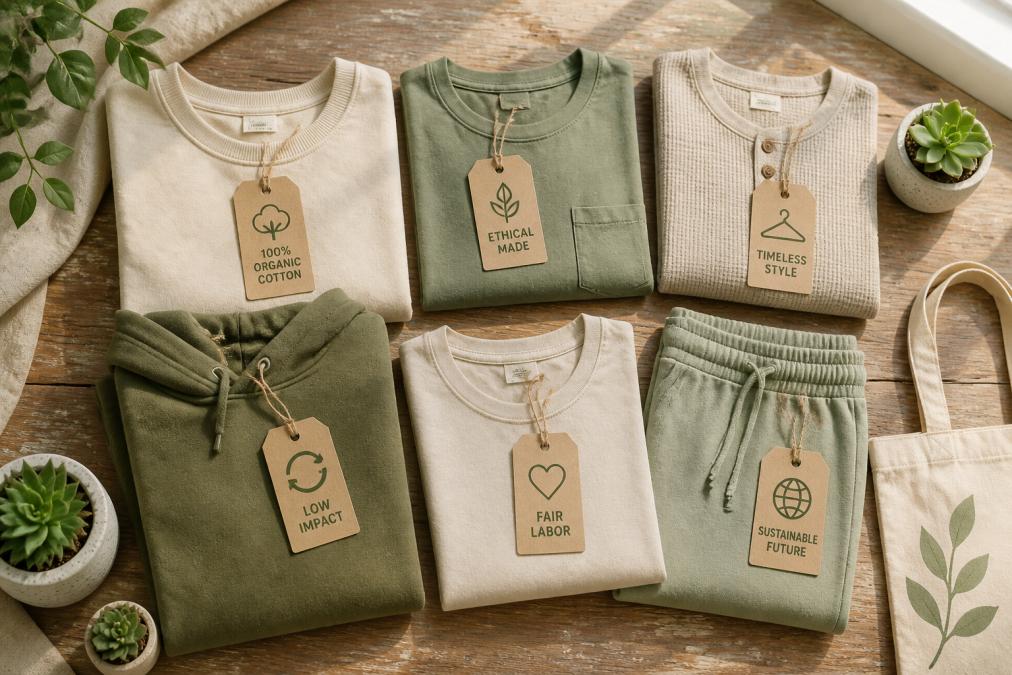
Stitched Creations is a woman-owned Wisconsin studio producing small-batch handmade crochet and macramé apparel using eco-friendly materials. Each piece is made by hand, making the supply chain transparent: one studio, one maker, zero mystery about labor conditions. Small-batch production eliminates overstock waste entirely.
Best for: Gift-givers, new parents seeking hypoallergenic baby essentials, and anyone wanting a truly handmade piece with verifiable ethical origin.
Pros:
- Fully handmade in a single US studio with complete supply chain visibility
- Eco-friendly materials with no greenwashing risk
- Small-batch model eliminates overproduction waste
Cons:
- Limited to crochet and macramé styles; not a full wardrobe solution
Pact: Everyday Organic Cotton at Accessible Prices
Pact uses GOTS-certified organic cotton in Fair Trade Certified factories and offsets the carbon footprint of every product through a verified carbon-neutral program. The organic cotton process requires significantly less water and energy than conventional cotton farming.
Best for: Consumers building an everyday wardrobe of basics, tees, underwear, socks, and leggings with strong certifications at accessible prices.
Pros:
- GOTS and Fair Trade certified across the entire line
- Wide range for men, women, and children
- Carbon-neutral program covers the full product lifecycle
Cons:
- Designs are practical and basic; limited appeal for trend-driven shoppers
Patagonia: Durability, Repair Programs, and Environmental Activism
Patagonia's Worn Wear program allows customers to send in damaged items for professional repair and resells used gear, making circular fashion a practice rather than a press release. The brand uses organic cotton and recycled materials extensively and has restructured its ownership to direct profits toward environmental causes.
Best for: Outdoor enthusiasts and anyone needing gear that survives years of hard use.
Pros:
- Industry-leading repair and resale infrastructure
- Organic cotton and recycled materials throughout
- Genuine environmental advocacy backed by corporate structure
Cons:
- Premium price point on most items
MATE the Label: Non-Toxic Loungewear with Circular Fashion Built In
MATE the Label uses GOTS-certified organic cotton and low-impact dyes, holds B Corp and Climate Neutral certifications, and offers a take-back recycling program for worn-out pieces. The focus on Tencel alongside organic cotton provides a softer hand feel than many competitors.
Best for: Loungewear and everyday essentials buyers who prioritize non-toxic, hypoallergenic materials and want genuine circular fashion options.
Pros:
- Non-toxic, GOTS-certified materials and low-impact dyes
- Certified B Corp and Climate Neutral
- Garment recycling program closes the loop on end-of-life management
Cons:
- Higher price point compared to other organic cotton options
Harvest & Mill: 100% USA-Grown Organic Cotton, Farm to Finished Garment
Harvest & Mill's entire supply chain is USA-based: cotton is grown, milled, and sewn domestically. The brand offers undyed and naturally colored organic cotton options, minimizing dye processing entirely.
Best for: Consumers who prioritize a fully USA-made supply chain and want the simplest, most traceable organic cotton basics available.
Pros:
- Entirely USA-grown, milled, and sewn
- Undyed and naturally colored options available
- Supports American agricultural and manufacturing workers
Cons:
- Limited style range; primarily basics
Girlfriend Collective: Size-Inclusive Activewear from Recycled Materials
Girlfriend Collective offers sizing from 2XS to 6XL, broader than most activewear brands. Materials are recycled polyester from post-consumer plastic bottles and fishing nets, certified under OEKO-TEX Standard 100. Labor standards are verified by SA8000, one of the more rigorous labor certifications in the industry.
Best for: Active individuals needing size-inclusive sustainable activewear with verified recycled materials and fair labor practices.
Pros:
- Sizing from 2XS-6XL, the most inclusive range on this list
- Recycled polyester from post-consumer waste
- OEKO-TEX and SA8000 certified
Cons:
- Primarily activewear; limited everyday apparel options
Toad&Co: Hemp, Tencel, and Timeless Design for Everyday Wear
Toad&Co uses organic cotton, recycled cotton, hemp, Tencel, and recycled fibers across its collection. The emphasis on timeless design over seasonal trends is explicit, and the ToadAgain resale program gives worn pieces a second life. Hemp requires minimal water, no pesticides, and improves soil health.
Best for: Everyday wear and travel wardrobes where versatility and durability matter more than fashion-forward styling.
Pros:
- Widest material variety on this list, including hemp
- Timeless design philosophy supports capsule wardrobe building
- Resale program promotes circular fashion
Cons:
- Some items sit at the higher end of the price range
tentree: B Corp Certified Basics That Fund Reforestation
tentree plants ten trees for every item purchased and is B Corp certified. The stated goal of planting one billion trees by 2030 gives the environmental mission a concrete, measurable target. The brand uses organic cotton and Tencel throughout its line.
Best for: Environmentally conscious consumers who want their purchases to directly fund reforestation alongside wearing eco-conscious basics.
Pros:
- Direct, measurable environmental impact per purchase
- B Corp certified
- Comfortable and versatile for active use
Cons:
- Styles are casual; limited options for professional or formal contexts
Reformation: Trend-Driven Styles Backed by Transparent Sustainability Reports
Reformation competes directly with fast fashion on style while maintaining genuine sustainability credentials. The brand uses eco-friendly fabrics, vintage garments, and deadstock fabric to reduce waste, and publishes detailed sustainability reports covering carbon footprint, water consumption, and waste metrics.
Best for: Fashion-forward buyers who want stylish women's clothing without abandoning their environmental values.
Pros:
- Trend-driven designs that compete with conventional fashion
- Detailed, published sustainability reports
- Uses deadstock fabric and vintage garments to reduce waste
Cons:
- Higher price point; not accessible for all budgets
Blue Canoe: USA-Made Organic Women's Apparel Since 1989
Blue Canoe has been making organic women's clothing in the USA since 1989, making it the longest-running organic clothing line on this list. Every step from fabric to finished garment happens domestically. A brand that has maintained organic and USA-made standards for over three decades has demonstrated a commitment that newer entrants have not yet had the chance to prove.
Best for: Women seeking comfortable, high-quality organic apparel with a long track record of USA-based manufacturing.
Pros:
- Entirely USA-made, supporting domestic workers
- Decades-long commitment to organic fibers
- Soft, feel-good fabrics with refined styling
Cons:
- Focused exclusively on women's clothing
Affordable Sustainable Clothing Brands: Budget vs. Cost-Per-Wear
The sticker price objection is the most common barrier to buying from ethical brands. A $90 organic cotton tee looks expensive next to a $15 fast fashion version. Cost-per-wear analysis tells a different story.
Cost-per-wear is calculated by dividing the purchase price by the number of times you wear a garment before it is no longer usable. A $15 tee worn 10 times costs $1.50 per wear. A $90 organic cotton tee worn 200 times costs $0.45 per wear.
| Brand | Price Range (Tees) | Estimated Wear Cycles | Cost-Per-Wear Estimate |
|---|---|---|---|
| Pact | Mid-range basics | High (durable construction) | Low |
| Harvest & Mill | Mid-range | High (USA-made quality) | Low |
| Toad&Co | Mid to upper | Very high (timeless design) | Very low |
| Patagonia | Upper range | Extremely high (repair program extends life) | Very low |
| Reformation | Upper range | Moderate to high | Moderate |
The math consistently favors ethical slow fashion apparel when the garment is worn regularly.
How to Build a Capsule Wardrobe with Ethical Pieces
A capsule wardrobe is a curated collection of versatile, high-quality garments that work together across multiple outfits, reducing the need for constant new purchases.
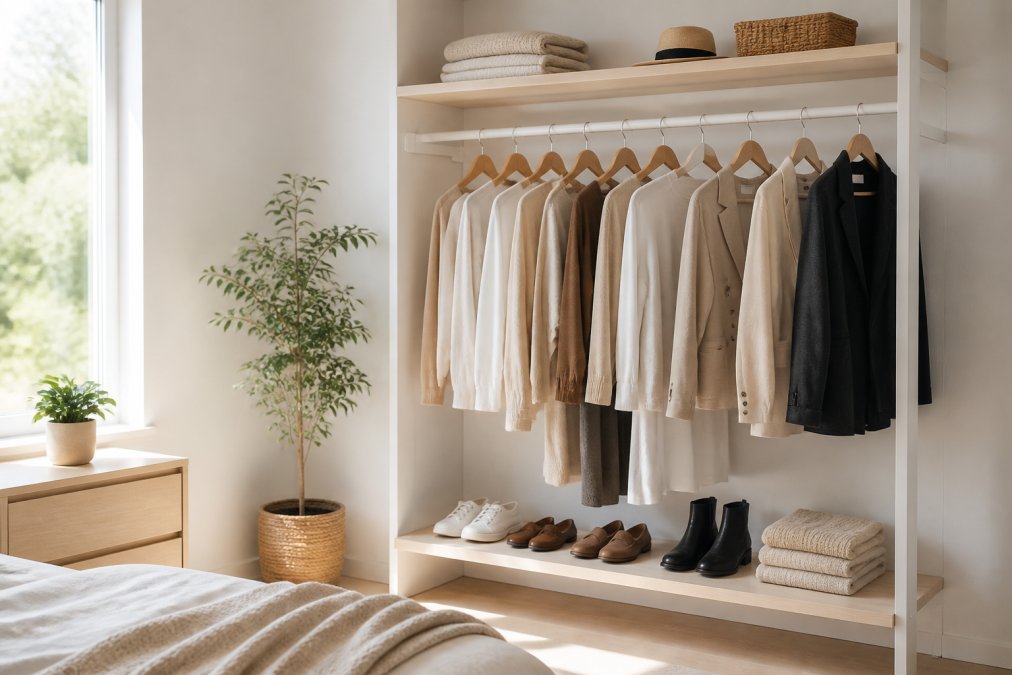
Step 1: Audit what you already own. Identify what you actually wear versus what sits untouched. Items worn fewer than five times per year are candidates for donation or resale.
Step 2: Define your core use cases. Most wardrobes need to cover three scenarios: everyday casual, work or semi-formal, and active or outdoor. List the specific garments each scenario requires.
Step 3: Fill gaps with ethical pieces built for longevity. Prioritize natural fibers like organic cotton, hemp, and Tencel. Choose timeless design over seasonal trends. A navy crewneck sweater from Toad&Co will work in three years. A novelty print from a fast fashion retailer will not.
Step 4: Apply the one-in, one-out rule. For every new ethical piece that enters the wardrobe, one existing piece leaves via donation, resale, or the brand's take-back program.
Step 5: Manage end-of-life deliberately. When a garment is genuinely worn out, use structured end-of-life options like Patagonia's Worn Wear program, MATE the Label's recycling program, or Toad&Co's ToadAgain resale platform to keep it out of landfill.
How to Spot Greenwashing Before You Buy
Greenwashing is the practice of making environmental claims that are vague, unverified, or actively misleading. According to FTC Green Guides on environmental marketing claims, the Federal Trade Commission requires that environmental marketing claims be truthful, non-deceptive, and substantiated. Vague terms like "eco-friendly," "green," or "sustainable" without supporting evidence or certification fall into legally questionable territory.
Red flags to watch for:
- Vague language with no certification backing. "Sustainable materials" means nothing without GOTS, OEKO-TEX, or equivalent certification.
- One green claim that overshadows everything else. A brand using recycled packaging while manufacturing in unverified overseas factories is not a slow fashion brand.
- No supply chain information. Ethical brands publish where their garments are made and under what conditions.
- Trend-driven collections with sustainability language. Releasing 52 "sustainable" micro-collections per year is fast fashion with a green label.
- Carbon offset claims without reduction commitments. Offsetting without reducing emissions is a delay tactic, not a solution.
Which Slow Fashion Brand Is Right for You?
Choosing among ethical slow fashion apparel brands 2026 offers comes down to three variables: your primary use case, your budget approach, and which certifications matter most to you.
| If You Need... | Best Pick | Why |
|---|---|---|
| Unique handmade apparel or gifts | Stitched Creations | Small-batch, eco-friendly, fully traceable |
| Affordable everyday basics | Pact | GOTS + Fair Trade at accessible prices |
| Durable outdoor gear | Patagonia | Repair program, recycled materials |
| Size-inclusive activewear | Girlfriend Collective | 2XS-6XL, recycled polyester |
| Fully USA-made supply chain | Harvest & Mill | Farm to finished garment, domestic |
| Trend-driven styles | Reformation | Deadstock fabrics, published sustainability data |
| Non-toxic loungewear | MATE the Label | GOTS, B Corp, garment recycling |
| Widest material variety | Toad&Co | Hemp, Tencel, organic cotton, resale program |
| Long-track-record organic | Blue Canoe | USA-made since 1989 |
| Reforestation impact | tentree | 10 trees per purchase, B Corp |
No single brand covers every need. A practical approach is to choose one or two core brands for everyday basics, add a specialty brand for activewear or outerwear, and fill in with handmade or artisan pieces for gifting and unique items.
For buyers who want something genuinely one-of-a-kind, handmade crochet and macramé from a studio like Stitched Creations sits in a category no certified mass-market brand can occupy. The supply chain is a single person in a single Wisconsin studio. That is as transparent as clothing gets.
Building a wardrobe around ethical slow fashion apparel brands takes more initial research than a trip to a fast fashion retailer, but the long-term result is a closet full of pieces you know the origin of, trust the quality of, and will actually wear for years. For handcrafted apparel and gifts that carry a genuine story, browse the Stitched Creations collection: small-batch crochet and macramé made with eco-friendly materials, premium construction, and the kind of care that shows in every stitch. Shop Now at stitchedcreations.store.
Frequently Asked Questions
What defines a brand as a slow fashion brand?
Slow fashion brands prioritize garment longevity, ethical manufacturing, and environmental impact over trend cycles and volume. They typically use natural fibers like organic cotton or recycled materials, pay fair wages, maintain supply chain transparency, and produce in small batches. The goal is conscious consumerism: buying fewer, better-made pieces that last years rather than seasons. Certifications like GOTS, Fair Trade, and B Corp are common markers of a genuine commitment to these values.
How can I tell if a clothing brand is truly ethical?
Check for third-party certifications such as GOTS for organic textiles, Fair Trade for labor standards, B Corp for overall social and environmental accountability, and OEKO-TEX for non-toxic dyes. Look for published sustainability reports and named factory partners. Brands that name their mills, disclose their carbon footprint, and offer repair or recycling programs are far less likely to be greenwashing than those using vague terms like 'eco-friendly' without supporting evidence.
Are slow fashion brands more expensive than fast fashion?
The upfront price is almost always higher, but cost-per-wear tells a different story. A $90 organic cotton tee worn 150 times costs $0.60 per wear. A $15 fast fashion equivalent that deteriorates after 20 washes costs $0.75 per wear and ends up in a landfill. Affordable sustainable clothing brands like Pact and tentree keep starting prices reasonable without sacrificing certifications, making ethical choices accessible even on a tighter budget.
What certifications should I look for in ethical clothing?
The most reliable certifications for US shoppers are GOTS (Global Organic Textile Standard) for organic fiber content and responsible processing, Fair Trade USA for fair wages and safe working conditions, B Corp certification for verified social and environmental performance, and OEKO-TEX Standard 100 for non-toxic, hypoallergenic textiles. SA8000 is a strong labor rights standard worth recognizing too. Each certification requires independent audits, making them more trustworthy than self-reported brand claims.
What is the best way to handle garments at the end of their life?
Several slow fashion brands now run take-back or resale programs. Patagonia's Worn Wear program repairs and resells used gear. MATE the Label and Toad&Co offer garment recycling and resale options. For pieces beyond repair, look for local textile recycling drop-offs through organizations like USAgain or municipal programs. Donating to thrift stores, repurposing fabric for crafts, or composting biodegradable natural fibers are all better end-of-life choices than sending garments to landfill.
This article was written using GrandRanker