 ultimate-guide
Best Crochet Patterns for Beginners 2026: Ultimate Guide
Table of Contents
- Why Crochet Patterns for Beginners Are Trending in 2026
- Essential Crochet Tools for Beginners: What You Actually Need
- Best Yarn for Beginner Crochet: Fiber, Weight, and Eco-Friendly Options
- How to Read a Crochet Pattern: Abbreviations, Charts, and Stitch Counts
- Easy Crochet Projects for Beginners: 7 Patterns to Start in 2026
- Troubleshooting Common Beginner Crochet Mistakes
- Top Free Crochet Patterns for Beginners: Where to Find Them
- Conclusion
Last Updated: August 7, 2026
Why Crochet Patterns for Beginners Are Trending in 2026
Crochet is having a moment. The best crochet patterns for beginners 2026 are more accessible, stylish, and community-driven than ever, making this the ideal year to pick up a hook. At Stitched Creations, we're seeing a genuine cultural shift: people want to create things with their hands again. Slow fashion is gaining traction, handmade home decor dominates social media, and the wellness angle of meditative crafting has brought an entirely new audience to crochet. Unlike knitting, you only ever work with one active loop at a time, making the learning curve much gentler than most expect.
Essential Crochet Tools for Beginners: What You Actually Need
Most beginners buy too much, too fast. The real list of essential tools is short, and starting lean is better for learning.
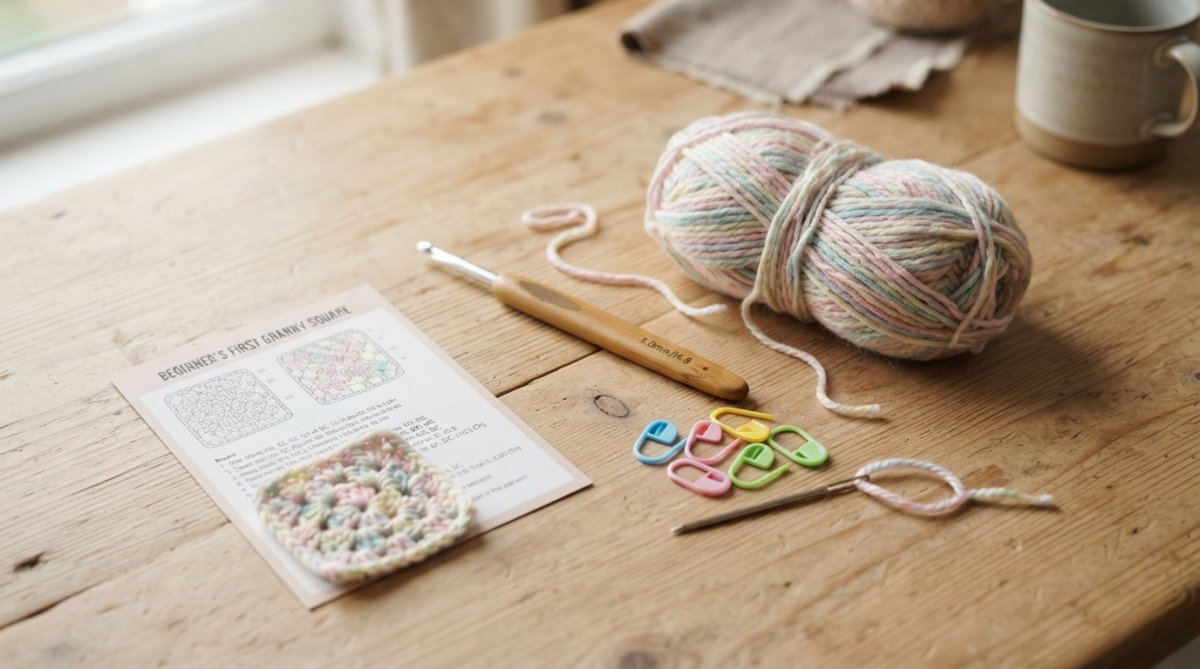
Here is what you genuinely need:
- A crochet hook in a mid-range size (5.0mm or 5.5mm)
- A skein of yarn in smooth, light-colored worsted weight
- Stitch markers to track progress through rows
- A tapestry needle for weaving in ends
- A pair of scissors
That is the complete list. No blocking mats or yarn swifts needed before your first project.
Hooks, Stitch Markers, and a Tapestry Needle
Aluminum hooks are smooth, durable, and inexpensive. Ergonomic hooks with soft rubber handles reduce hand fatigue for longer sessions. For a first hook, a 5.0mm aluminum hook works with most beginner-weight yarns.
Stitch markers clip into a loop to mark the beginning of a round or track stitch count. Without them, beginners frequently lose their place and miscount rows. Locking stitch markers are the most versatile style.
A tapestry needle weaves in ends, hiding yarn tails left at the start and end of a project. A blunt-tipped tapestry needle makes it easy to thread through crochet fabric without splitting the yarn.
Budget-Friendly Starter Kits Worth Considering
The Woobles beginner kits include custom yarn designed for stitch visibility, making it easy to see exactly where to insert the hook. These kits focus on amigurumi, crocheted stuffed animals, which are small enough to finish quickly.
Annie's Beginner Crochet Kit Club delivers monthly project kits that build skills progressively, including hooks, stitch markers, and video tutorials for both right- and left-handed crocheters. Hobbii complete crochet kits offer another solid entry point, particularly for beginners wanting functional items like scarves or shawls.
| Kit Option | Best For | Includes Hook | Pattern Style |
|---|---|---|---|
| The Woobles | Amigurumi beginners | Yes | Step-by-step with video |
| Annie's Kit Club | Structured skill-building | Yes | Progressive monthly projects |
| Hobbii Kits | Scarves, shawls, bags | Check per kit | Written pattern |
| Lion Brand Free Patterns | Beginners with supplies already | No | Digital download |
Best Yarn for Beginner Crochet: Fiber, Weight, and Eco-Friendly Options
The best yarn for beginner crochet is smooth, medium-weight, and light in color. Fuzzy yarns hide your stitches. Dark yarn makes it nearly impossible to see where you are working.
Understanding Yarn Weight and Gauge
Yarn weight is the thickness of the yarn strand and determines which hook size you use. The Craft Yarn Council standardizes yarn weights from 0 (lace) to 7 (jumbo). For beginners, weight 4 (worsted) is ideal, thick enough to work quickly but fine enough for lightweight items.
Gauge is the number of stitches and rows that fit within four inches. Matching gauge ensures your finished project comes out the right size. Many beginners skip this step and end up with items that don't fit.
Tension refers to how tightly or loosely you hold the yarn. Consistent tension, whatever your personal default, is what matters most.
Sustainable and Eco-Friendly Yarn Sourcing
Eco-conscious crafters increasingly ask where their fiber comes from. Organic cotton, recycled cotton, and plant-based fibers like bamboo and linen are excellent choices for beginners who care about sustainability. They tend to be smooth and are free from synthetic coatings that can irritate sensitive skin.
Recycled polyester yarns made from post-consumer plastic bottles are durable, machine-washable, and increasingly available at accessible prices. Look for certifications like OEKO-TEX Standard 100, which verifies the yarn has been tested for harmful substances. For wool, the Responsible Wool Standard (RWS) certification indicates ethical animal husbandry practices.
Stitched Creations uses eco-friendly materials across its handmade crochet collection, which is why customers with sensitive skin, including parents buying baby essentials, return consistently.
How to Read a Crochet Pattern: Abbreviations, Charts, and Stitch Counts
A crochet pattern looks like a wall of abbreviations at first but becomes readable within a single session. Every pattern follows the same structure: a materials list, gauge note, abbreviations, and written instructions. Some patterns include stitch charts, visual diagrams using symbols to represent each stitch.
Common Abbreviations Every Beginner Should Know
The abbreviations used in US crochet patterns are standardized:
- ch, chain stitch
- sl st, slip stitch
- sc, single crochet
- hdc, half double crochet
- dc, double crochet
- yo, yarn over
- sk, skip
- sp, space
- st(s), stitch(es)
- rep, repeat
- RS / WS, right side / wrong side
A slip knot is how every crochet project begins. A turning chain is the chain stitches worked at the end of a row before turning. The number varies by stitch height: single crochet uses one, double crochet uses three.
Turning Chains, Tension, and Counting Rows
Counting rows and stitches is a skill that becomes automatic quickly. A stitch count note at the end of a pattern row, written as a number in parentheses like (24), tells you exactly how many stitches you should have. If your count is off, stop and find the error before continuing.
Consistent tension across rows gives finished crochet fabric a clean, even look. New crafters often crochet their first few rows tightly and relax as they go, producing uneven fabric. Practicing on a small swatch before starting a real project fixes this faster than any other technique.
Easy Crochet Projects for Beginners: 7 Patterns to Start in 2026
The most important quality in a first crochet project is fast feedback. Projects that take months to finish are not beginner projects, regardless of their skill label. The best easy crochet projects for beginners are small enough to complete in a weekend.
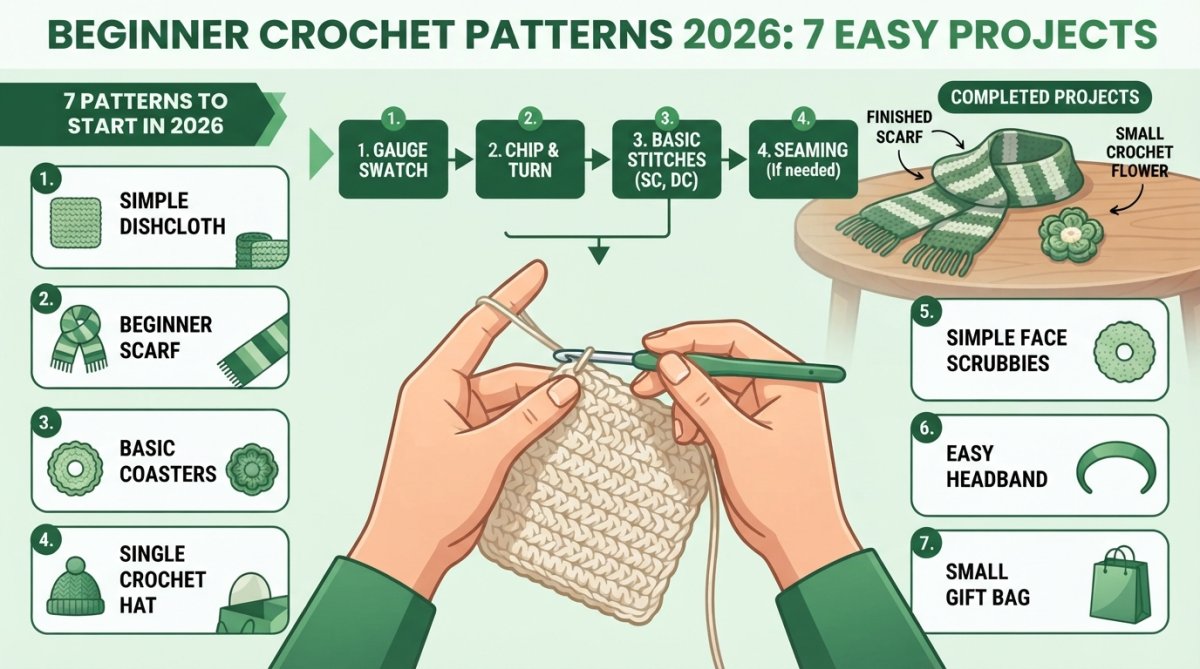
Here are seven beginner-friendly patterns worth starting this year:
- Dishcloth or washcloth, Uses only chain stitch and single crochet. Finishes in two to three hours.
- Simple scarf, A rectangle worked in double crochet. Teaches turning chains and consistent row length.
- Ear warmer headband, Works up in under an hour using thick yarn.
- Tote bag, Worked in the round with single crochet. Teaches basic construction and handles.
- Granny square, The foundational crochet motif. Learn one and you can make blankets, bags, and garments.
- Beanie hat, Worked in the round, teaches increases and decreases.
- Amigurumi character, A small stuffed animal using magic ring technique.
Quick Wins: Projects You Can Finish in a Weekend
The dishcloth and ear warmer headband are most likely to get a beginner hooked. Both use basic stitches, require minimal yarn, and produce something genuinely useful. Start with the dishcloth: work ten chain stitches, turn, and single crochet across. Repeat until you have a square. Weave in your ends. You now know the core mechanics of crochet.
Seasonal Spring and Summer Crochet Ideas for 2026
Spring and summer 2026 crochet trends lean into open-weave textures, plant-based fibers, and accessories. Cotton and linen yarn are ideal for warm-weather projects because they breathe and hold their shape.
Top seasonal project ideas include market tote bags in natural cotton with mesh or shell stitch patterns, sun hats with wide brims, lightweight crop tops and tanks using linen-blend yarn, crochet flower hair clips, and beach bags with colorful striped patterns. The shift toward wearable crochet is one of the clearest 2026 trends.
Troubleshooting Common Beginner Crochet Mistakes
Most beginner frustration comes from a small set of recurring problems.
Stitch count keeps changing. You are likely crocheting into the turning chain or skipping the last stitch in a row. At the end of every row, check that you have worked into the very last stitch before turning.
Edges are curling inward. Curling edges usually mean your tension is too tight. Try going up one hook size or consciously relax your grip on the yarn. Blocking also helps significantly.
Holes appearing in the fabric. Unexpected holes typically mean you are accidentally creating yarn overs or working into the wrong part of a stitch. Slow down and make sure you are inserting the hook under both loops of each stitch unless the pattern specifies otherwise.
Running out of yarn mid-project. Before starting, calculate how much yarn your project needs by checking the pattern's yardage requirements against your skein's label. Buy an extra skein when in doubt.
Finishing looks messy. Weaving in ends neatly takes practice. Use the tapestry needle to weave the tail through several stitches in different directions, then trim close to the fabric.
According to the Craft Yarn Council's beginner resources, establishing a consistent practice routine, even fifteen minutes a day, builds muscle memory faster than longer, less frequent sessions.
Top Free Crochet Patterns for Beginners: Where to Find Them
Free crochet patterns for beginners are genuinely plentiful in 2026, and the quality has improved substantially.
Lion Brand's free pattern library is one of the most reliable sources. Patterns are organized by skill level, and the beginner collection includes blankets, scarves, and accessories. Instructions are clear and patterns are designed for Lion Brand yarns available at most craft stores.
Etsy hosts thousands of beginner crochet patterns from independent designers, many priced between two and five dollars. Reviews and ratings make it straightforward to identify well-written patterns before purchasing.
Ravelry is the largest dedicated crochet and knitting community online. The Ravelry pattern database is searchable by skill level, yarn weight, project type, and stitch count, making it a genuinely useful tool.
YouTube video tutorials for specific stitches and projects are often more useful than written patterns for visual learners. Searching for the stitch name plus "beginner tutorial" reliably surfaces high-quality, step-by-step instruction.
For structured online learning, Craftsy offers in-depth crochet classes, often at significant promotional discounts. Skillshare provides access to a broader library of creative classes on a subscription basis.
When using free patterns, watch for whether they specify US or UK terminology, as the same abbreviations mean different things in each system.
Crochet is a craft that rewards patience. The beginners who finish their first project are almost always the ones who chose a small, achievable project and saw it through. Start with a dishcloth. The skills transfer to everything that comes after.
At Stitched Creations, our handmade crochet pieces are built from the same foundational techniques covered in this guide, worked with eco-friendly materials and the kind of consistent tension that only comes with practice. If you want to see what those techniques look like in a finished, professionally crafted piece, explore our collection of handmade apparel, home decor, and baby essentials. Shop Now at stitchedcreations.store.
Frequently Asked Questions
What are the easiest crochet patterns for absolute beginners?
The easiest crochet patterns for beginners use only the chain stitch and single crochet. Dishcloths, simple scarves, and flat pot holders are ideal first projects because they work in straight rows with no shaping required. These projects let you practice your slip knot, tension, and stitch count without the complexity of increases or decreases. Once you complete a few rows consistently, you can move on to projects like headbands or simple baby blankets.
Is crochet still a trend in 2026?
Yes. Crochet has sustained strong momentum through 2025 and into 2026, driven by the slow-fashion movement, social media communities, and growing interest in handmade and sustainable textile art. Granny squares, boho bags, and textured market totes are among the most searched beginner crochet patterns for 2026. The craft's accessibility, low startup cost, and meditative quality continue to attract new crafters across all age groups.
What basic supplies do I need to start crocheting?
You need a crochet hook, a skein of yarn, stitch markers, a tapestry needle for weaving in ends, and a beginner-friendly pattern. For most beginner crochet projects, a size 5 mm (H-8) hook paired with a worsted-weight yarn works well because the stitches are easy to see and the gauge is forgiving. A small pair of scissors rounds out your starter kit. Total startup costs are typically low, making crochet one of the most budget-friendly crafts to begin.
How long does it take to learn basic crochet stitches?
Most beginners can form a slip knot, complete a foundation chain, and work single crochet stitches within one to two hours of focused practice. Half double crochet and double crochet usually follow within a few sessions. Consistent tension and even stitch count take a few more practice projects to develop. With 30 minutes of daily practice, most new crafters feel comfortable with four or five basic stitches within two to three weeks.
What yarn weight is best for beginner crochet patterns?
Worsted-weight yarn (category 4) is the most recommended choice for beginner crochet because it is thick enough to see each stitch clearly, works up quickly, and pairs with widely available hook sizes. Bulky yarn (category 5 or 6) is an even faster option for projects like blankets. Avoid lace or fingering-weight yarn at first, as the thin fiber content makes it harder to spot mistakes and maintain consistent tension.
Where can I find free crochet patterns for beginners in 2026?
Several reputable sources offer free beginner crochet patterns as digital downloads, including major yarn brand websites, Ravelry, and independent designers on platforms like Etsy. Many patterns include step-by-step written instructions alongside abbreviation guides. When choosing a free pattern, look for one that lists gauge, yarn weight, and a stitch count for each row. Patterns with photos of each stage are especially helpful for visual learners working through their first few projects.
This article was written using GrandRanker