 ultimate-guide
Benefits of Wearing Handmade Crochet Clothes
Table of Contents
- Why Choose Handmade Over Fast Fashion?
- Sustainable Fashion Benefits: Eco-Friendly and Ethical
- Comfort, Fit, and Durability of Handmade Crochet Clothes
- The Therapeutic and Emotional Benefits of Crochet
- How to Care for Handmade Crochet Clothes
- Styling Handmade Crochet for Modern Professional Settings
- The Economic Impact and Ethical Value of Handmade
- Frequently Asked Questions
Last Updated: September 29, 2026
Why Choose Handmade Over Fast Fashion?
The benefits of wearing handmade crochet clothes start with what they replace. Mass-produced garments are built for volume and speed, while a crocheted piece is built stitch by stitch, often with natural fibers and a specific person in mind. This guide from Stitched Creations walks through the real advantages, from sustainability to comfort to the quiet pleasure of wearing something made by hand.
The Problem with Fast Fashion
Fast fashion is clothing produced rapidly and cheaply to chase short-lived trends, and it depends on disposable thinking. Garments are worn briefly, then replaced. The environmental cost lands in landfills and in the water and energy used to produce fibers and ship finished goods.
The Slow Fashion Difference
Slow fashion is the practice of buying fewer, better-made garments and keeping them in use longer. Handmade crochet clothes fit that model naturally because each piece is made in small batches, not mass quantities.
Sustainable Fashion Benefits: Eco-Friendly and Ethical
The sustainable fashion benefits of handmade crochet come down to two things: less waste and better materials. A made-to-order garment is not produced until someone wants it, which means far less unsold inventory and far less discarded stock.
Reducing Textile Waste
Textile waste is the volume of fabric and clothing that ends up thrown away rather than reused, repaired, or recycled. Mass production creates it in two places: overstock that never sells and garments that fall apart quickly.
Natural Fibers and Lower Carbon Footprint
Natural fibers such as cotton and wool come from renewable sources and break down more readily than synthetic alternatives. Handmade production also skips the energy-heavy factory lines that mass manufacturing depends on.
Comfort, Fit, and Durability of Handmade Crochet Clothes
Handmade crochet clothes tend to fit better and last longer because the maker controls tension, shaping, and finishing at every stage. A crocheted garment stretches with you, breathes with natural yarn, and holds its structure through years of wear.
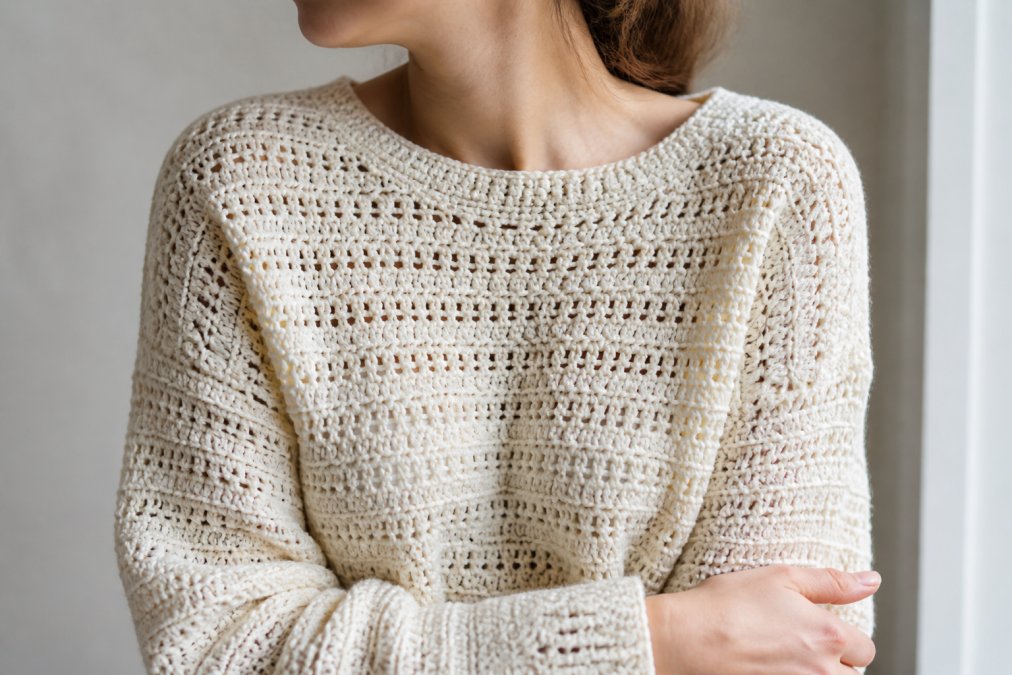
Three qualities separate handmade from mass-produced:
- Fit. A crocheter adjusts length, width, and sleeve shape to the wearer, so the garment sits where it should.
- Durability. Tight, even stitching and finished seams mean the piece resists the pilling and stretching that plague cheap knits.
- Yarn quality. Better fiber holds color and shape far longer, and stitch definition stays crisp instead of going fuzzy.
The Therapeutic and Emotional Benefits of Crochet
The therapeutic value of crochet runs in both directions: for the maker and for the wearer. Crochet is a repetitive, rhythmic craft, and that repetition calms the nervous system. Many people find it eases stress and even helps with insomnia relief when used as an evening wind-down.
How to Care for Handmade Crochet Clothes
Handmade crochet clothes last longest with gentle, low-heat care. The goal is to protect the fiber and the stitch structure rather than treat the garment like a sturdy cotton tee. Most top-ranking articles stop at "hand wash cold," which is not enough to keep a crocheted sweater looking new for a decade.
Match the Method to the Fiber
Not every handmade piece wants the same treatment. A quick rule of thumb:
- Cotton and linen blends: These are the most forgiving. Hand wash in cool water, or use a mesh bag on a delicate cycle. They can handle a gentle spin, but still lay flat to dry.
- Wool and wool blends: These need the most care. Use a wool-safe detergent, never hot water, and never agitate. Agitation plus heat is what causes felting, where the stitches fuse together and the garment shrinks permanently.
- Acrylic and synthetic blends: More durable in the wash, but prone to pilling and static. Turn the piece inside out, use a mesh bag, and skip the dryer.
- Macramé and structured pieces: Spot clean only. Submerging stiff cord can soften the shape that makes the piece work.
A Wash Routine That Protects the Stitches
- Fill a basin with cool water and a capful of mild detergent. Avoid bleach, fabric softener, and enzyme-heavy stain removers, which break down natural fibers over time.
- Submerge the garment and let it soak for 10 to 15 minutes. Do not scrub. Gently squeeze the water through the fabric.
- Rinse in cool water until the water runs clear.
- Never wring or twist the garment. Press the water out between two clean towels instead.
- Lay flat to dry on a fresh towel, reshaping gently while damp. Hanging a wet crochet piece stretches it out of shape at the shoulders.
Fixing the Two Most Common Problems
Pilling. Small fiber balls form where the garment rubs, usually under the arms or along the sides. A fabric shaver or a fine-tooth comb removes them without damaging the stitch. Pilling is normal on natural fibers and does not mean the piece is wearing out.
Storage That Keeps the Shape
Fold heavy sweaters and cardigans rather than hanging them. Hangers stretch the shoulder seams and distort the neckline over time. For long-term storage, wash the piece first, make sure it is completely dry, and keep it out of direct sun, which fades natural dyes. Rotate your handmade pieces into regular wear rather than saving them for special occasions; natural fibers do better when they are not compressed in a drawer for months.
Styling Handmade Crochet for Modern Professional Settings
Crochet does not have to read as strictly boho, and it does not have to stay in your weekend closet. A well-chosen handmade piece can work in a modern, minimalist wardrobe with a little intention. This is the gap most articles miss: they celebrate the craft but never tell you how to actually wear it to the office without looking like you wandered in from a craft fair.
Why Crochet Gets a Bad Reputation at Work
The problem is rarely the crochet itself. It is the styling around it. A chunky, multicolored granny-square vest over ripped jeans reads casual because everything around it reads casual. The same vest over a crisp white shirt and tailored trousers reads intentional. Texture is the detail; the rest of the outfit should be quiet.
Three Outfit Formulas That Work
- The fine-gauge sweater. Pair a lightweight crochet sweater in a neutral tone with tailored trousers and a structured leather bag. The fine gauge keeps the silhouette clean, and the texture adds interest without bulk.
- The crochet vest over a button-down. Layer a crochet vest over a crisp shirt and straight-leg pants. This works because the shirt provides structure and the vest provides warmth and texture. Keep the vest in a single color.
- The handmade purse as the accent. If a full crochet garment feels like too much for your workplace, start with a handmade purse. A structured crochet tote or a small crossbody in a neutral shade adds texture to an otherwise plain outfit without changing the silhouette.
What to Avoid
- Chunky yarn in a full garment. It adds visual weight and can look costume-like in a professional setting. Save the chunky pieces for weekends.
- Bright, busy colorwork. A single accent color is fine; a rainbow of them competes with everything else you are wearing.
- Crochet head-to-toe. One handmade piece per outfit is the sweet spot. Two or more starts to read as a theme rather than a wardrobe.
Building the Bridge From Boho to Boardroom
If your closet is currently all flowy dresses and layered jewelry, do not throw it out. Add one structured piece at a time. Start with a neutral crochet purse, then a fine-gauge sweater, then a vest. Each piece gives you a new way to mix handmade texture into outfits you already own. Within a season, crochet stops being a category and starts being a tool you reach for the same way you reach for a blazer or a good pair of boots.
The Economic Impact and Ethical Value of Handmade
Buying handmade keeps money in the hands of the people who actually make the goods. A crocheted sweater from a small studio supports a maker directly, rather than routing most of the value to factories, middlemen, and shareholders.
| What You Are Buying | Fast Fashion | Handmade Crochet |
|---|---|---|
| Production model | Mass, trend-driven | Small-batch, made-to-order |
| Materials | Often synthetic blends | Natural, eco-friendly fibers |
| Lifespan | A season or two | Years with proper care |
| Who benefits | Shareholders, middlemen | The maker and their community |
| Waste | High overstock and disposal | Minimal, made on demand |
Frequently Asked Questions
Do handmade crochet clothes last long?
Yes, handmade crochet clothes often outlast mass-produced items when cared for properly. The durability comes from the quality of the yarn and the tightness of the stitches. At Stitched Creations, each piece is quality-checked for even tension and secure construction before shipping. To maximize longevity, hand wash in cold water and lay flat to dry. This preserves the shape and prevents stretching.
Is crochet clothing suitable for all seasons?
Crochet clothing is versatile across seasons depending on the yarn weight. Cotton and linen blends work well for spring and summer, offering breathability. Wool and alpaca blends provide warmth for fall and winter. Stitched Creations offers a range of pieces from lightweight tops to cozy sweaters. Layering is key for transitional weather.
Are handmade crochet clothes more durable than mass-produced items?
Handmade crochet clothes typically last longer than fast fashion because they use higher-quality yarns and reinforced stitching. Mass-produced knits often use thin threads that pill and tear quickly. Handmade pieces are crafted stitch by stitch, allowing for stronger construction. With proper care, a handmade crochet garment can remain in your wardrobe for years, offering better value over time.
Why is handmade crochet considered a sustainable fashion choice?
Handmade crochet supports sustainable fashion by reducing textile waste and using natural fibers. Unlike fast fashion, which produces excess inventory that ends up in landfills, handmade items are often made-to-order or small-batch. This minimizes waste. Natural fibers like cotton and wool are biodegradable and have a lower carbon footprint than synthetic materials. Choosing handmade supports ethical fashion and eco-conscious values.